Bell Rachael Lynda, Turkington Hannah Louise, Cosby Sara Louise
Veterinary Sciences Division, Agri-Food and Biosciences Institute, Stormont, Belfast, BT4 3SD Northern, Ireland.
Centre for Experimental Medicine, School of Medicine, Dentistry and Biomedical Sciences, Queen's University Belfast, BT9 7BL Northern, Ireland.
Vaccines (Basel). 2021 Apr 1;9(4):337. doi: 10.3390/vaccines9040337.
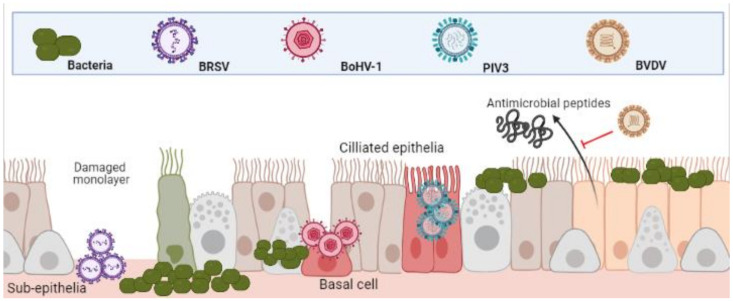
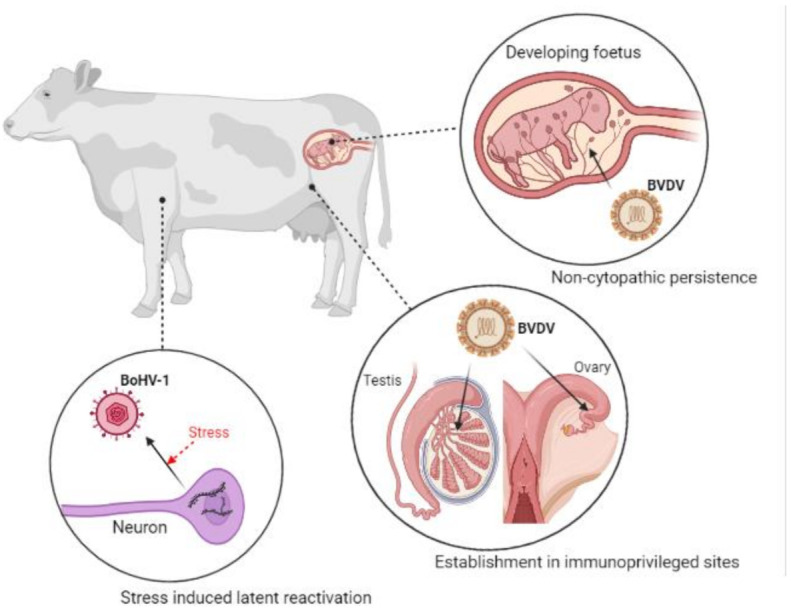
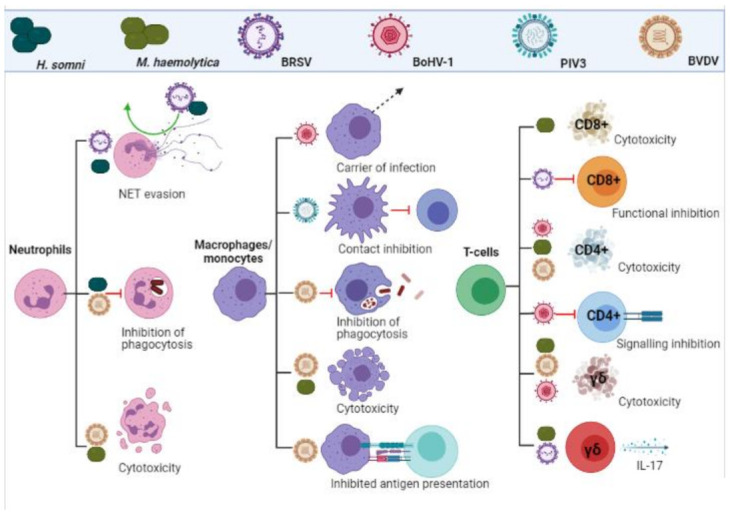
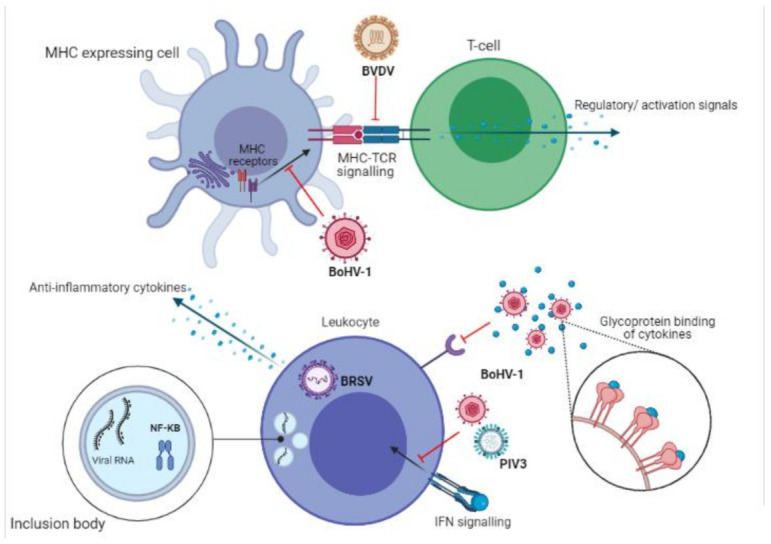
Bovine respiratory disease complex (BRDC) is a multifactorial disease of cattle which presents as bacterial and viral pneumonia. The causative agents of BRDC work in synergy to suppress the host immune response and increase the colonisation of the lower respiratory tracts by pathogenic bacteria. Environmental stress and/or viral infection predispose cattle to secondary bacterial infections via suppression of key innate and adaptive immune mechanisms. This allows bacteria to descend the respiratory tract unchallenged. BRDC is the costliest disease among feedlot cattle, and whilst vaccines exist for individual pathogens, there is still a lack of evidence for the efficacy of these vaccines and uncertainty surrounding the optimum timing of delivery. This review outlines the immunosuppressive actions of the individual pathogens involved in BRDC and highlights the key issues in the development of vaccinations against them.
牛呼吸道疾病综合征(BRDC)是一种牛的多因素疾病,表现为细菌性和病毒性肺炎。BRDC的病原体协同作用,抑制宿主免疫反应,并增加病原菌在下呼吸道的定植。环境应激和/或病毒感染通过抑制关键的固有免疫和适应性免疫机制,使牛易发生继发性细菌感染。这使得细菌能够毫无阻碍地进入呼吸道。BRDC是饲养场牛中代价最高的疾病,虽然针对个别病原体有疫苗,但这些疫苗的有效性仍缺乏证据,且疫苗接种的最佳时机也存在不确定性。本综述概述了BRDC中各病原体的免疫抑制作用,并强调了针对它们开发疫苗的关键问题。