Servicio Canario de Salud. Gerencia de Atención Primaria de Tenerife, Primary Health Care San Isidro, 38611 Tenerife (Canary Islands), Spain.
Joint Research Centre European Commission, 21027 Ispra, Italy.
Int J Environ Res Public Health. 2021 Apr 6;18(7):3819. doi: 10.3390/ijerph18073819.
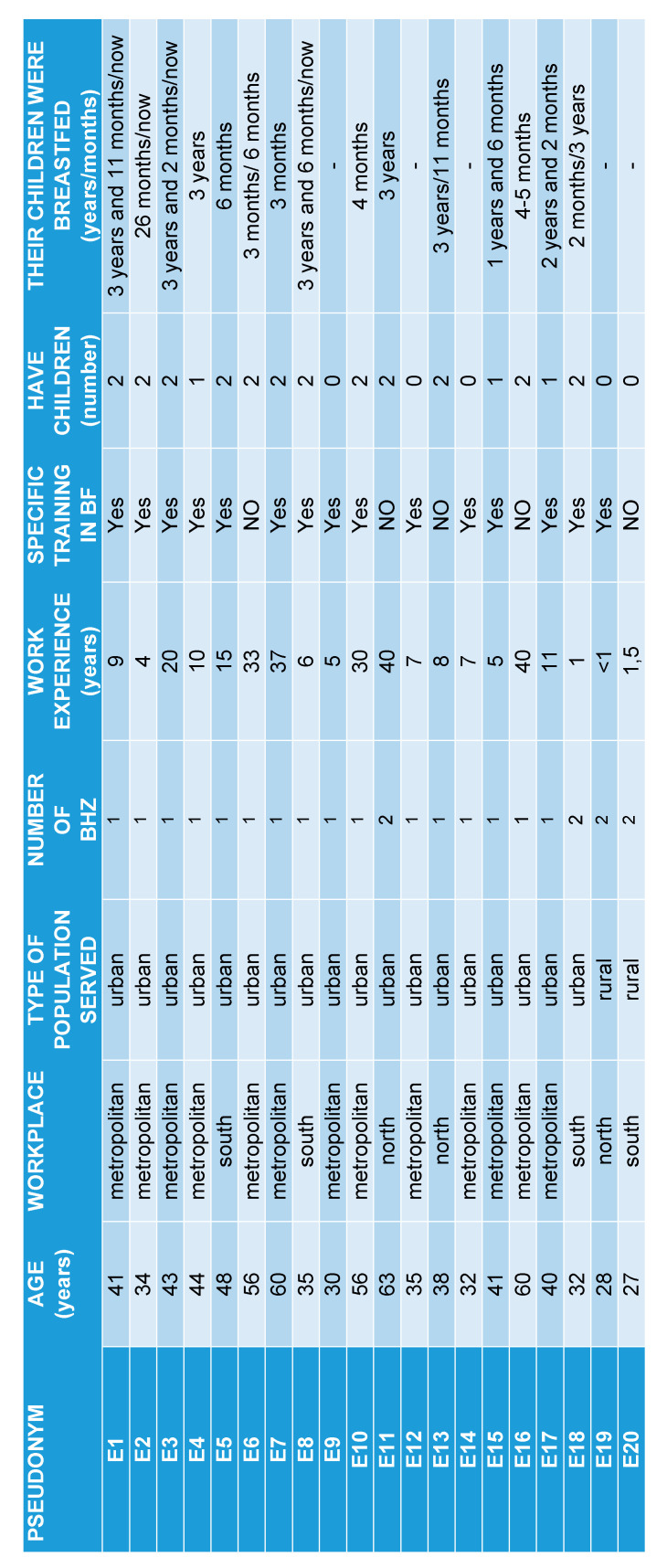
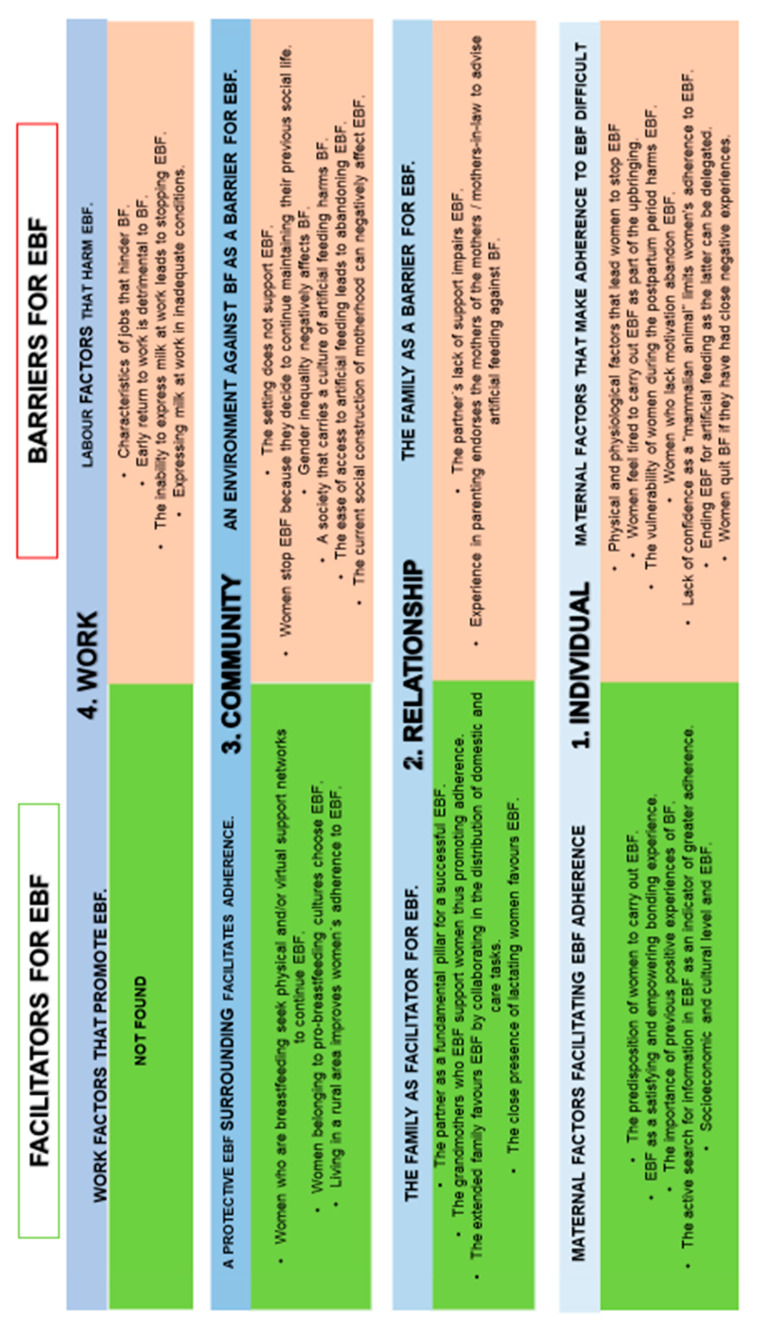
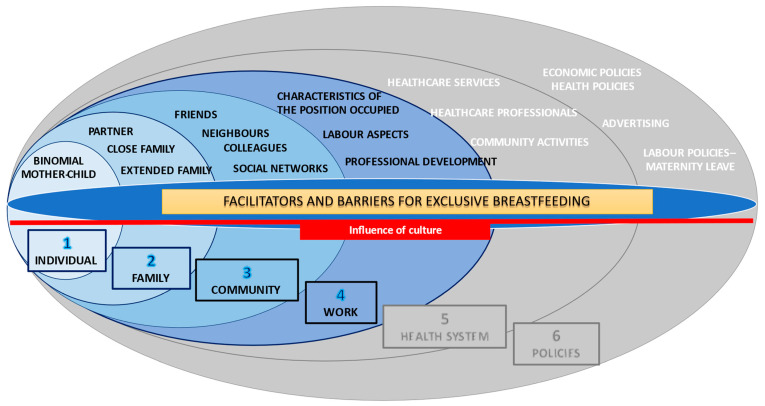
(1) The objective of our study is to determine, from a primary care midwife's perspective, which biopsychosocial factors can favour or be detrimental to exclusive breast feeding. (2) The study was carried out in Tenerife (Canary Islands, Spain) and is based on qualitative methodology. Twenty in-depth interviews were carried out with midwives working in primary care centres in Tenerife, using a content analysis approach. The transcript data was then encoded following an inductive approach. (3) According to the perceptions of the primary care midwives who were interviewed, the barriers and facilitators that influence exclusive breastfeeding related to the biopsychosocial spheres of women are, at an individual level, the physical and emotional aspects during the postnatal period; at the relationship level, the presence or not of support from the close family and partner; at the community level, the environment and social networks the new mothers may have; and at the work level, characteristics of jobs and early return to work. (4) The findings of our research can help healthcare professionals to approach the promotion and encouragement of exclusive breast feeding at each of the levels studied, with the aim of increasing rates following recommendations issued by The World Health Organization.
(1) 本研究旨在从基层助产士的角度确定哪些生物心理社会因素有利于或不利于纯母乳喂养。(2) 该研究在特内里费岛(西班牙加那利群岛)进行,基于定性方法。对特内里费岛基层医疗中心的 20 名助产士进行了深入访谈,采用内容分析法。然后,根据归纳法对转录数据进行编码。(3) 根据接受采访的基层助产士的看法,影响纯母乳喂养的障碍和促进因素与女性的生物心理社会领域有关,在个体层面上,是产后期间的身体和情绪方面;在关系层面上,是直系亲属和伴侣是否支持;在社区层面上,是新妈妈可能拥有的环境和社交网络;在工作层面上,是工作的特点和提前返回工作岗位。(4) 我们的研究结果可以帮助医疗保健专业人员在研究的各个层面上接近促进和鼓励纯母乳喂养,以提高世界卫生组织建议的母乳喂养率。