Agricultural Biotechnology Research Center, Academia Sinica, Taipei 11529, Taiwan.
Molecular and Biological Agricultural Sciences Program, Taiwan International Graduate Program, Academia Sinica, Taipei 11529, Taiwan.
Int J Mol Sci. 2021 Apr 17;22(8):4174. doi: 10.3390/ijms22084174.
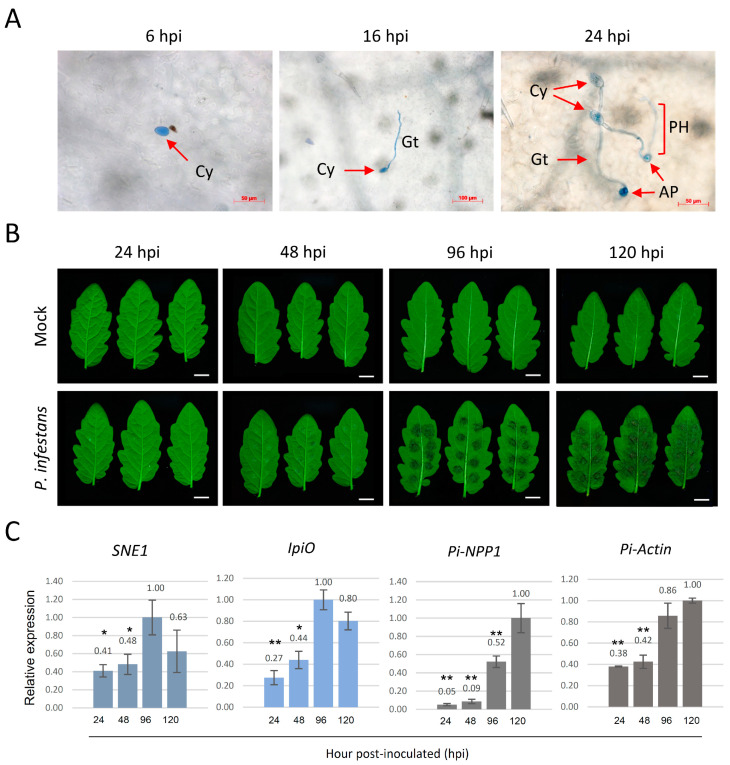
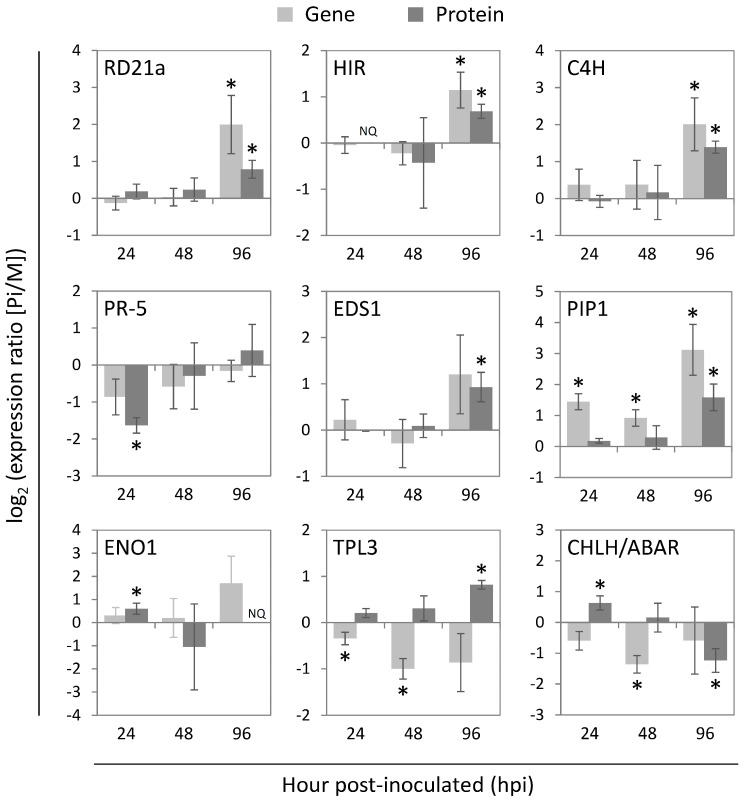
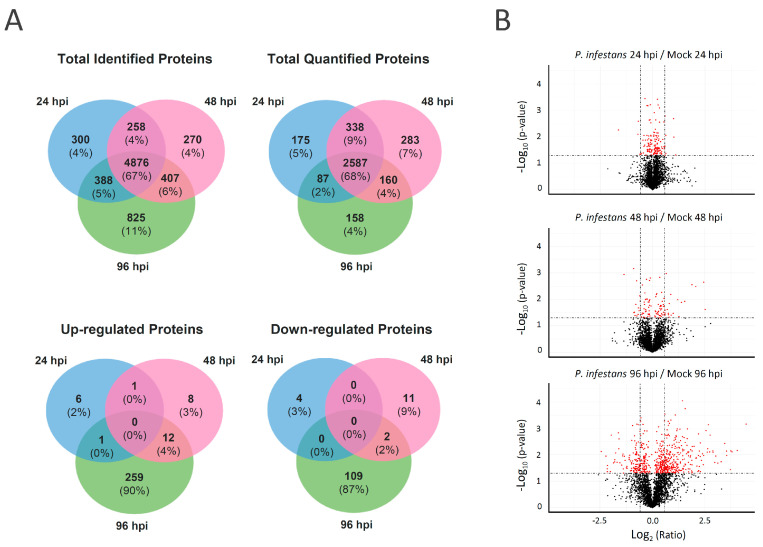
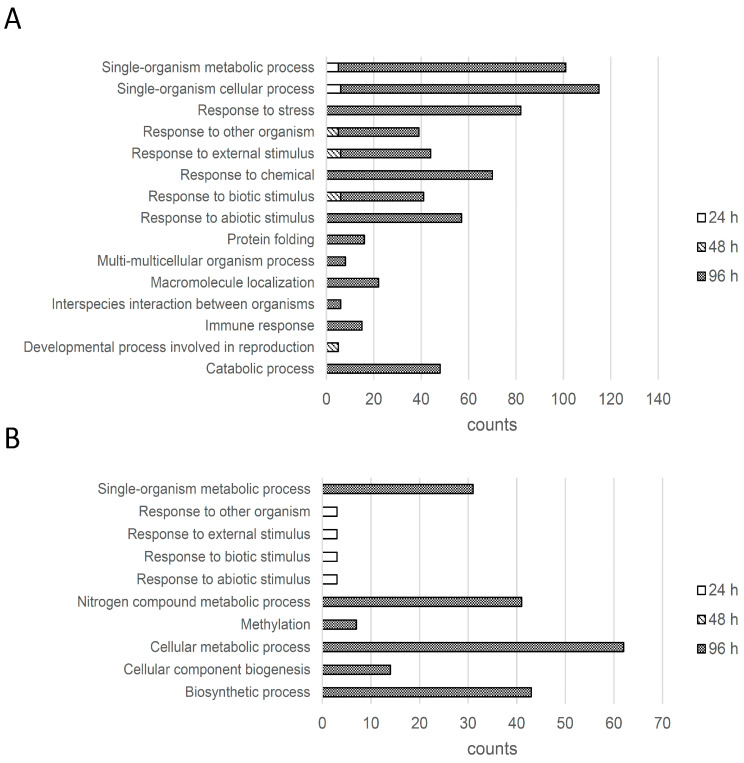
Late blight (LB) disease is a major threat to potato and tomato production. It is caused by the hemibiotrophic pathogen, . can destroy all of the major organs in plants of susceptible crops and result in a total loss of productivity. At the early pathogenesis stage, this hemibiotrophic oomycete pathogen causes an asymptomatic biotrophic infection in hosts, which then progresses to a necrotrophic phase at the later infection stage. In this study, to examine how the tomato proteome is regulated by at different stages of pathogenesis, a data-independent acquisition (DIA) proteomics approach was used to trace the dynamics of the protein regulation. A comprehensive picture of the regulation of tomato proteins functioning in the immunity, signaling, defense, and metabolism pathways at different stages of infection is revealed. Among the regulated proteins, several involved in mediating plant defense responses were found to be differentially regulated at the transcriptional or translational levels across different pathogenesis phases. This study increases understanding of the pathogenesis of in tomato and also identifies key transcriptional and translational events possibly targeted by the pathogen during different phases of its life cycle, thus providing novel insights for developing a new strategy towards better control of LB disease in tomato.
晚疫病(LB)是马铃薯和番茄生产的主要威胁。它是由半活体病原菌 引起的。 可以破坏易感作物的所有主要器官,导致生产力的全面丧失。在早期发病阶段,这种半活体卵菌病原菌在宿主中引起无症状的生物营养感染,然后在后期感染阶段进展为坏死营养阶段。在这项研究中,为了研究番茄蛋白质组在不同发病阶段如何被 调控,采用了一种数据非依赖性采集(DIA)蛋白质组学方法来追踪蛋白质调控的动态。揭示了番茄在免疫、信号转导、防御和代谢途径中发挥作用的蛋白质在 感染不同阶段的调控的综合情况。在所调控的蛋白质中,发现有几个参与调节植物防御反应的蛋白质在不同发病阶段的转录或翻译水平上存在差异调控。这项研究增加了对番茄中 发病机制的理解,同时也确定了病原菌在其生命周期的不同阶段可能靶向的关键转录和翻译事件,从而为开发更好地控制番茄 LB 病的新策略提供了新的见解。