Department of Medical Sciences, University of Torino, 10126 Torino, Italy.
Department of Agricultural, Forestry and Food Science, University of Torino, 10095 Torino, Italy.
Nutrients. 2021 Apr 12;13(4):1260. doi: 10.3390/nu13041260.
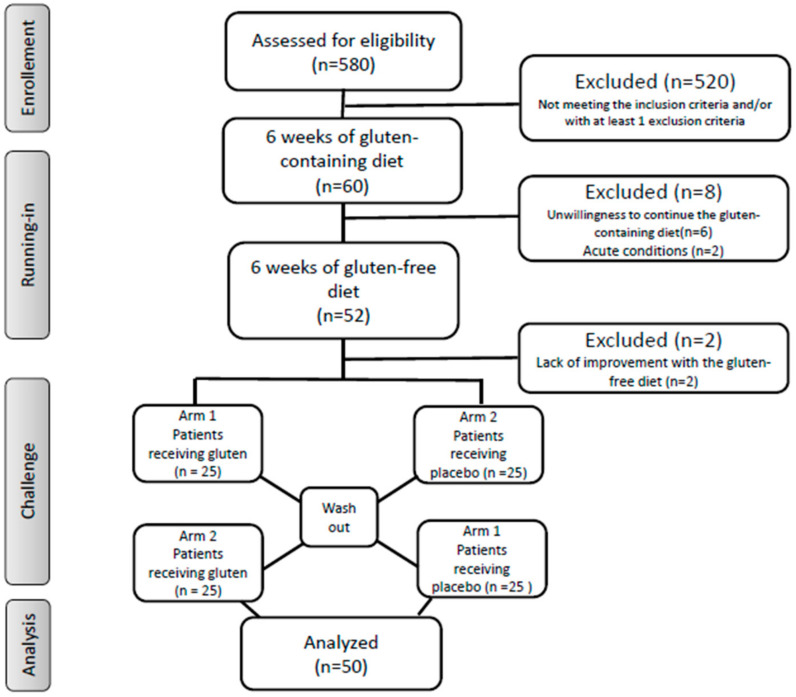
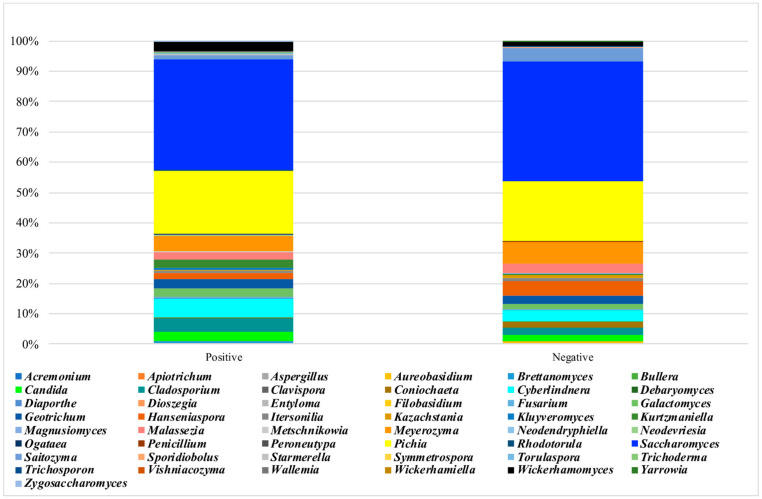
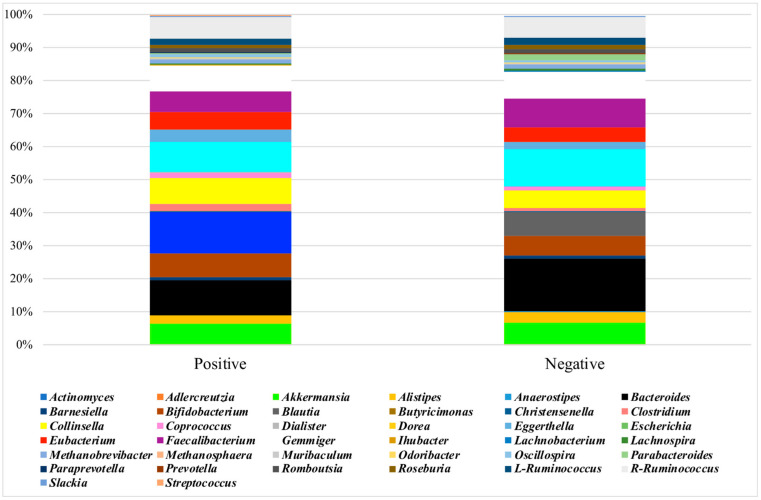
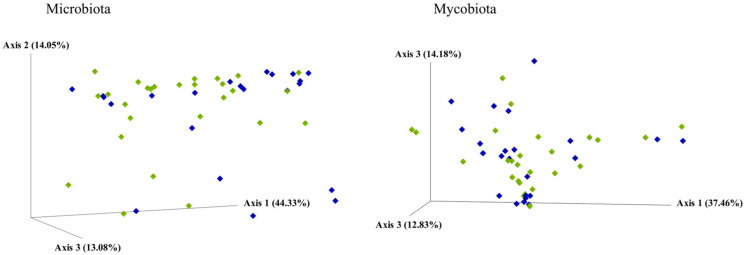
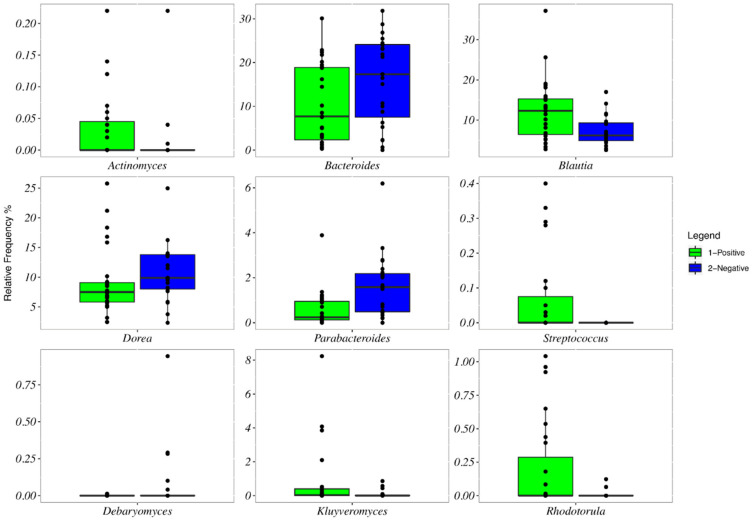
The aims of this observational "proof-of-concept" study were to analyze the clinical/psychological characteristics and gut microbiota/mycobiota composition of individuals with suspected non-celiac gluten/wheat sensitivity (NCGS/WS) according to responses to the double-blind-placebo-controlled (DBPC) crossover gluten challenge test. Fifty individuals with suspected NCGS/WS were subjected to the DBPC challenge test; anthropometric measurements, psychometric questionnaires, and fecal samples were collected. Twenty-seven (54%) participants were gluten responsive (NCGS), and 23 were placebo responsive, with an order effect. NCGS individuals displayed a significantly lower risk of eating disorders and a higher mental health score when compared to placebo-responsive participants, confirmed by multiple logistic regression analyses (OR = 0.87; 95% CI 0.76-0.98, = 0.021, and OR = 1.30; 95% CI 1.06-1.59, = 0.009, respectively). Principal coordinate analyses based on microbiota composition showed a separation by the DBPC response ( = 0.039). For ( = 0.05) and ( = 0.007), the frequency of amplicon sequence variants was lower, and that for ( = 0.009) and ( = 0.004) was higher in NCGS individuals at multiple regression analyses. No difference in the mycobiota composition was detected between the groups. In conclusion, almost half of the individuals with suspected gluten sensitivity reported symptoms with placebo; they showed lower mental health scores, increased risk for eating disorders, and a different gut microbiota composition.
本观察性“概念验证”研究的目的是根据双盲安慰剂对照(DBPC)交叉麸质挑战试验的反应,分析疑似非乳糜泻麸质/小麦敏感(NCGS/WS)个体的临床/心理特征和肠道菌群/真菌群组成。50 名疑似 NCGS/WS 的个体接受了 DBPC 挑战试验;收集了人体测量学测量、心理计量学问卷和粪便样本。27 名(54%)参与者对麸质有反应(NCGS),23 名对安慰剂有反应,存在顺序效应。通过多项逻辑回归分析证实,NCGS 个体的饮食障碍风险显著降低,心理健康评分较高,与安慰剂反应者相比(OR=0.87;95%CI 0.76-0.98,=0.021 和 OR=1.30;95%CI 1.06-1.59,=0.009)。基于微生物群落组成的主坐标分析显示,DBPC 反应存在分离(=0.039)。在多重回归分析中,对于(=0.05)和(=0.007),扩增子序列变异的频率较低,而对于(=0.009)和(=0.004),NCGS 个体的频率较高。两组之间的真菌群组成没有差异。总之,疑似麸质敏感性的个体中近一半报告有安慰剂症状;他们的心理健康评分较低,饮食障碍风险增加,肠道微生物群落组成不同。