Honari Arvin, Merillat Darrah A, Bellary Aditi, Ghaderi Mohammadaref, Sirsi Shashank R
Department of Bioengineering, Erik Johnson School of Engineering, The University of Texas at Dallas, Richardson, TX 75080, USA.
Department of Radiology, The University of Texas Southwestern Medical Center, 5323 Harry Hines Blvd, Dallas, TX 75390, USA.
Pharmaceutics. 2021 Apr 22;13(5):609. doi: 10.3390/pharmaceutics13050609.
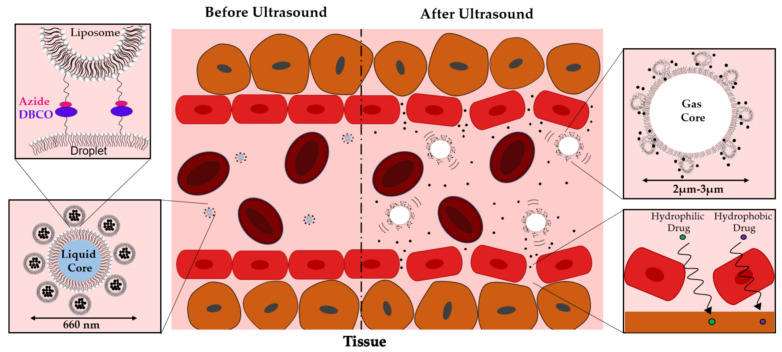
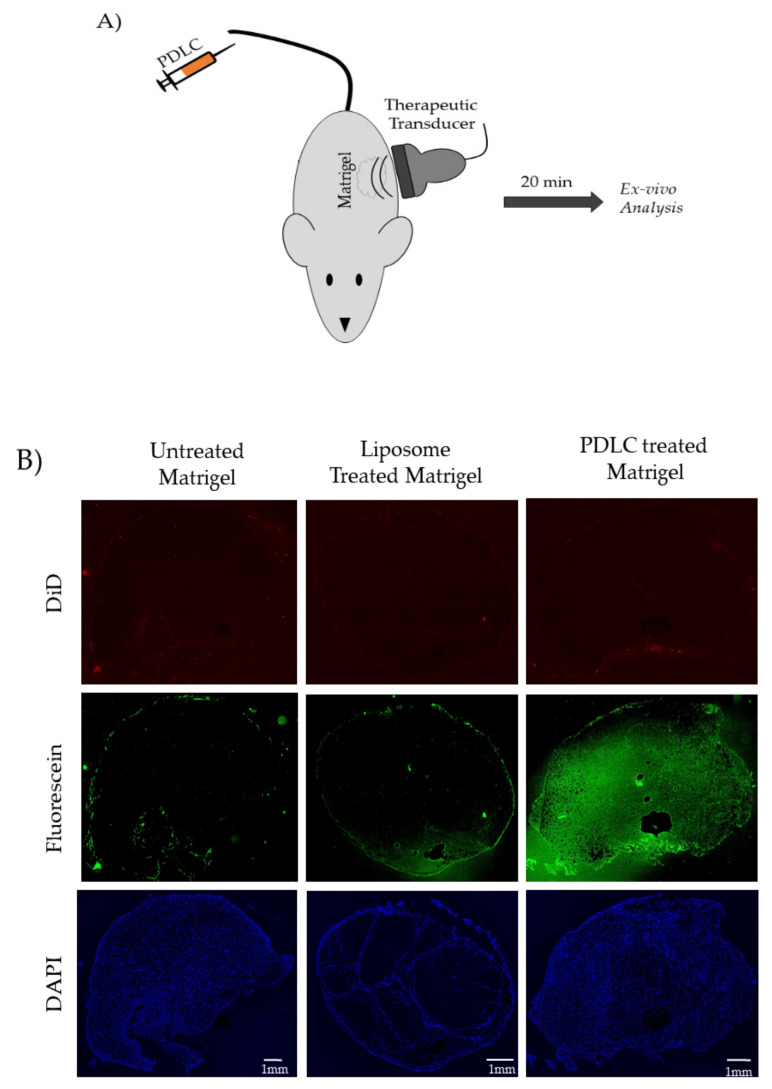
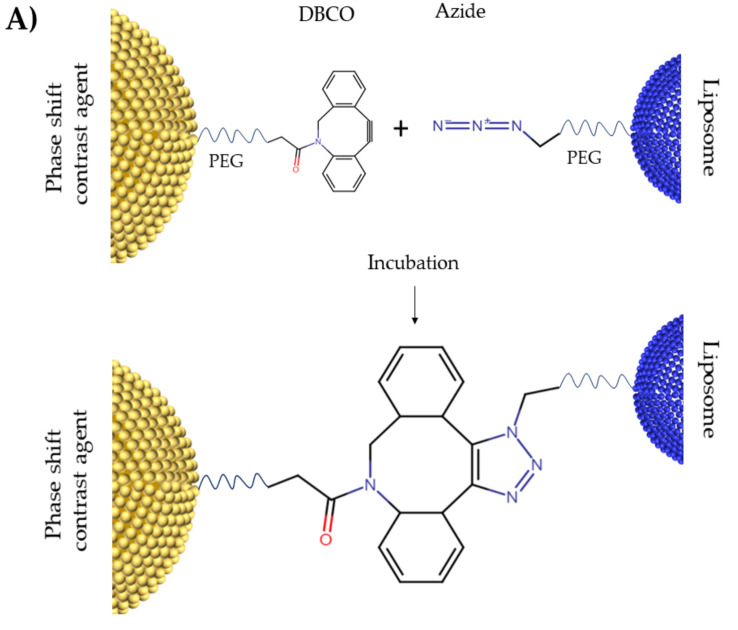
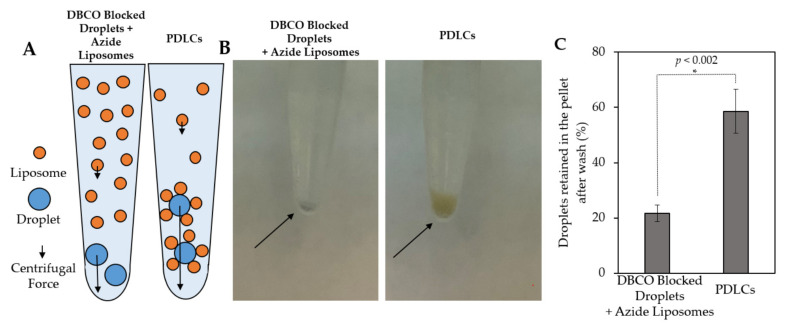
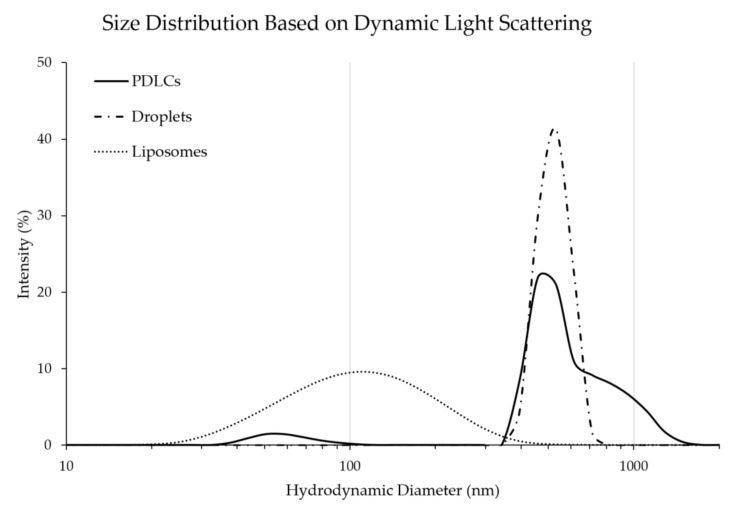
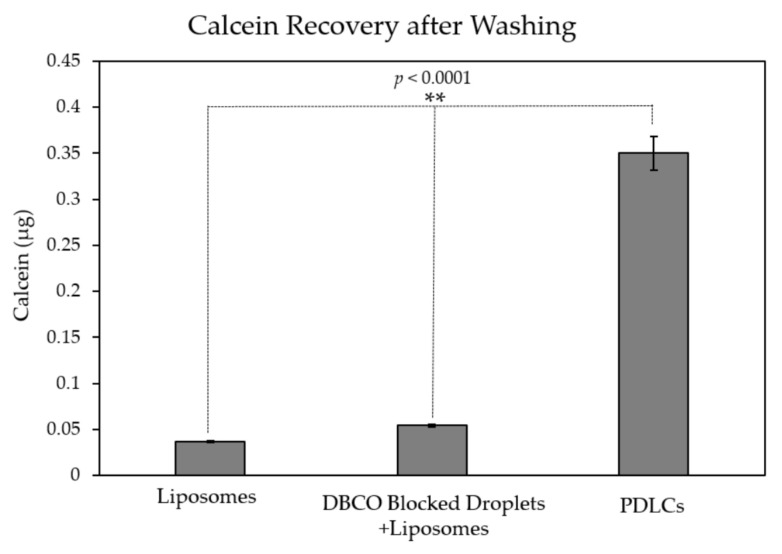
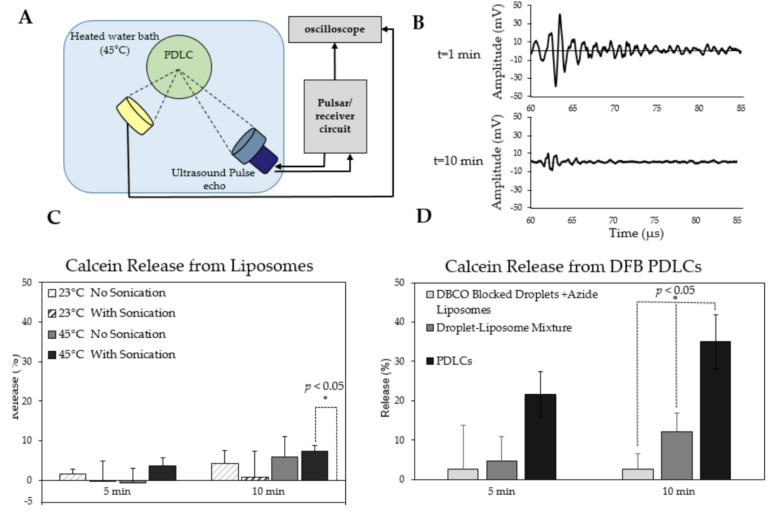
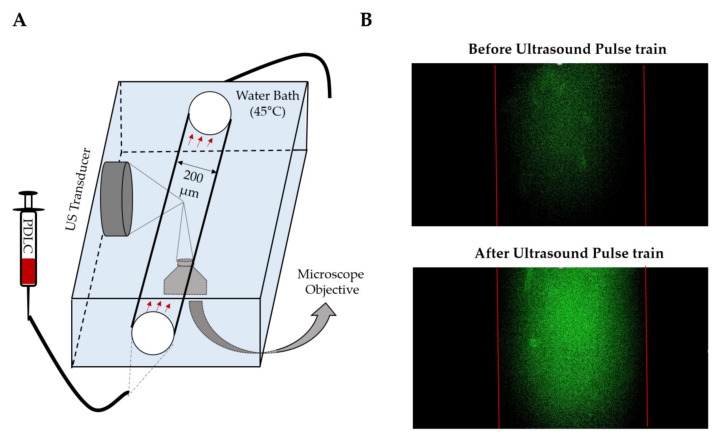
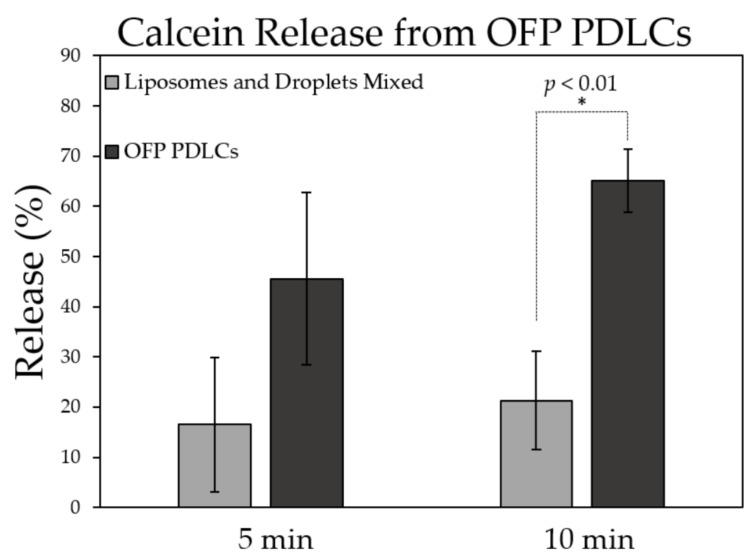
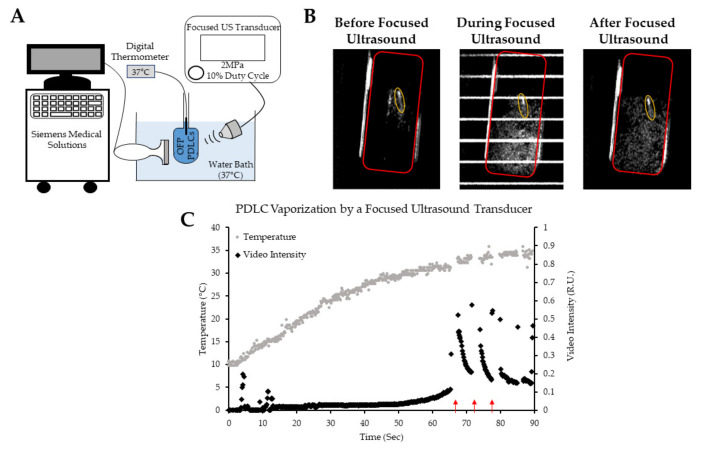
Active targeted delivery of small molecule drugs is becoming increasingly important in personalized therapies, especially in cancer, brain disorders, and a wide variety of other diseases. However, effective means of spatial targeting and delivering high drug payloads in vivo are still lacking. Focused ultrasound combined with superheated phase-shift nanodroplets, which vaporize into microbubbles using heat and sound, are rapidly becoming a popular strategy for targeted drug delivery. Focused ultrasound can target deep tissue with excellent spatial precision and without using ionizing energy, thus can activate nanodroplets in circulation. One of the main limitations of this technology has been poor drug loading in the droplet core or the shell material. To address this need, we have developed a strategy to combine low-boiling point decafluorabutane and octafluoropropane (DFB and OFP) nanodroplets with drug-loaded liposomes, creating phase-changeable droplet-liposome clusters (PDLCs). We demonstrate a facile method of assembling submicron PDLCs with high drug-loading capacity on the droplet surface. Furthermore, we demonstrate that chemical tethering of liposomes in PDLCs enables a rapid release of their encapsulated cargo upon acoustic activation (>60% using OFP-based PDLCs). Rapid uncaging of small molecule drugs would make them immediately bioavailable in target tissue or promote better penetration in local tissue following intravascular release. PDLCs developed in this study can be used to deliver a wide variety of liposome-encapsulated therapeutics or imaging agents for multi-modal imaging applications. We also outline a strategy to deliver a surrogate encapsulated drug, fluorescein, to tumors in vivo using focused ultrasound energy and PDLCs.
小分子药物的主动靶向递送在个性化治疗中变得越来越重要,尤其是在癌症、脑部疾病和多种其他疾病的治疗中。然而,在体内进行空间靶向和递送高药物载量的有效方法仍然缺乏。聚焦超声与过热相移纳米液滴相结合,利用热和声将其汽化为微泡,正迅速成为一种流行的靶向药物递送策略。聚焦超声能够以极高的空间精度靶向深部组织,且无需使用电离能量,因此能够激活循环中的纳米液滴。该技术的主要局限性之一在于液滴核心或壳材料中的药物负载量较低。为满足这一需求,我们开发了一种策略,将低沸点的十氟丁烷和八氟丙烷(DFB和OFP)纳米液滴与载药脂质体相结合,形成相变液滴-脂质体簇(PDLC)。我们展示了一种在液滴表面组装具有高药物负载能力的亚微米级PDLC的简便方法。此外,我们证明了PDLC中脂质体的化学连接能够在声学激活后使其包封的货物快速释放(基于OFP的PDLC释放率>60%)。小分子药物的快速释放将使其在靶组织中立即具有生物利用度,或在血管内释放后促进在局部组织中的更好渗透。本研究中开发的PDLC可用于递送多种脂质体包封的治疗剂或成像剂,用于多模态成像应用。我们还概述了一种使用聚焦超声能量和PDLC在体内将替代包封药物荧光素递送至肿瘤的策略。