Jakovljević Tamara, Janković Milica M, Savić Andrej M, Soldatović Ivan, Čolić Gordana, Jakulin Tadeja Jere, Papa Gregor, Ković Vanja
Jožef Stefan International Postgraduate School, 1000 Ljubljana, Slovenia.
School of Electrical Engineering, University of Belgrade, 11000 Belgrade, Serbia.
Brain Sci. 2021 Apr 25;11(5):539. doi: 10.3390/brainsci11050539.
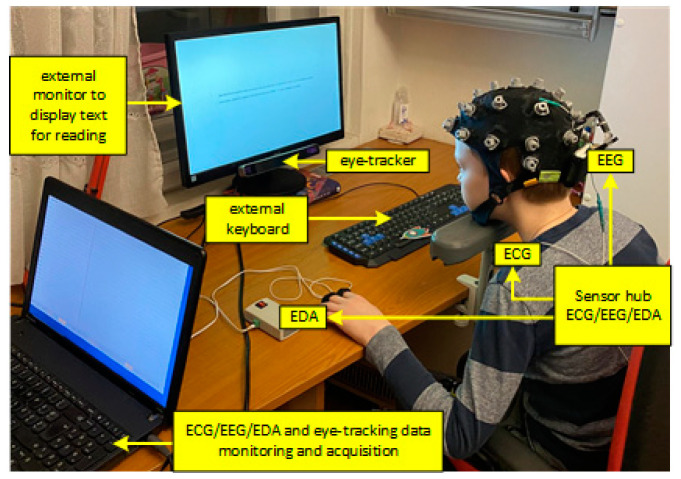
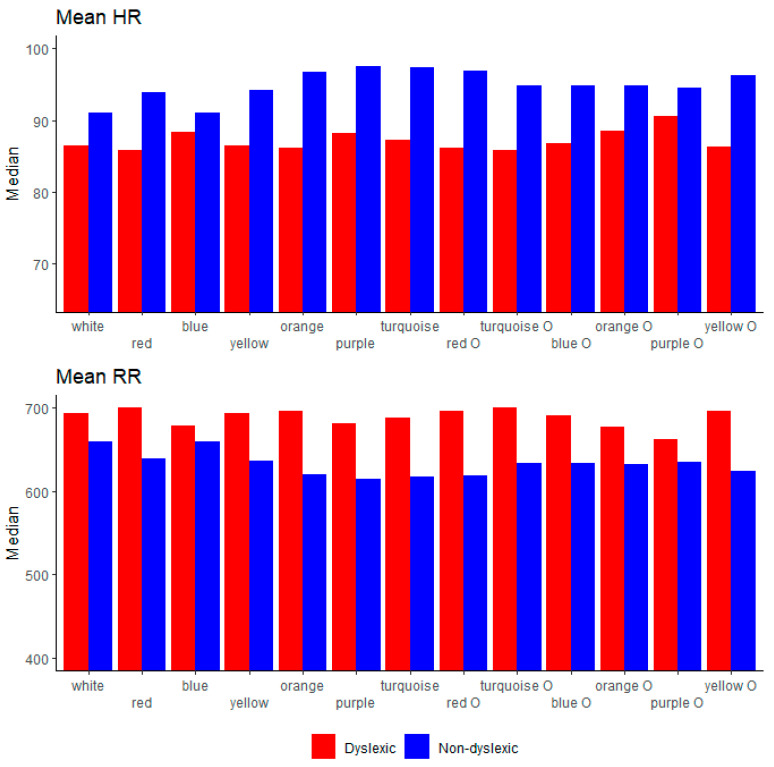
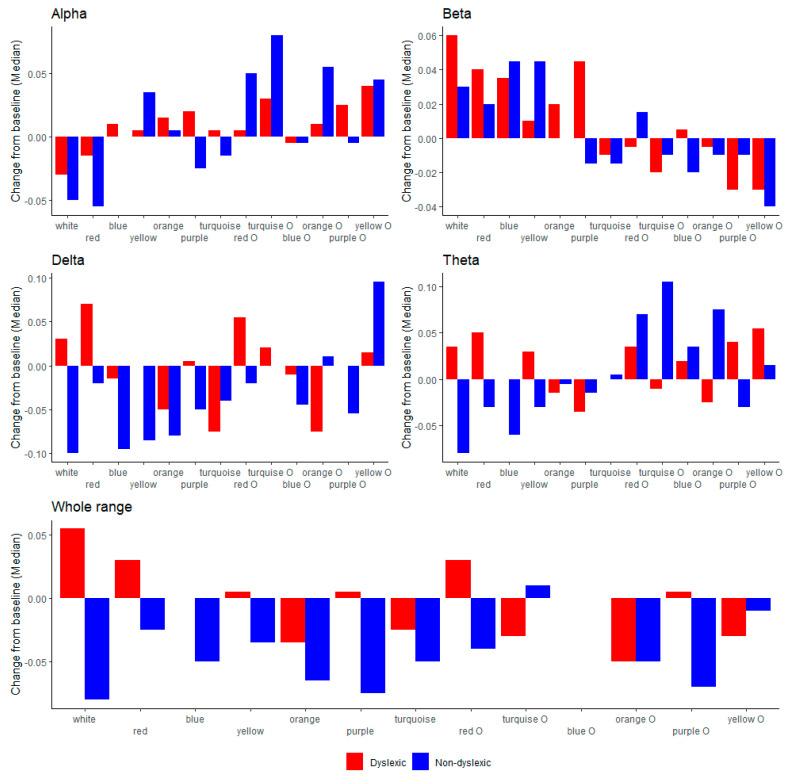
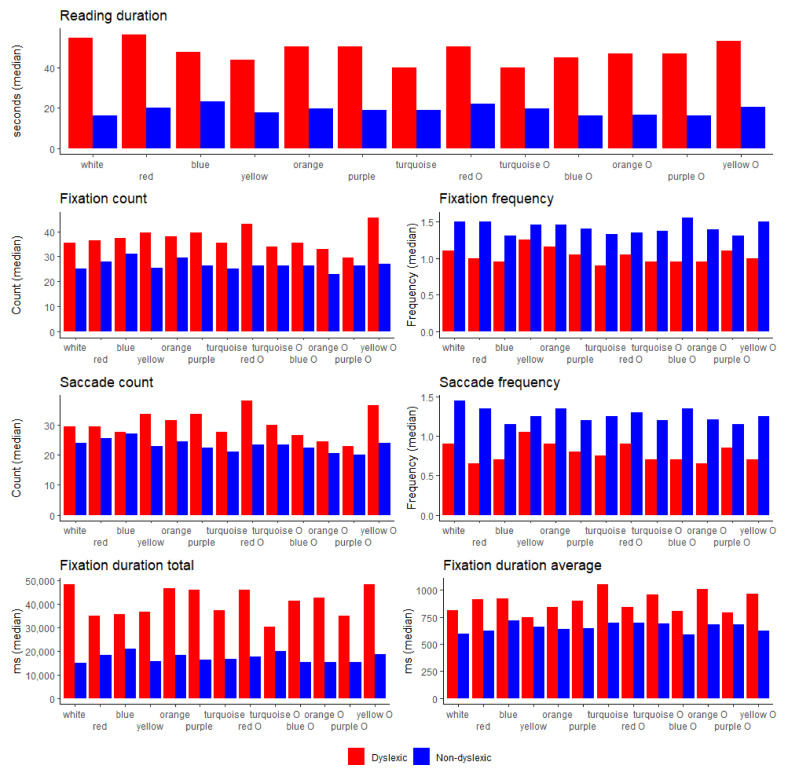
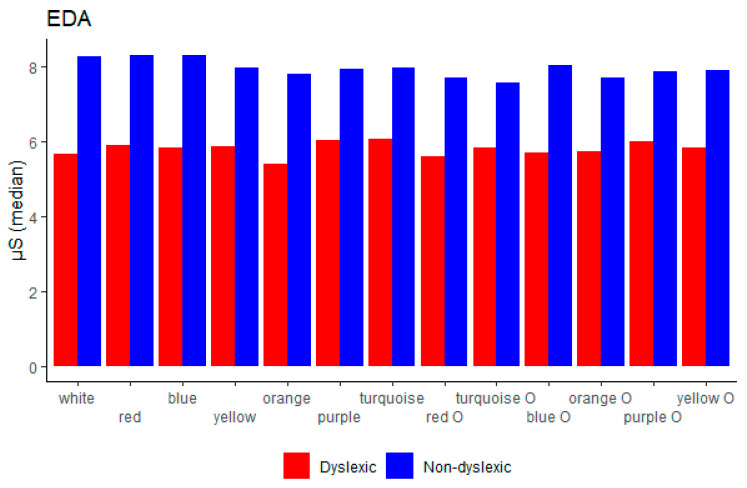
Reading is one of the essential processes during the maturation of an individual. It is estimated that 5-10% of school-age children are affected by dyslexia, the reading disorder characterised by difficulties in the accuracy or fluency of word recognition. There are many studies which have reported that coloured overlays and background could improve the reading process, especially in children with reading disorders. As dyslexia has neurobiological origins, the aim of the present research was to understand the relationship between physiological parameters and colour modifications in the text and background during reading in children with and without dyslexia. We have measured differences in electroencephalography (EEG), heart rate variability (HRV), electrodermal activities (EDA) and eye movements of the 36 school-age (from 8 to 12 years old) children (18 with dyslexia and 18 of control group) during the reading task in 13 combinations of background and overlay colours. Our findings showed that the dyslexic children have longer reading duration, fixation count, fixation duration average, fixation duration total, and longer saccade count, saccade duration total, and saccade duration average while reading on white and coloured background/overlay. It was found that the turquoise background, turquoise overlay, and yellow background colours are beneficial for dyslexic readers, as they achieved the shortest time duration of the reading tasks when these colours were used. Additionally, dyslexic children have higher values of beta (15-40 Hz) and the broadband EEG (0.5-40 Hz) power while reading in one particular colour (purple), as well as increasing theta range power while reading with the purple overlay. We have observed no significant differences between HRV parameters on white colour, except for single colours (purple, turquoise overlay, and yellow overlay) where the control group showed higher values for mean HR, while dyslexic children scored higher with mean RR. Regarding EDA measure, we found systematically lower values in children with dyslexia in comparison to the control group. Based on the present results, we can conclude that both pastel and intense background/overlays are beneficial for reading of both groups and all sensor modalities could be used to better understand the neurophysiological origins in dyslexic children.
阅读是个体成长过程中的重要环节之一。据估计,5%至10%的学龄儿童受诵读困难症影响,该阅读障碍的特征是在单词识别的准确性或流畅性方面存在困难。许多研究报告称,彩色覆盖物和背景可以改善阅读过程,尤其是对于有阅读障碍的儿童。由于诵读困难症具有神经生物学根源,本研究的目的是了解有诵读困难症和无诵读困难症儿童在阅读时生理参数与文本及背景颜色变化之间的关系。我们测量了36名学龄儿童(8至12岁)(18名患有诵读困难症,18名作为对照组)在13种背景和覆盖物颜色组合的阅读任务中的脑电图(EEG)、心率变异性(HRV)、皮肤电活动(EDA)和眼动差异。我们的研究结果表明,诵读困难症儿童在白色和彩色背景/覆盖物上阅读时,阅读持续时间更长、注视次数更多、平均注视持续时间更长、总注视持续时间更长,扫视次数更多、总扫视持续时间更长、平均扫视持续时间更长。研究发现,绿松石色背景、绿松石色覆盖物和黄色背景对诵读困难症读者有益,因为使用这些颜色时他们完成阅读任务的时间最短。此外,诵读困难症儿童在以一种特定颜色(紫色)阅读时,β波(15 - 40赫兹)和宽带脑电图(0.5 - 40赫兹)功率值更高,在使用紫色覆盖物阅读时θ波范围功率也增加。我们观察到,除了单一颜色(紫色、绿松石色覆盖物和黄色覆盖物)外,白色背景下HRV参数无显著差异,在单一颜色中,对照组的平均心率值较高,而诵读困难症儿童的平均RR值较高。关于EDA测量,我们发现诵读困难症儿童的值系统性地低于对照组。基于目前的结果,我们可以得出结论,柔和及鲜明的背景/覆盖物对两组的阅读都有益,并且所有感觉模态都可用于更好地理解诵读困难症儿童的神经生理学根源。