Jové Mariona, Mota-Martorell Natàlia, Torres Pascual, Ayala Victoria, Portero-Otin Manuel, Ferrer Isidro, Pamplona Reinald
Department of Experimental Medicine, Lleida Biomedical Research Institute (IRBLleida), Lleida University (UdL), 25198 Lleida, Spain.
Department of Pathology and Experimental Therapeutics, University of Barcelona, Bellvitge University Hospital/Bellvitge Biomedical Research Institute (IDIBELL), L'Hospitalet de Llobregat, 08907 Barcelona, Spain.
Life (Basel). 2021 Apr 25;11(5):388. doi: 10.3390/life11050388.
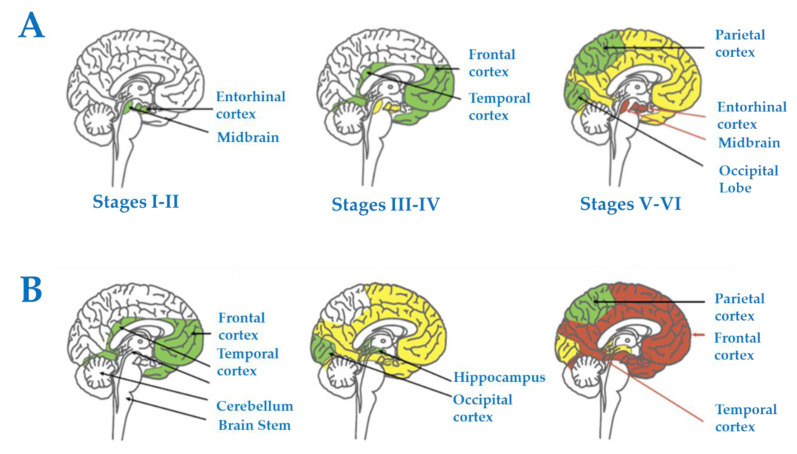
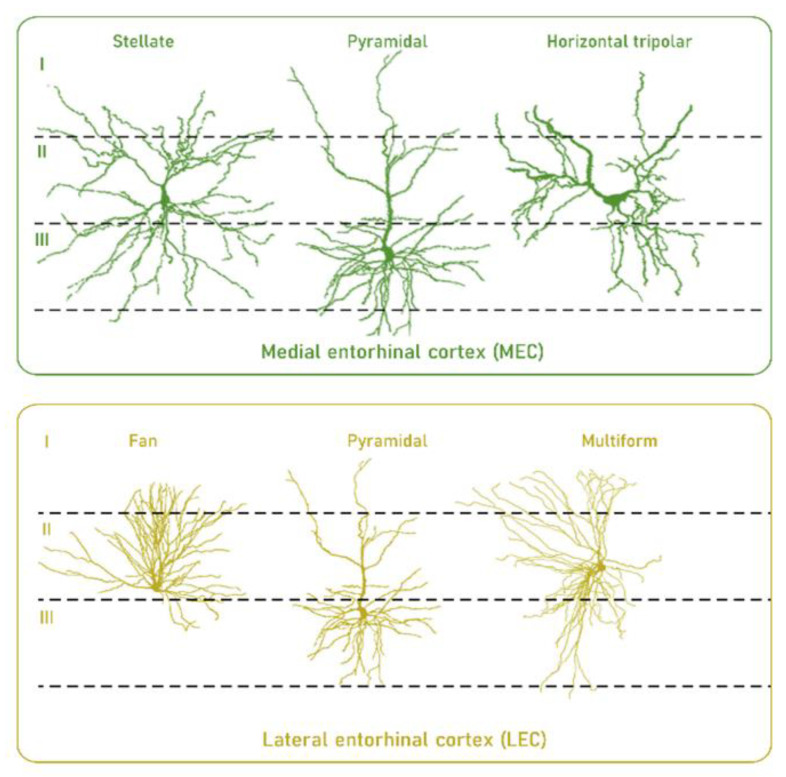
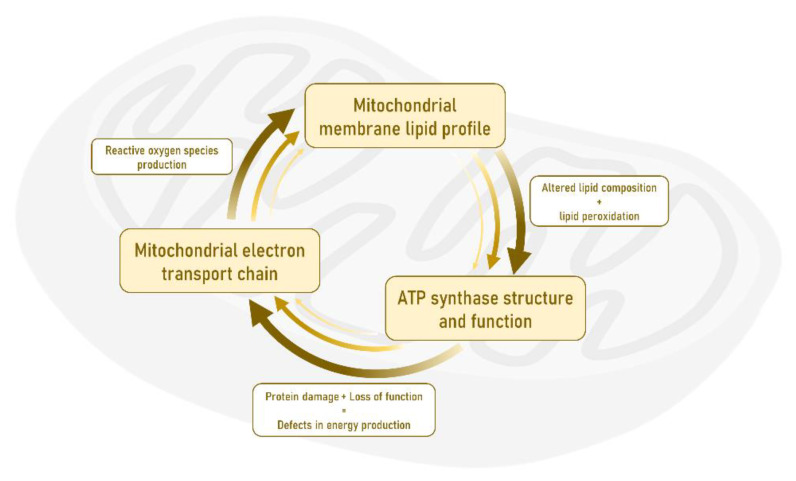
Current shreds of evidence point to the entorhinal cortex (EC) as the origin of the Alzheimer's disease (AD) pathology in the cerebrum. Compared with other cortical areas, the neurons from this brain region possess an inherent selective vulnerability derived from particular oxidative stress conditions that favor increased mitochondrial molecular damage with early bioenergetic involvement. This alteration of energy metabolism is the starting point for subsequent changes in a multitude of cell mechanisms, leading to neuronal dysfunction and, ultimately, cell death. These events are induced by changes that come with age, creating the substrate for the alteration of several neuronal pathways that will evolve toward neurodegeneration and, consequently, the development of AD pathology. In this context, the present review will focus on description of the biological mechanisms that confer vulnerability specifically to neurons of the entorhinal cortex, the changes induced by the aging process in this brain region, and the alterations at the mitochondrial level as the earliest mechanism for the development of AD pathology. Current findings allow us to propose the existence of an altered allostatic mechanism at the entorhinal cortex whose core is made up of mitochondrial oxidative stress, lipid metabolism, and energy production, and which, in a positive loop, evolves to neurodegeneration, laying the basis for the onset and progression of AD pathology.
目前的证据表明,内嗅皮层(EC)是大脑中阿尔茨海默病(AD)病理的起源。与其他皮质区域相比,该脑区的神经元具有内在的选择性易损性,这源于特定的氧化应激条件,这种条件有利于增加线粒体分子损伤并早期涉及生物能量代谢。能量代谢的这种改变是众多细胞机制后续变化的起点,导致神经元功能障碍,并最终导致细胞死亡。这些事件是由年龄增长带来的变化引发的,为几种神经元通路的改变创造了条件,这些通路将朝着神经退行性变发展,进而导致AD病理的发展。在此背景下,本综述将重点描述赋予内嗅皮层神经元特异性易损性的生物学机制、该脑区衰老过程引起的变化以及线粒体水平的改变作为AD病理发展的最早机制。目前的研究结果使我们能够提出,在内嗅皮层存在一种改变的应激适应机制,其核心由线粒体氧化应激、脂质代谢和能量产生组成,并且以正反馈循环的方式演变为神经退行性变,为AD病理的发生和发展奠定基础。