Ortíz Raúl, Quiñonero Francisco, García-Pinel Beatriz, Fuel Marco, Mesas Cristina, Cabeza Laura, Melguizo Consolación, Prados Jose
Institute of Biopathology and Regenerative Medicine (IBIMER), Center of Biomedical Research (CIBM), University of Granada, 18100 Granada, Spain.
Department of Anatomy and Embriology, Faculty of Medicine, University of Granada, 18071 Granada, Spain.
Cancers (Basel). 2021 Apr 24;13(9):2058. doi: 10.3390/cancers13092058.
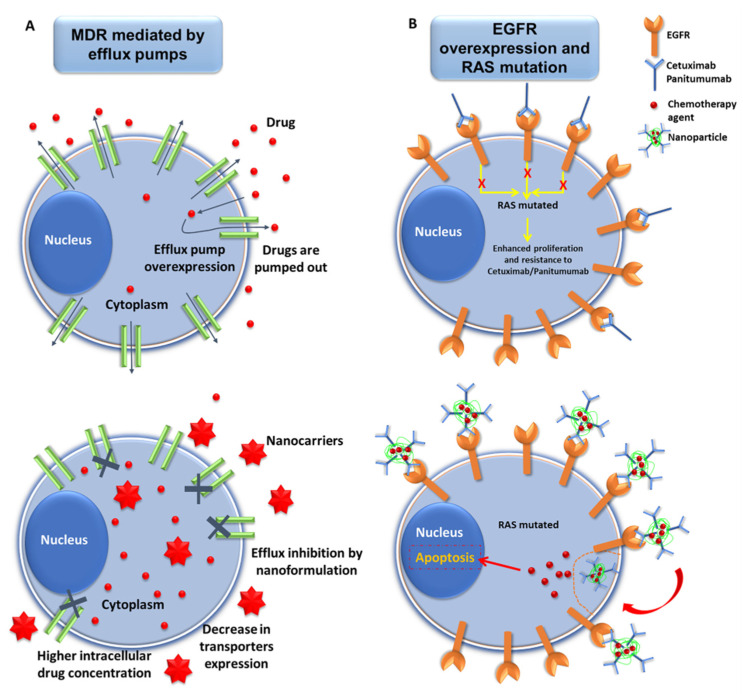
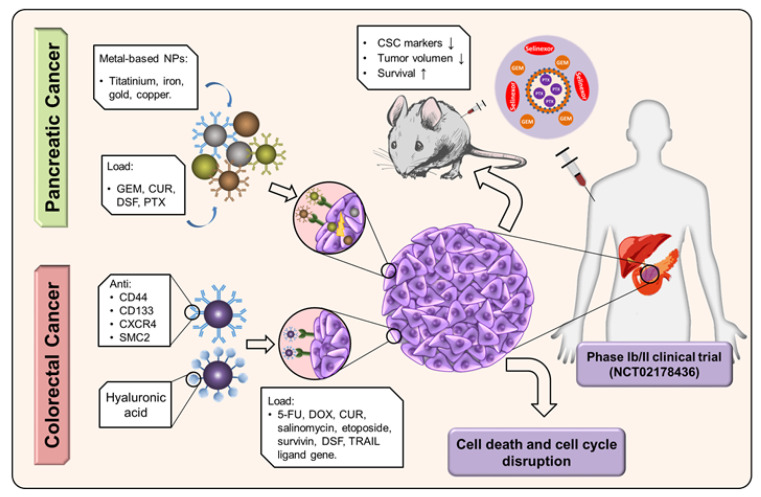
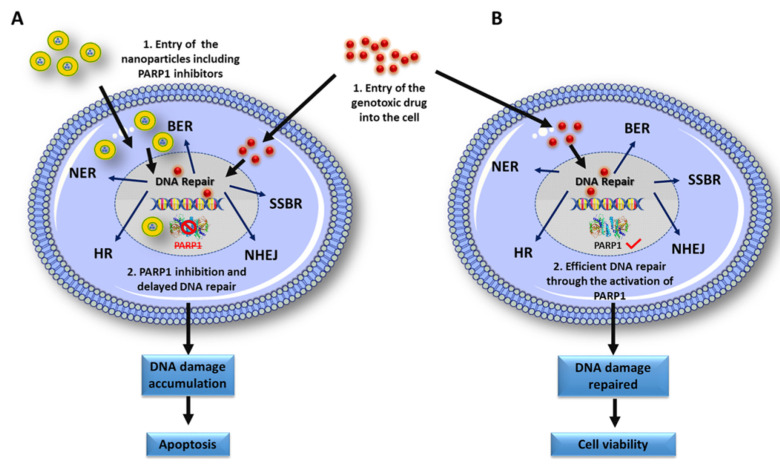
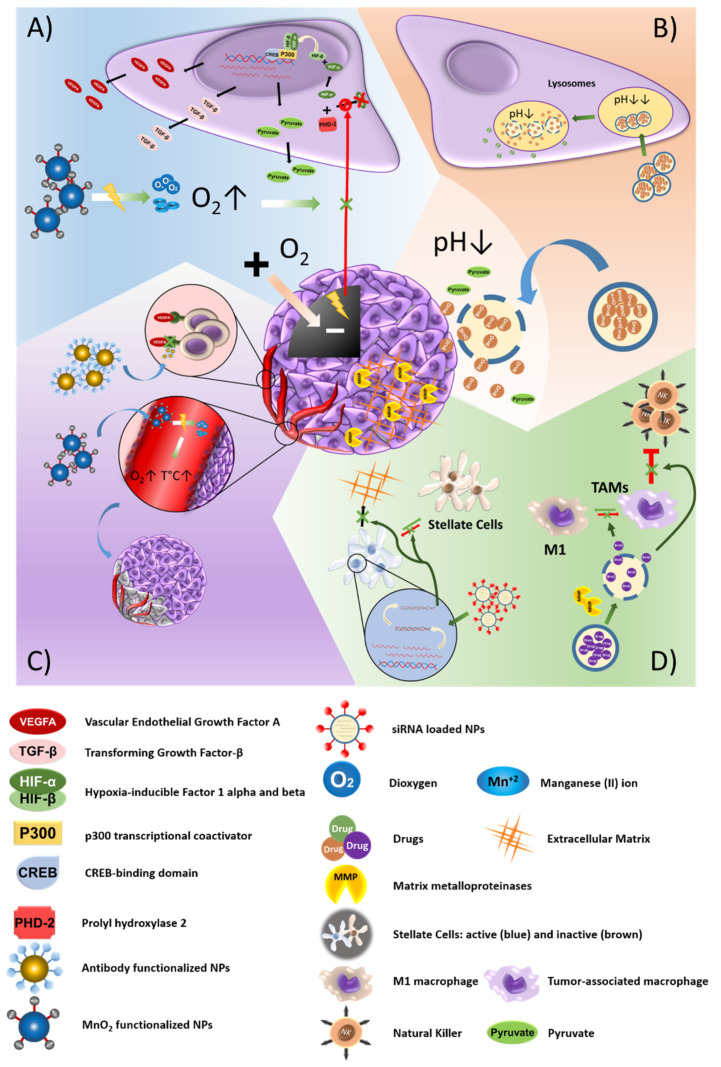
The development of drug resistance is one of the main causes of cancer treatment failure. This phenomenon occurs very frequently in different types of cancer, including colon and pancreatic cancers. However, the underlying molecular mechanisms are not fully understood. In recent years, nanomedicine has improved the delivery and efficacy of drugs, and has decreased their side effects. In addition, it has allowed to design drugs capable of avoiding certain resistance mechanisms of tumors. In this article, we review the main resistance mechanisms in colon and pancreatic cancers, along with the most relevant strategies offered by nanodrugs to overcome this obstacle. These strategies include the inhibition of efflux pumps, the use of specific targets, the development of nanomedicines affecting the environment of cancer-specific tissues, the modulation of DNA repair mechanisms or RNA (miRNA), and specific approaches to damage cancer stem cells, among others. This review aims to illustrate how advanced nanoformulations, including polymeric conjugates, micelles, dendrimers, liposomes, metallic and carbon-based nanoparticles, are allowing to overcome one of the main limitations in the treatment of colon and pancreatic cancers. The future development of nanomedicine opens new horizons for cancer treatment.
耐药性的产生是癌症治疗失败的主要原因之一。这种现象在包括结肠癌和胰腺癌在内的不同类型癌症中非常频繁地出现。然而,其潜在的分子机制尚未完全了解。近年来,纳米医学改善了药物的递送和疗效,并降低了其副作用。此外,它还使得能够设计出能够避开肿瘤某些耐药机制的药物。在本文中,我们综述了结肠癌和胰腺癌中的主要耐药机制,以及纳米药物为克服这一障碍提供的最相关策略。这些策略包括抑制外排泵、使用特定靶点、开发影响癌症特异性组织环境的纳米药物、调节DNA修复机制或RNA(miRNA),以及损伤癌症干细胞的特定方法等。本综述旨在说明包括聚合物缀合物、胶束、树枝状大分子、脂质体、金属和碳基纳米颗粒在内的先进纳米制剂如何能够克服结肠癌和胰腺癌治疗中的主要局限性之一。纳米医学的未来发展为癌症治疗开辟了新的前景。