De Brun Laureana, Leites Mauro, Furtado Agustín, Campos Fabricio, Roehe Paulo, Puentes Rodrigo
Departamento de Patobiología, Facultad de Veterinaria, Universidad de la República, Montevideo 11600, Uruguay.
Laboratório de Bioinformática & Biotecnologia, Campus de Gurupi, Universidade Federal do Tocantins, Gurupi 77410-530, Brazil.
Vaccines (Basel). 2021 Apr 20;9(4):408. doi: 10.3390/vaccines9040408.
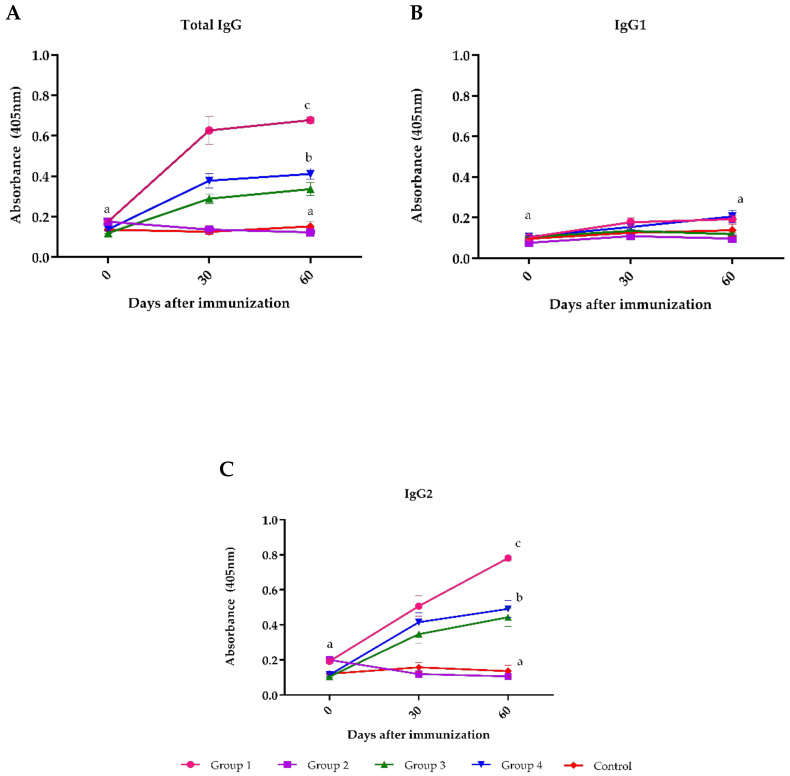
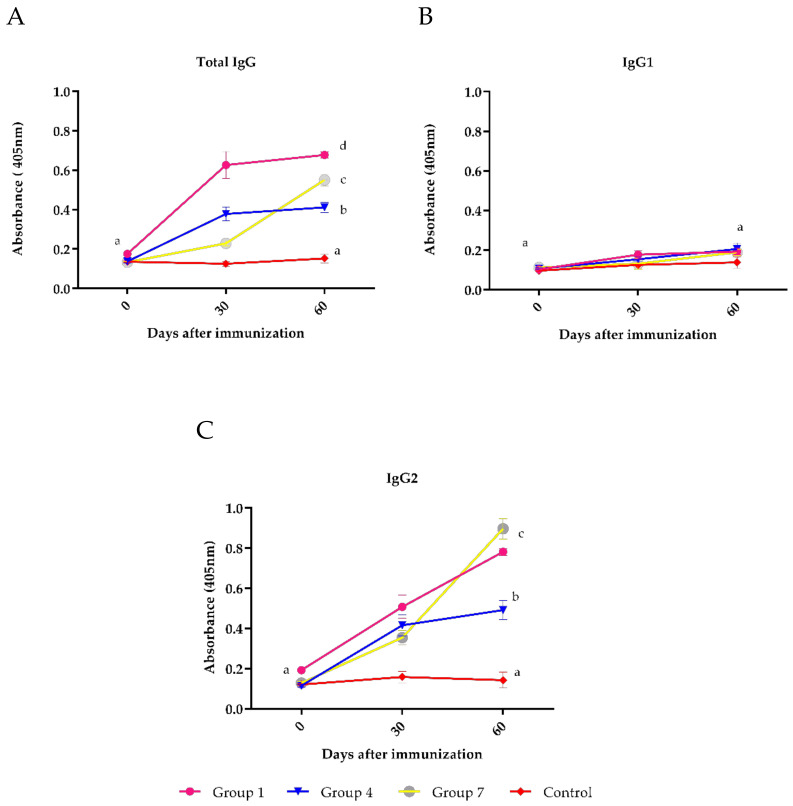
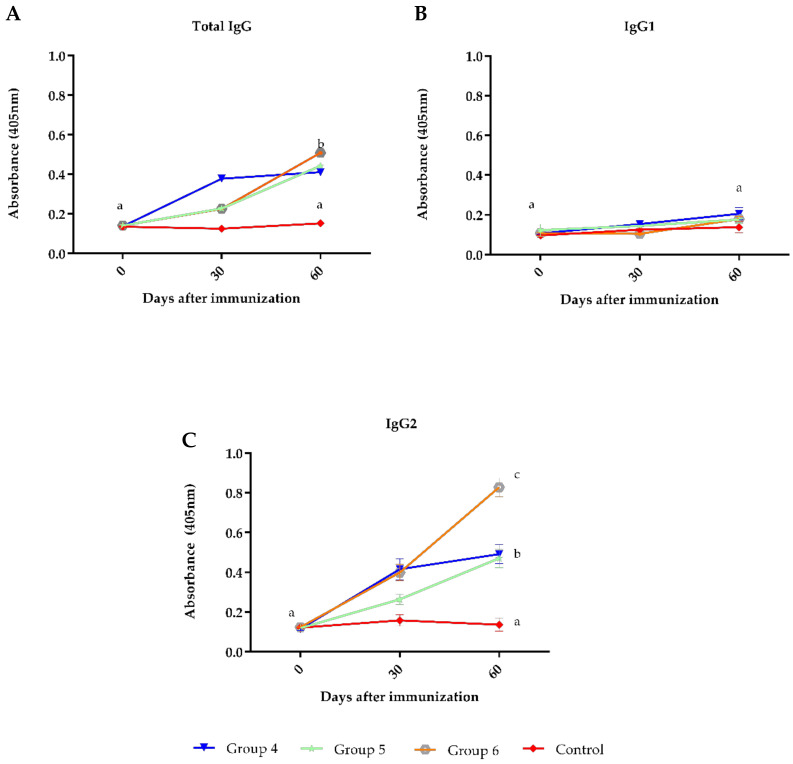
is ubiquitous in cattle populations and is associated with several clinical syndromes, including respiratory disease, genital disease, infertility and abortions. Control of the virus in many parts of the world is achieved primarily through vaccination with either inactivated or live modified viral vaccines. The objective of this study was to evaluate the performance of four commercially available BoHV-1 vaccines commonly used in Central and South America. Animals were divided into eight groups and vaccinated on days 0 and 30. Groups 1 to 4 received two doses of four different BoHV-1 commercial vaccines (named A to D). Groups 5 and 6 received vaccine D plus a vaccine for either Clostridial or Food-and-Mouth-Disease (FMD), respectively. Group 7 received one dose of two different brands of reproductive vaccines. Serum samples were collected from all animals on days 0, 30 and 60 to evaluate neutralizing and isotype-specific (IgG1 and IgG2) antibodies. Of the four commercial vaccines evaluated, only vaccine A induced neutralizing antibodies to titers ≥ 1:8 in 13/15 (86%) of the animals 60 days post-vaccination. Levels of IgG2 antibody increased in all groups, except for group 2 after the first dose of vaccine B. These results show that only vaccine A induced significant and detectable levels of BoHV-1-neutralizing antibodies. The combination of vaccine D with Clostridial or FMD vaccines did not affect neutralizing antibody responses to BoHV-1. The antibody responses of three of the four commercial vaccines analyzed here were lower than admissible by vaccine A. These results may be from vaccination failure, but means to identify the immune signatures predictive of clinical protection against BoHV-1 in cattle should also be considered.
在牛群中普遍存在,并与多种临床综合征相关,包括呼吸道疾病、生殖系统疾病、不育和流产。在世界许多地区,主要通过接种灭活或减毒活病毒疫苗来控制该病毒。本研究的目的是评估中美洲和南美洲常用的四种市售牛疱疹病毒1型(BoHV-1)疫苗的性能。将动物分为八组,并在第0天和第30天进行接种。第1至4组接受两剂四种不同的BoHV-1商业疫苗(分别命名为A至D)。第5组和第6组分别接受疫苗D加一种用于梭菌或口蹄疫(FMD)的疫苗。第7组接受一剂两种不同品牌的生殖疫苗。在第0天、第30天和第60天从所有动物采集血清样本,以评估中和抗体以及同型特异性(IgG1和IgG2)抗体。在所评估的四种商业疫苗中,只有疫苗A在接种疫苗60天后使13/15(86%)的动物产生了滴度≥1:8的中和抗体。除了在接种第一剂疫苗B后的第2组外,所有组的IgG2抗体水平均有所升高。这些结果表明,只有疫苗A诱导产生了显著且可检测到的BoHV-1中和抗体水平。疫苗D与梭菌或FMD疫苗的联合使用并未影响对BoHV-1的中和抗体反应。这里分析的四种商业疫苗中有三种的抗体反应低于疫苗A的可接受水平。这些结果可能是由于疫苗接种失败,但也应考虑确定预测牛对BoHV-1临床保护的免疫特征的方法。