College of Pharmacy, Pusan National University, Busan 46214, Korea.
Cells. 2021 Apr 13;10(4):880. doi: 10.3390/cells10040880.
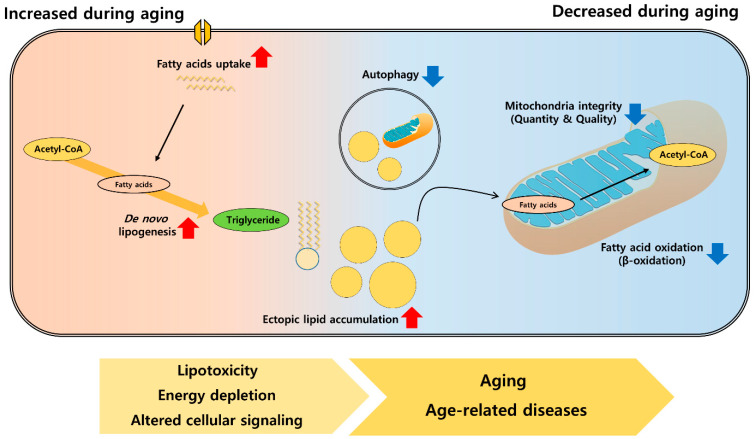
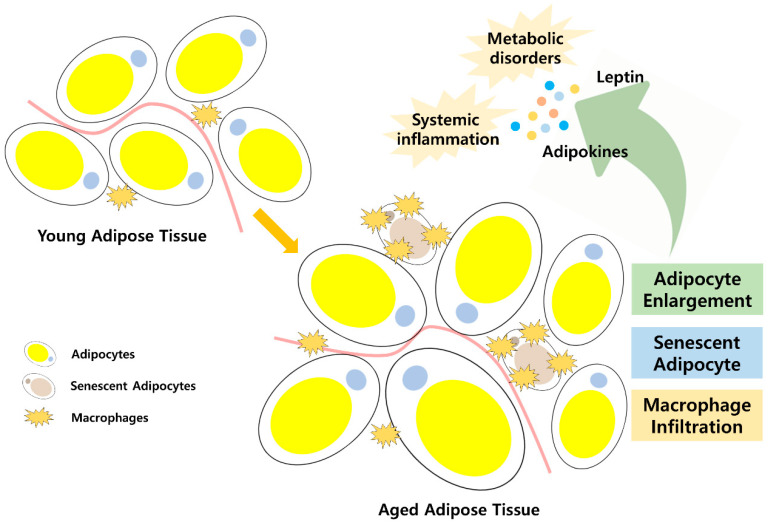
During aging, body adiposity increases with changes in the metabolism of lipids and their metabolite levels. Considering lipid metabolism, excess adiposity with increased lipotoxicity leads to various age-related diseases, including cardiovascular disease, cancer, arthritis, type 2 diabetes, and Alzheimer's disease. However, the multifaceted nature and complexities of lipid metabolism make it difficult to delineate its exact mechanism and role during aging. With advances in genetic engineering techniques, recent studies have demonstrated that changes in lipid metabolism are associated with aging and age-related diseases. Lipid accumulation and impaired fatty acid utilization in organs are associated with pathophysiological phenotypes of aging. Changes in adipokine levels contribute to aging by modulating changes in systemic metabolism and inflammation. Advances in lipidomic techniques have identified changes in lipid profiles that are associated with aging. Although it remains unclear how lipid metabolism is regulated during aging, or how lipid metabolites impact aging, evidence suggests a dynamic role for lipid metabolism and its metabolites as active participants of signaling pathways and regulators of gene expression. This review describes recent advances in our understanding of lipid metabolism in aging, including established findings and recent approaches.
随着脂质代谢及其代谢物水平的变化,衰老过程中体脂增加。考虑到脂质代谢,脂肪毒性增加导致的过多脂肪堆积会导致各种与年龄相关的疾病,包括心血管疾病、癌症、关节炎、2 型糖尿病和阿尔茨海默病。然而,脂质代谢的多面性和复杂性使得难以描绘其在衰老过程中的确切机制和作用。随着基因工程技术的进步,最近的研究表明,脂质代谢的变化与衰老和与年龄相关的疾病有关。器官中的脂质积累和脂肪酸利用受损与衰老的病理表型有关。脂联素水平的变化通过调节全身代谢和炎症来影响衰老。脂质组学技术的进步已经确定了与衰老相关的脂质谱变化。尽管尚不清楚脂质代谢在衰老过程中是如何调节的,或者脂质代谢物如何影响衰老,但有证据表明脂质代谢及其代谢物作为信号通路的活跃参与者和基因表达的调节剂发挥着动态作用。本综述描述了我们对衰老过程中脂质代谢的最新理解,包括已确立的发现和最近的方法。