Department of Molecular, Cellular, and Developmental Biology, University of California, Santa Barbara, CA 93106, USA.
Neuroscience Research Institute, University of California, Santa Barbara, CA 93106, USA.
Viruses. 2021 Apr 28;13(5):783. doi: 10.3390/v13050783.
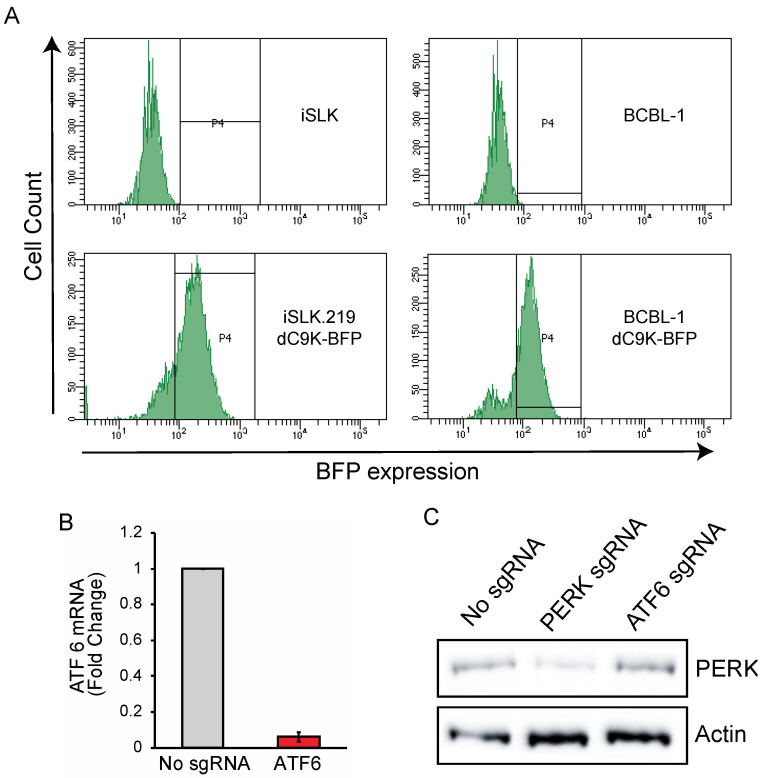
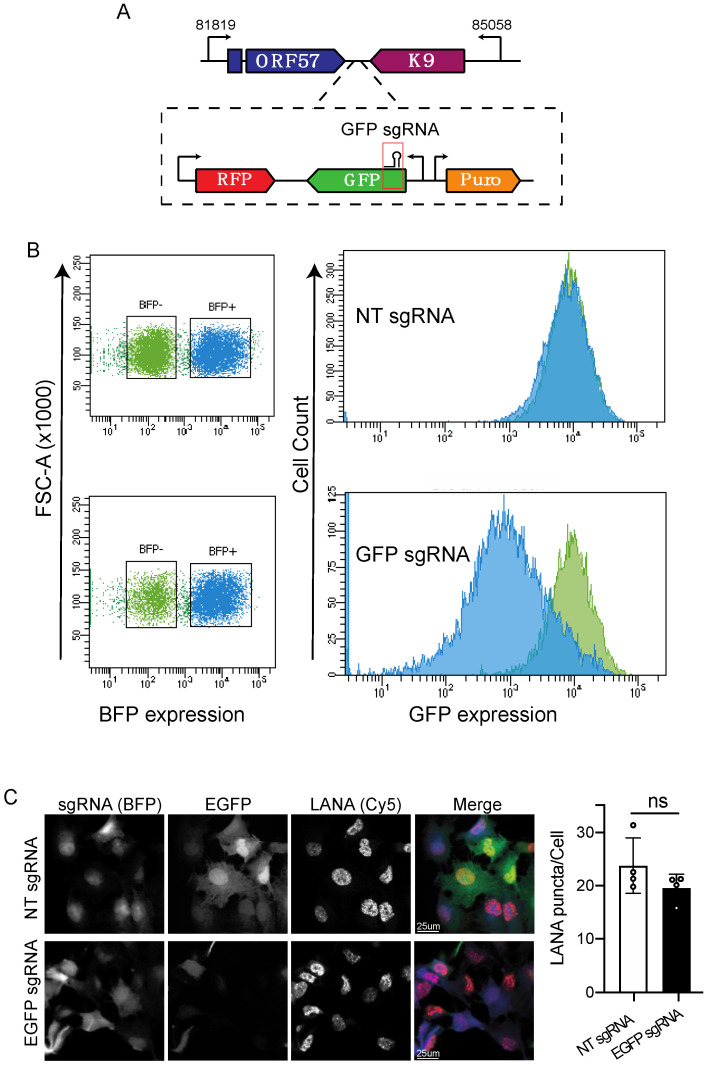
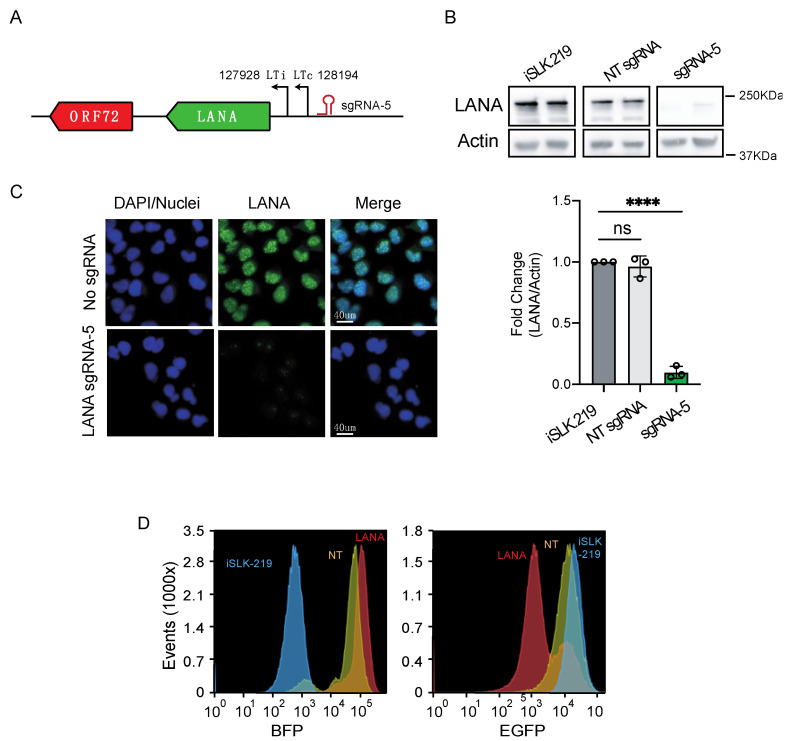
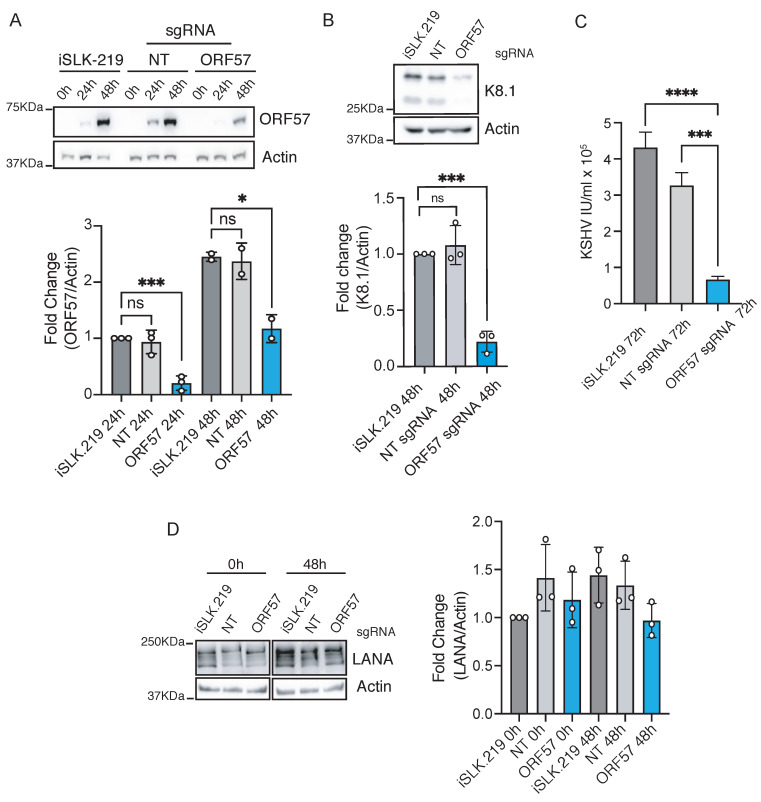
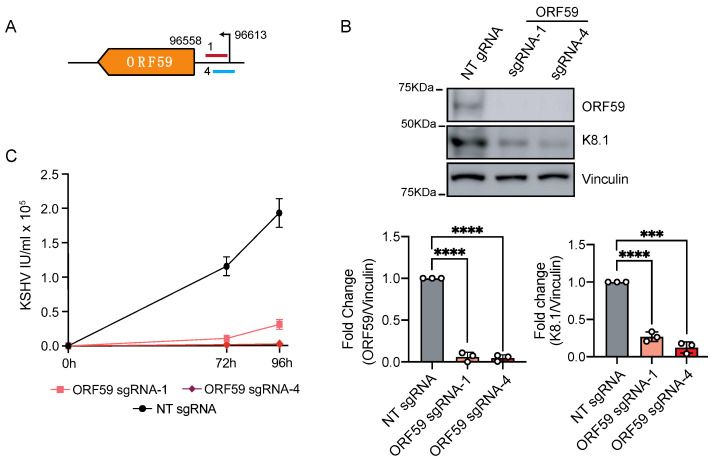
Uncovering viral gene functions requires the modulation of gene expression through overexpression or loss-of-function. CRISPR interference (CRISPRi), a modification of the CRISPR-Cas9 gene editing technology, allows specific and efficient transcriptional silencing without genetic ablation. CRISPRi has been used to silence eukaryotic and prokaryotic genes at the single-gene and genome-wide levels. Here, we report the use of CRISPRi to silence latent and lytic viral genes, with an efficiency of ~80-90%, in epithelial and B-cells carrying multiple copies of the Kaposi's sarcoma-associated herpesvirus (KSHV) genome. Our results validate CRISPRi for the analysis of KSHV viral elements, providing a functional genomics tool for studying virus-host interactions.
揭示病毒基因功能需要通过过表达或基因功能丧失来调节基因表达。CRISPR 干扰(CRISPRi)是对 CRISPR-Cas9 基因编辑技术的修改,它允许在不进行遗传消融的情况下特异性和有效地进行转录沉默。CRISPRi 已被用于在单细胞和全基因组水平上沉默真核和原核基因。在这里,我们报告了使用 CRISPRi 来沉默潜伏和裂解病毒基因,效率约为 80-90%,在携带卡波济氏肉瘤相关疱疹病毒(KSHV)基因组的多个拷贝的上皮细胞和 B 细胞中。我们的结果验证了 CRISPRi 用于分析 KSHV 病毒元件,为研究病毒-宿主相互作用提供了一种功能基因组学工具。