Duan Lixia, Liu Chenxi, Wang Dan
School of Medicine and Health Management, Tongji Medical School, Huazhong University of Science and Technology, Wuhan 430030, China.
Antibiotics (Basel). 2021 Apr 26;10(5):497. doi: 10.3390/antibiotics10050497.
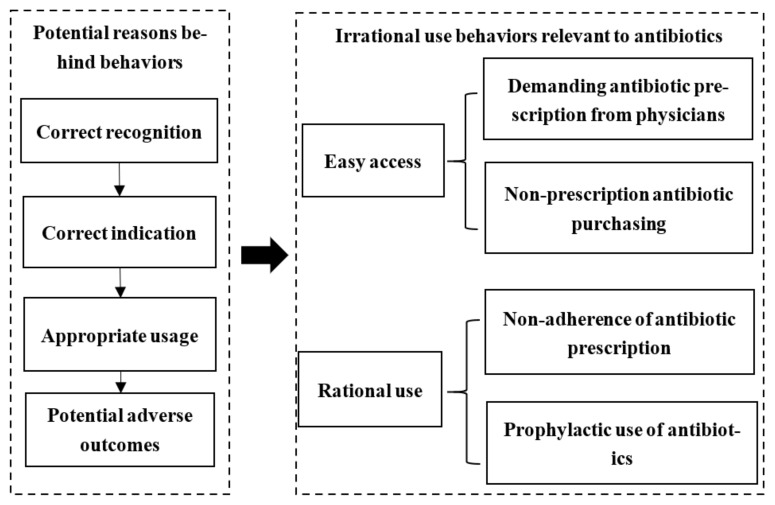
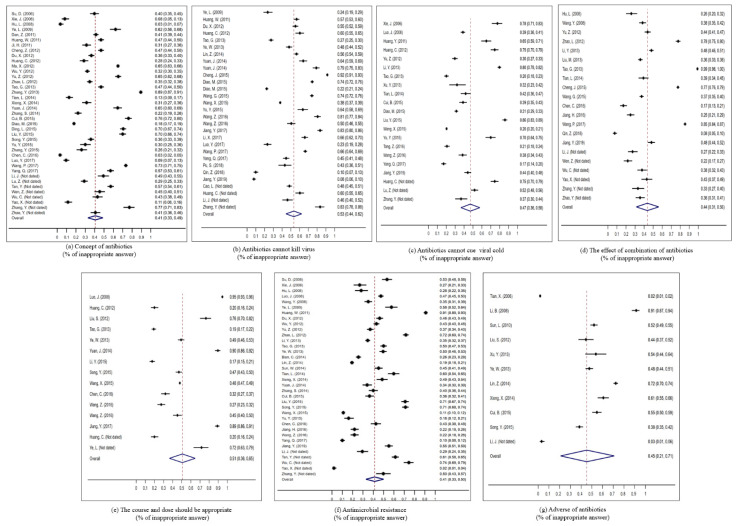
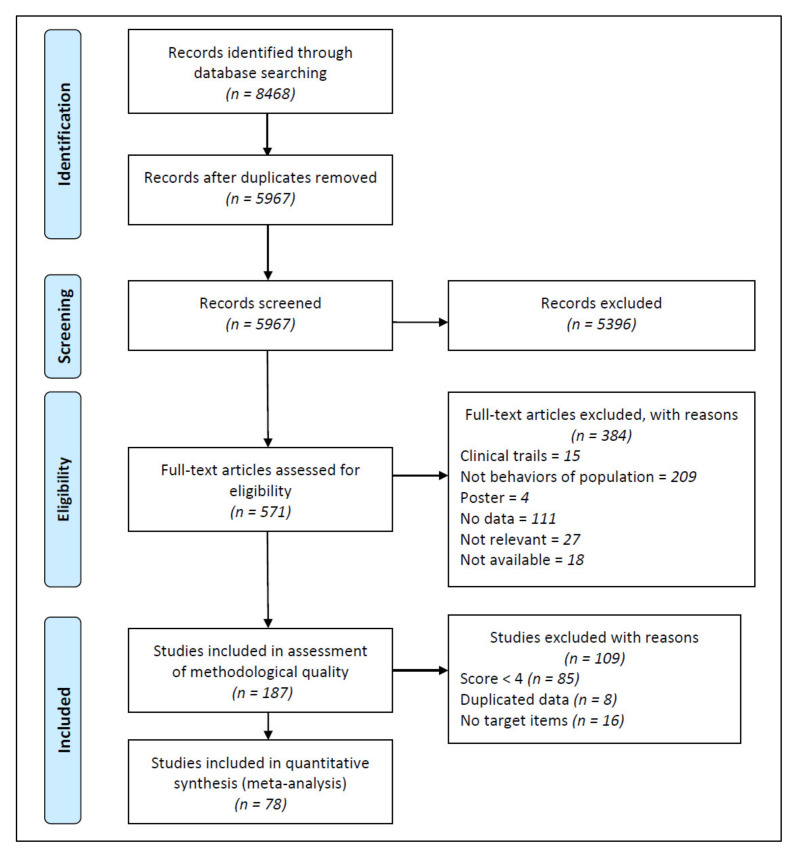
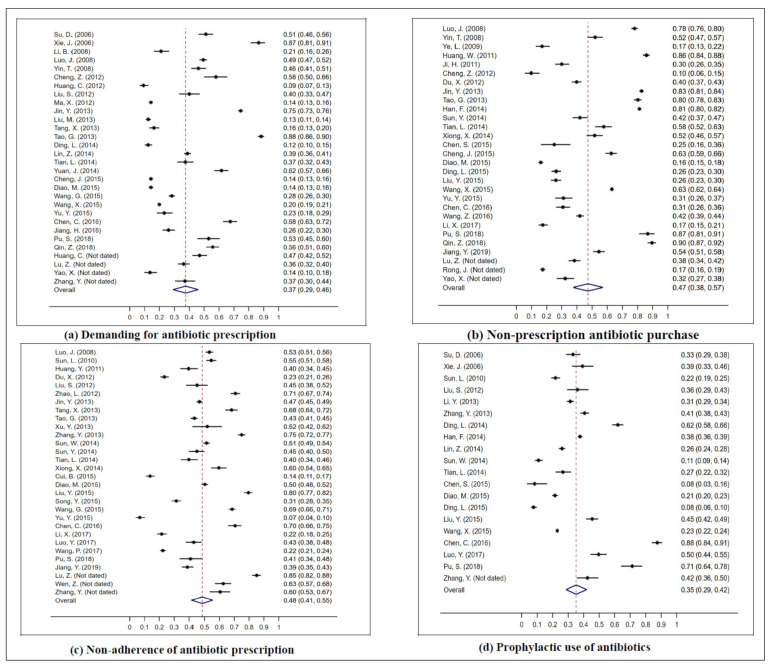
The general population has increasingly become the key contributor to irrational antibiotic use in China, which fuels the emergence of antibiotic resistance. This study aimed to estimate the prevalence of the general population's irrational use behaviors of antibiotics and identify the potential reasons behind them. A systematic review and meta-analysis were performed concerning four main behaviors relevant to easy access and irrational use of antibiotics and common misunderstandings among the population about antibiotics. Four databases were searched, and studies published before 28 February 2021 were retrieved. Medium and high-level quality studies were included. Random effects meta-analysis was performed to calculate the prevalence of the general population's irrational behaviors and misunderstandings relevant to antibiotic use. A total of 8468 studies were retrieved and 78 met the criteria and were included. The synthesis showed the public can easily obtain unnecessary antibiotics, with an estimated 37% (95% CI: 29-46) of the population demanding antibiotics from physicians and 47% (95% CI: 38-57) purchasing non-prescription antibiotics from pharmacies. This situation is severe in the western area of China. People also commonly inappropriately use antibiotics by not following antibiotic prescriptions (pooled estimate: 48%, 95% CI: 41-55) and preventatively use antibiotics for non-indicated diseases (pooled estimate: 35%, 95% CI: 29-42). Misunderstanding of antibiotic use was also popular among people, including incorrect antibiotic recognition, wrong antibiotic use indication, inappropriate usage, and ignorance of potential adverse outcomes. Over-and inappropriate use of antibiotics is evident in China and a multifaceted antibiotic strategy targeted at the general population is urgently required.
在中国,普通民众日益成为不合理使用抗生素的主要推动因素,这助长了抗生素耐药性的出现。本研究旨在评估普通民众抗生素不合理使用行为的发生率,并找出其背后的潜在原因。针对与抗生素的易获取性、不合理使用以及民众对抗生素的常见误解相关的四种主要行为进行了系统综述和荟萃分析。检索了四个数据库,并检索了2021年2月28日之前发表的研究。纳入了中高质量的研究。采用随机效应荟萃分析来计算普通民众与抗生素使用相关的不合理行为和误解的发生率。共检索到8468项研究,78项符合标准并被纳入。综合分析表明,公众能够轻易获得不必要的抗生素,估计有37%(95%置信区间:29%-46%)的民众向医生索要抗生素,47%(95%置信区间:38%-57%)的民众从药店购买非处方抗生素。这种情况在中国西部地区较为严重。人们还普遍存在不遵循抗生素处方不合理使用抗生素的情况(合并估计值:48%,95%置信区间:41%-55%),以及针对无适应症疾病预防性使用抗生素的情况(合并估计值:35%,95%置信区间:29%-42%)。民众对抗生素使用的误解也很普遍,包括对抗生素的错误认知、错误的使用指征、不当的用法以及对潜在不良后果的忽视。在中国,抗生素的过度使用和不当使用现象明显,迫切需要针对普通民众制定多方面的抗生素策略。