Khan Abdul Latif, Asaf Sajjad, Al-Rawahi Ahmed, Al-Harrasi Ahmed
Natural and Medical Sciences Research Center, University of Nizwa, 616, Nizwa, Oman.
Department of Botany, Garden Campus, Abdul Wali Khan University, Mardan, 23200, Pakistan.
BMC Genomics. 2021 Apr 30;22(1):312. doi: 10.1186/s12864-021-07626-x.
Salvadora persica L. (Toothbrush tree - Miswak; family-Salvadoraceae) grows in the arid-land ecosystem and possesses economic and medicinal importance. The species, genus and the family have no genomic datasets available specifically on chloroplast (cp) genomics and taxonomic evolution. Herein, we have sequenced the complete chloroplast genome of S. persica for the first time and compared it with 11 related specie's cp genomes from the order Brassicales.
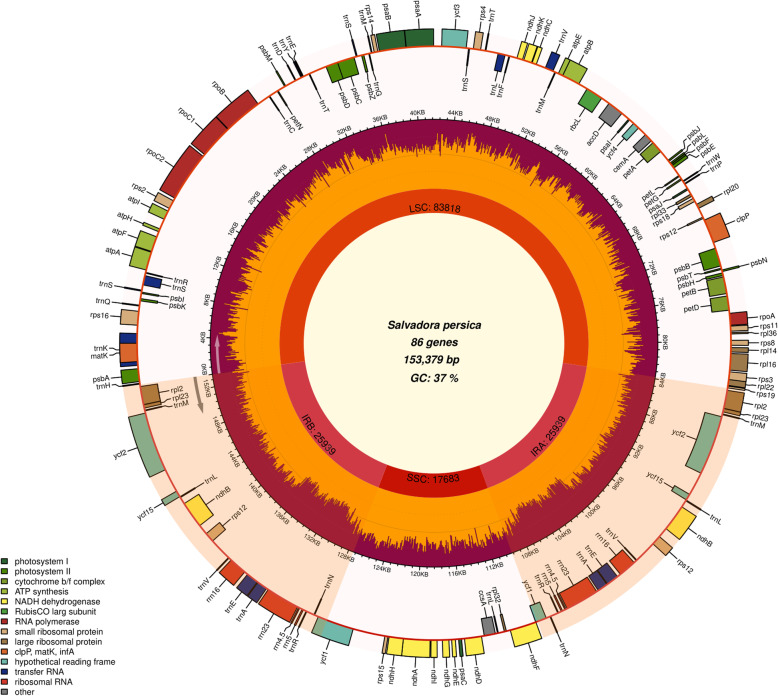
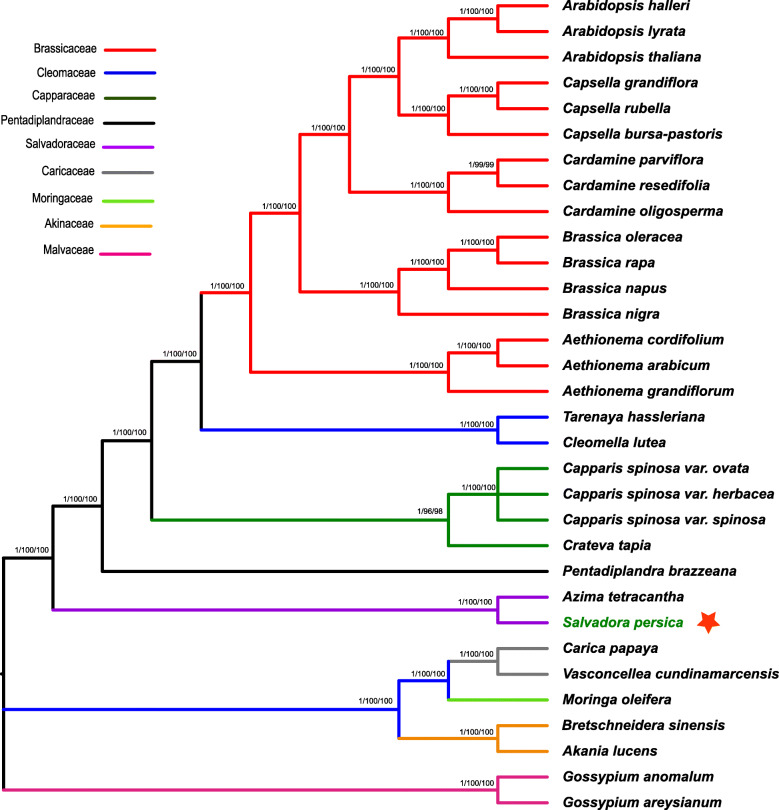
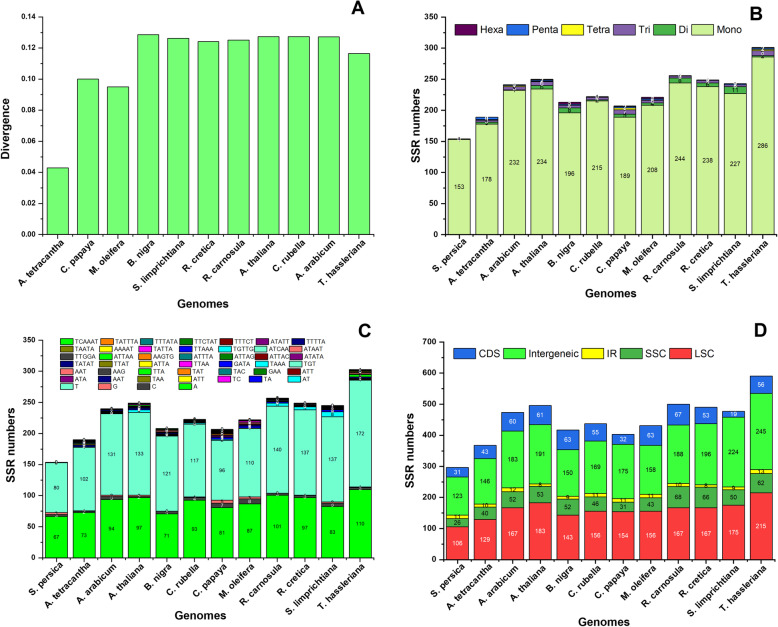
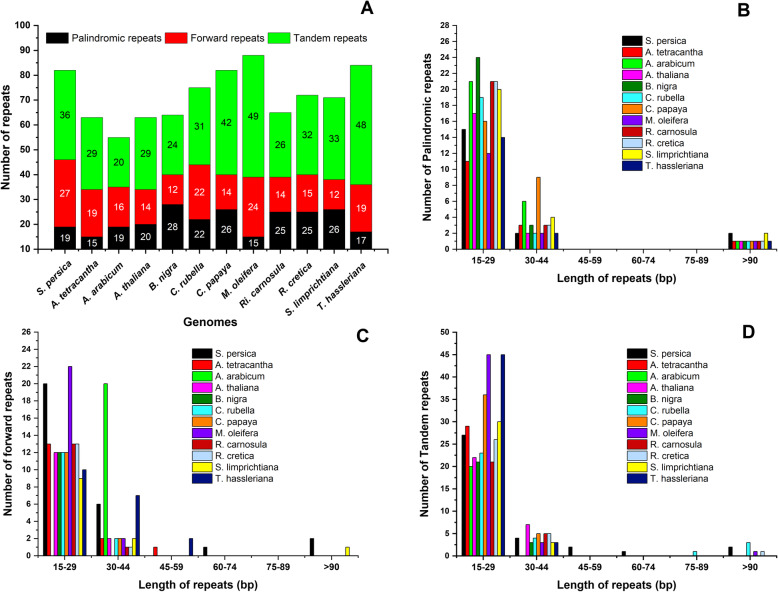
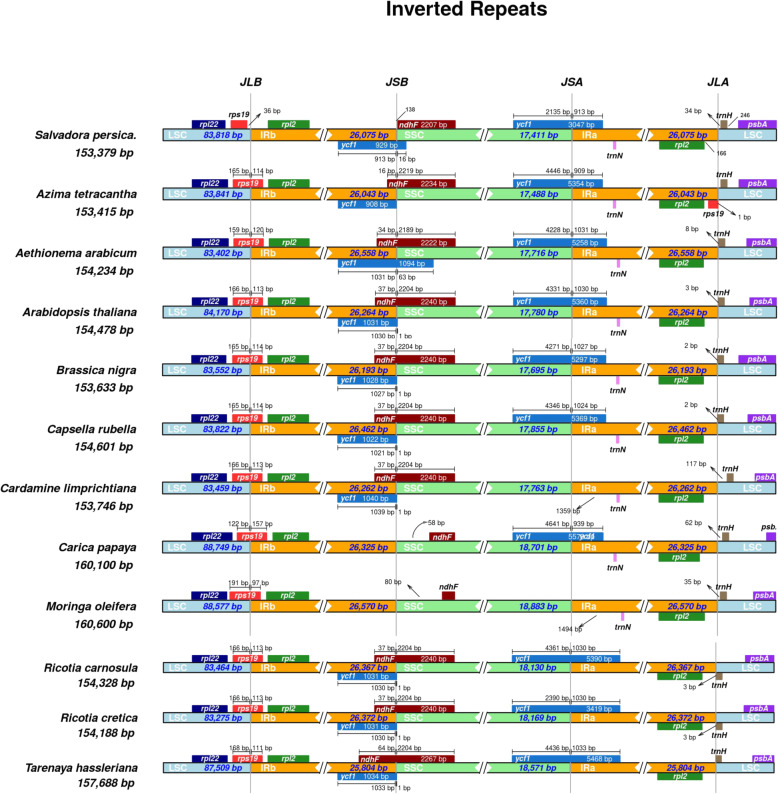
The S. persica cp genome was 153,379 bp in length containing a sizeable single-copy region (LSC) of 83,818 bp which separated from the small single-copy region (SSC) of 17,683 bp by two inverted repeats (IRs) each 25,939 bp. Among these genomes, the largest cp genome size (160,600 bp) was found in M. oleifera, while in S. persica it was the smallest (153,379 bp). The cp genome of S. persica encoded 131 genes, including 37 tRNA genes, eight rRNA genes and 86 protein-coding genes. Besides, S. persica contains 27 forward, 36 tandem and 19 palindromic repeats. The S. persica cp genome had 154 SSRs with the highest number in the LSC region. Complete cp genome comparisons showed an overall high degree of sequence resemblance between S. persica and related cp genomes. Some divergence was observed in the intergenic spaces of other species. Phylogenomic analyses of 60 shared genes indicated that S. persica formed a single clade with A. tetracantha with high bootstrap values. The family Salvadoraceae is closely related to Capparaceae and Petadiplandraceae rather than to Bataceae and Koberliniacaea.
The current genomic datasets provide pivotal genetic resources to determine the phylogenetic relationships, genome evolution and future genetic diversity-related studies of S. persica in complex angiosperm families.
佩氏骆驼蓬(牙刷树 - 米斯瓦克;骆驼蓬科)生长在干旱陆地生态系统中,具有经济和药用价值。该物种、属和科目前尚无专门针对叶绿体(cp)基因组学和分类进化的基因组数据集。在此,我们首次对佩氏骆驼蓬的完整叶绿体基因组进行了测序,并将其与十字花目11个相关物种的cp基因组进行了比较。
佩氏骆驼蓬cp基因组长度为153,379 bp,包含一个83,818 bp的大单拷贝区域(LSC),该区域由两个25,939 bp的反向重复序列(IRs)与17,683 bp的小单拷贝区域(SSC)隔开。在这些基因组中,油橄榄叶花椒的cp基因组最大(160,600 bp),而佩氏骆驼蓬的cp基因组最小(153,379 bp)。佩氏骆驼蓬的cp基因组编码131个基因,包括37个tRNA基因、8个rRNA基因和86个蛋白质编码基因。此外,佩氏骆驼蓬含有27个正向重复、36个串联重复和19个回文重复。佩氏骆驼蓬cp基因组有154个简单序列重复(SSRs),其中LSC区域数量最多。完整cp基因组比较显示,佩氏骆驼蓬与相关cp基因组之间总体上具有高度的序列相似性。在其他物种的基因间隔区观察到一些差异。对共同的60个基因进行的系统发育基因组分析表明,佩氏骆驼蓬与四刺骆驼蓬形成了一个具有高自展值的单分支。骆驼蓬科与白花菜科和双片花科密切相关,而与刺茉莉科和柯柏莲科关系较远。
当前的基因组数据集为确定佩氏骆驼蓬在复杂被子植物科中的系统发育关系、基因组进化及未来与遗传多样性相关的研究提供了关键的遗传资源。