Bengtsson Mariette, Ekedahl Ann-Britt Ivarsson, Sjöström Karin
Department of Care Science, Faculty of Health and Society, Malmö University, SE 205 06, Malmö, Sweden.
BMC Nurs. 2021 Apr 29;20(1):69. doi: 10.1186/s12912-021-00587-2.
The number of errors in medication management in nursing homes is increasing, which may lead to potentially life-threatening harm. Few studies on this subject are found in the municipal nursing home setting, and causes need to be identified. The aim of this study was to explore perceptions of errors connected to medication management in nursing homes by exploring the perspective of first-line registered nurses, registered nurses, and non-licensed staff involved in the care of older persons.
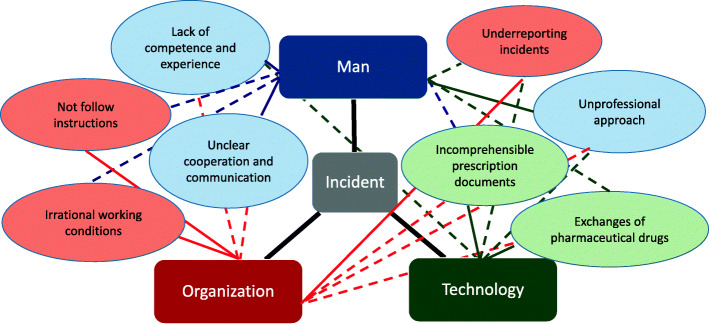
A qualitative research approach was applied based on semi-structured interviews with 21 participants at their workplaces: Seven in each of the occupational categories of first-line registered nurses, registered nurses, and non-licensed staff. Subcategories were derived from transcribed interviews by content analysis and categorized according to the Man, Technology, and Organization concept of error causation, which is as a framework to identify errors.
Mistakes in medication management were commonly perceived as a result of human shortcomings and deficiencies in working conditions such as the lack of safe tools to facilitate and secure medication management. The delegation of drug administration to non-licensed staff, the abandonment of routines, carelessness, a lack of knowledge, inadequate verbal communication between colleagues, and a lack of understanding of the difficulties involved in handling the drugs were all considered as risk areas for errors. Organizational hazards were related to the ability to control the delegation, the standard of education, and safety awareness among staff members. Safety issues relating to technology involved devices for handling prescription cards and when staff were not included in the development process of new technological aids. A lack of staff and the lack of time to act safely in the care of the elderly were also perceived as safety hazards, particularly with the non-licensed staff working in nursing homes.
The staff working in nursing homes perceive that the risks due to medication management are mainly caused by human limitations or technical deficiencies. Organizational factors, such as working conditions, can often facilitate the occurrence of malpractice. To minimize mistakes, care managers need to have a systemwide perspective on safety issues, where organizational issues are essential.
养老院药物管理中的错误数量不断增加,这可能导致潜在的危及生命的伤害。在市政养老院环境中,关于这个主题的研究很少,需要找出原因。本研究的目的是通过探索一线注册护士、注册护士和参与老年人护理的非持证工作人员的观点,来探讨与养老院药物管理相关的错误认知。
采用定性研究方法,对21名参与者在其工作场所进行半结构化访谈:一线注册护士、注册护士和非持证工作人员这三个职业类别各7名。通过内容分析从转录的访谈中得出子类别,并根据错误因果关系的人、技术和组织概念进行分类,该概念作为识别错误的框架。
药物管理中的错误通常被认为是由于人的缺点和工作条件不足造成的,例如缺乏便于和确保药物管理的安全工具。将药物管理委托给非持证工作人员、放弃常规、粗心大意、缺乏知识、同事之间口头沟通不足以及对处理药物所涉及的困难缺乏理解,都被视为错误的风险领域。组织危害与控制委托的能力、教育标准以及工作人员的安全意识有关。与技术相关的安全问题涉及处理处方卡的设备,以及工作人员未参与新技术辅助工具的开发过程。人员短缺以及在照顾老年人时缺乏安全行动的时间也被视为安全隐患,尤其是在养老院工作的非持证工作人员。
在养老院工作的人员认为,药物管理带来的风险主要是由人的局限性或技术缺陷造成的。组织因素,如工作条件,往往会助长不当行为的发生。为了尽量减少错误,护理管理人员需要对安全问题有一个全系统的视角,其中组织问题至关重要。