Research Center and Memory Clinic, Fundació ACE. Institut Català de Neurociències Aplicades, International University of Catalunya (UIC), C/Marquès de Sentmenat, 57, 08029, Barcelona, Spain.
Biomedical Research Networking Centre in Neurodegenerative Diseases (CIBERNED), Madrid, Spain.
J Nanobiotechnology. 2021 Apr 29;19(1):122. doi: 10.1186/s12951-021-00864-x.
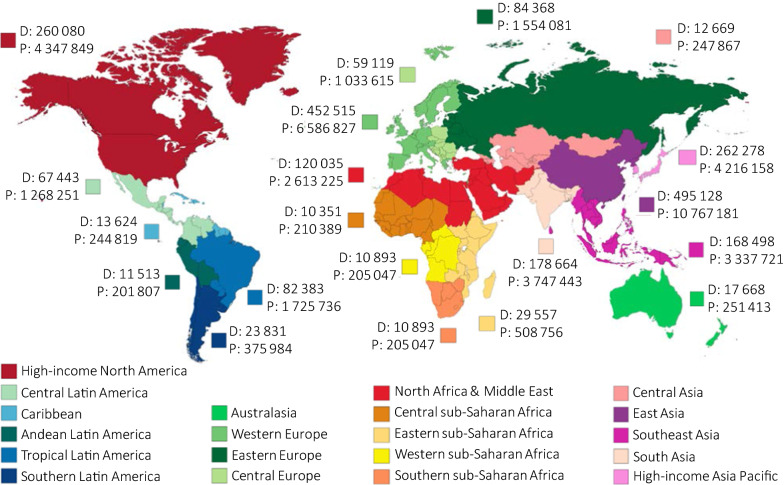
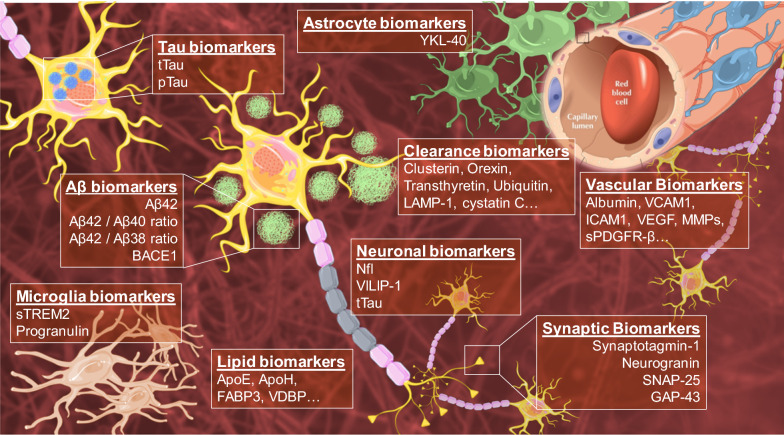
Increasing life expectancy has led to an aging population, which has consequently increased the prevalence of dementia. Alzheimer's disease (AD), the most common form of dementia worldwide, is estimated to make up 50-80% of all cases. AD cases are expected to reach 131 million by 2050, and this increasing prevalence will critically burden economies and health systems in the next decades. There is currently no treatment that can stop or reverse disease progression. In addition, the late diagnosis of AD constitutes a major obstacle to effective disease management. Therefore, improved diagnostic tools and new treatments for AD are urgently needed. In this review, we investigate and describe both well-established and recently discovered AD biomarkers that could potentially be used to detect AD at early stages and allow the monitoring of disease progression. Proteins such as NfL, MMPs, p-tau217, YKL-40, SNAP-25, VCAM-1, and Ng / BACE are some of the most promising biomarkers because of their successful use as diagnostic tools. In addition, we explore the most recent molecular strategies for an AD therapeutic approach and nanomedicine-based technologies, used to both target drugs to the brain and serve as devices for tracking disease progression diagnostic biomarkers. State-of-the-art nanoparticles, such as polymeric, lipid, and metal-based, are being widely investigated for their potential to improve the effectiveness of both conventional drugs and novel compounds for treating AD. The most recent studies on these nanodevices are deeply explained and discussed in this review.
预期寿命的延长导致了人口老龄化,进而导致痴呆症的患病率上升。阿尔茨海默病(AD)是世界上最常见的痴呆症形式,估计占所有病例的 50-80%。到 2050 年,AD 病例预计将达到 1.31 亿,这种不断增加的患病率将在下一个十年严重影响经济和卫生系统。目前尚无可以阻止或逆转疾病进展的治疗方法。此外,AD 的晚期诊断是有效疾病管理的主要障碍。因此,迫切需要改进的诊断工具和新的 AD 治疗方法。在这篇综述中,我们调查和描述了已经确立的和最近发现的 AD 生物标志物,这些生物标志物可能有助于在早期发现 AD,并允许监测疾病进展。NfL、MMPs、p-tau217、YKL-40、SNAP-25、VCAM-1 和 Ng / BACE 等蛋白质是最有前途的生物标志物之一,因为它们已成功用作诊断工具。此外,我们还探讨了 AD 治疗方法和基于纳米医学的技术的最新分子策略,这些技术用于将药物靶向大脑并用作跟踪疾病进展的诊断生物标志物的设备。正在广泛研究最新的纳米粒子,如聚合物、脂质和金属基纳米粒子,以提高治疗 AD 的常规药物和新型化合物的有效性。本综述深入解释和讨论了这些纳米器件的最新研究。