Fan Dehui, Liu Hengping, Zhang Zhenning, Su Meiyi, Yuan Zhixian, Lin Ying, Yang Shuquan, Li Wenqiang, Zhang Xintao
The Fifth Clinical College of Guangzhou University of Chinese Medicine Guangzhou, Guangdong Second Traditional Chinese Medicine Hospital, Guangzhou, China.
Beijing University of Chinese Medicine Third Affiliated Hospital, Beijing, China.
Front Pharmacol. 2021 Apr 13;12:618724. doi: 10.3389/fphar.2021.618724. eCollection 2021.
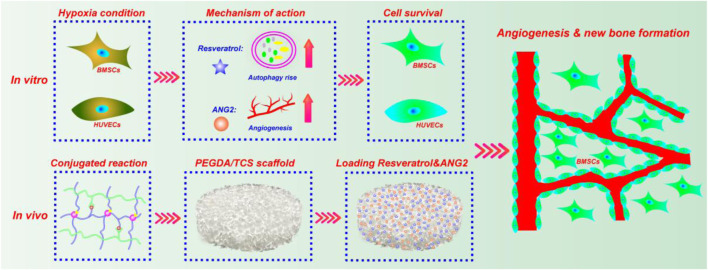
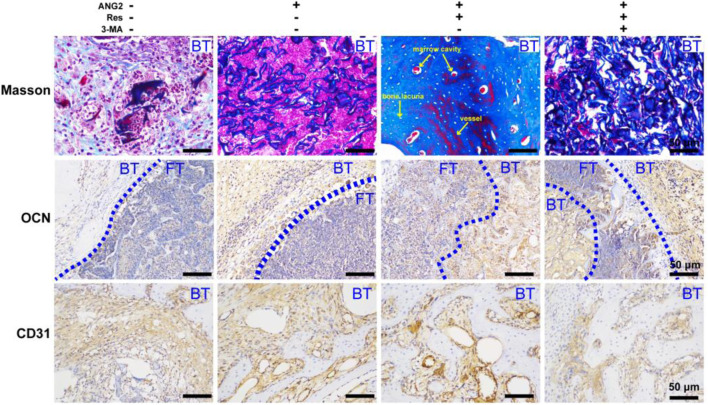
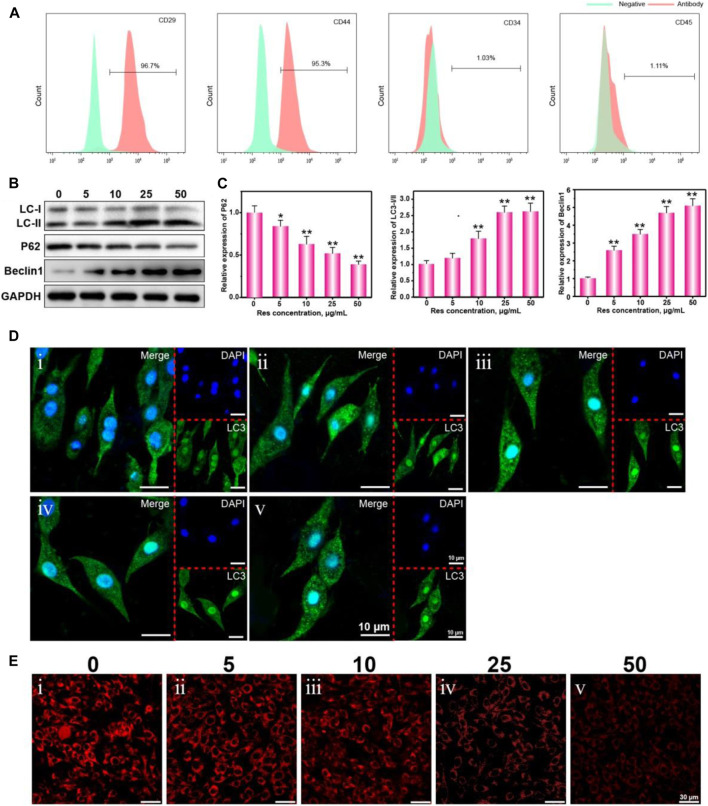
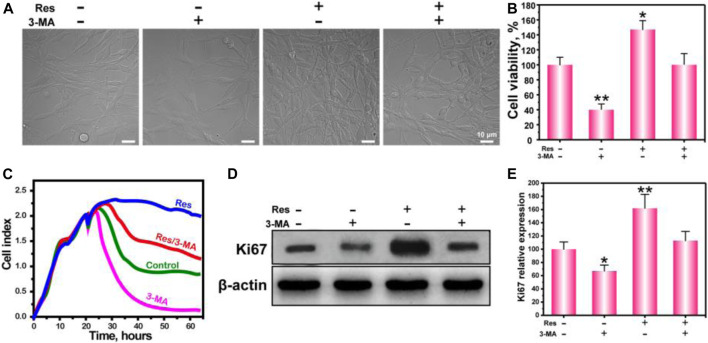
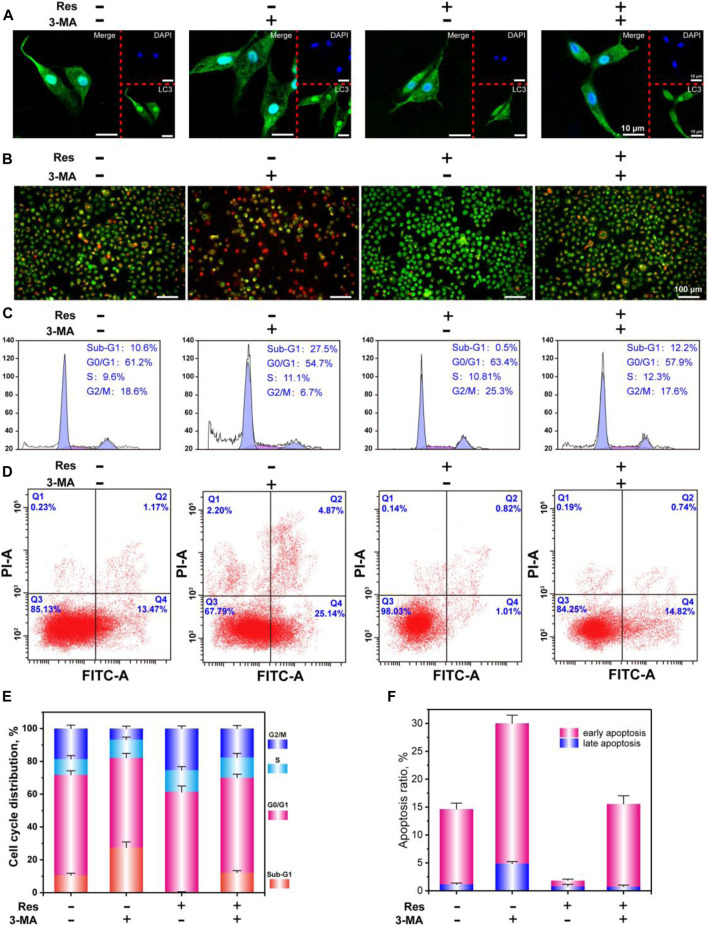
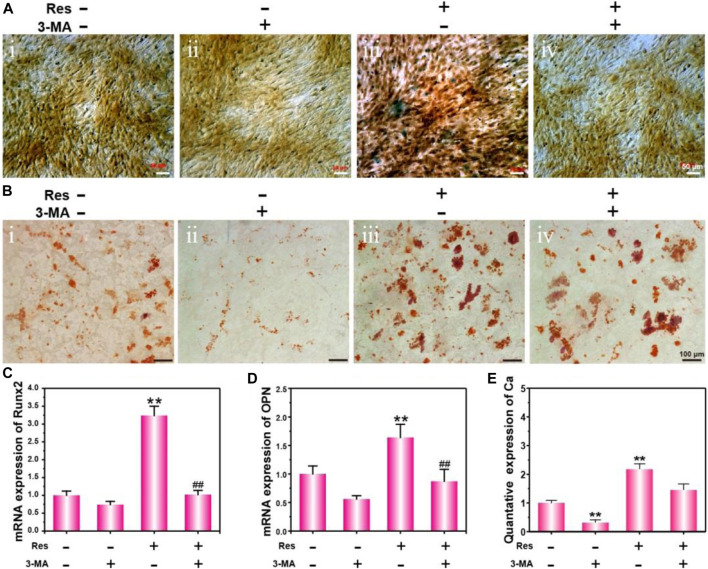
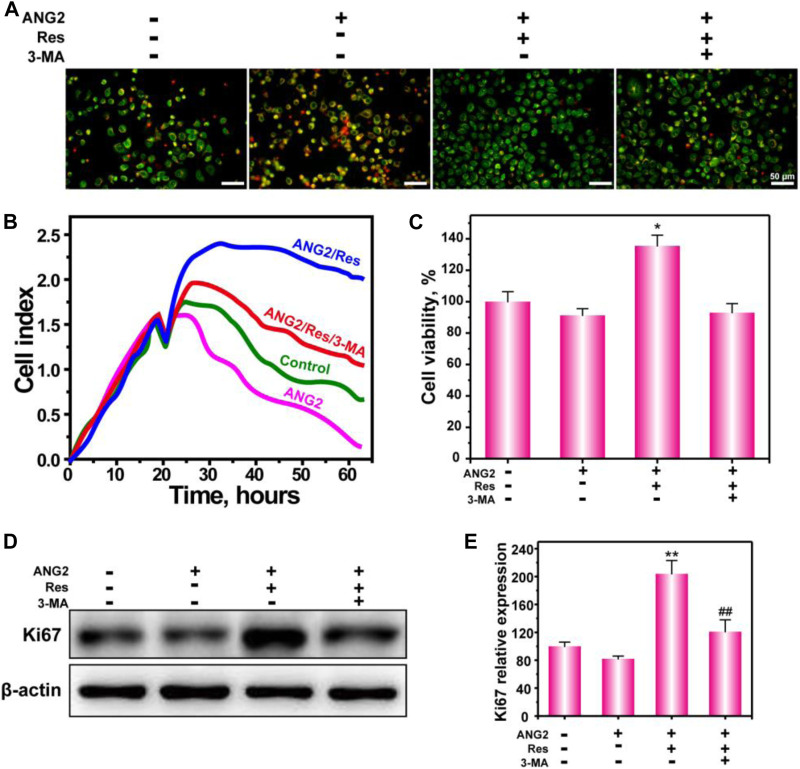
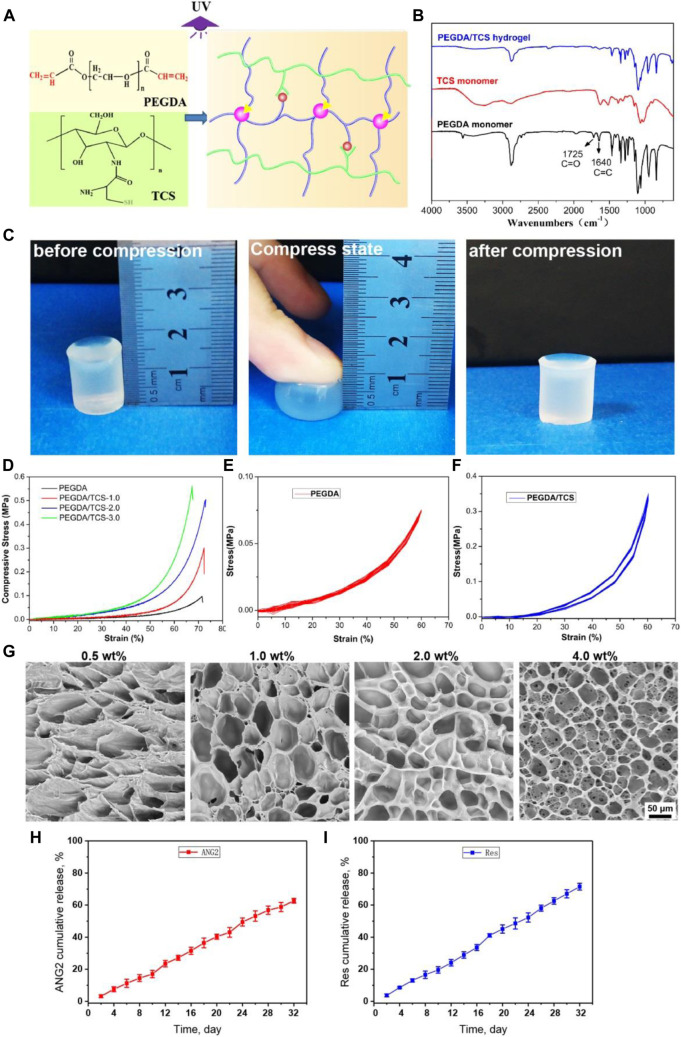
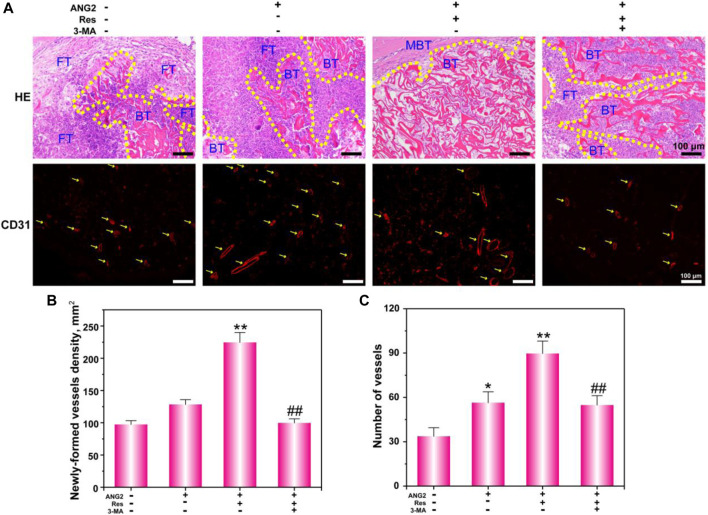
The guarantee of cell survival under hypoxic conditions and rapid vascularization is a key in tissue engineering strategies for treating bone defects. Our study aimed to establish the protective role of bone marrow mesenchymal stem cells (BMSCs) and human umbilical vein endothelial cells (HUVECs) in hypoxic conditions and realize rapid vascularization in bone defects. Resveratrol (Res), a non-flavonoid polyphenolic compound, and angiopoietin-2 (ANG2), a vascular activating factor, were applied to enhance BMSC and HUVEC survival, osteogenesis, and angiogenesis. The morphology, autophagy, viability, apoptosis, cycle, and osteogenic differentiation of BMSCs treated with Res were analyzed. The results indicated that Res could improve BMSC survival and differentiation via the autophagy pathway under hypoxic conditions. In addition, Res maintained HUVEC growth and proliferation in a hypoxic and ANG2 double-adverse environment via the autophagy pathway. To simulate a relatively hypoxic environment, small-aperture PEGDA/TCS hydrogels containing Res and ANG2 were prepared. BMSCs were cultured in the PEGDA/TCS scaffold and transplanted into a large tibial defect. CD31 immunofluorescence showed that the density and size of new blood vessels in the bone defect were significantly enhanced by ANG2 and Res at 8 weeks after surgery. H&E, Masson, and immunohistochemical staining results indicated that ANG2 combined with Res could promote new bone formation in defects. All these results suggested that Res combined with ANG2 may be a novel strategy for the targeted therapy of hypoxic bone defects with tissue engineering scaffolds.
在缺氧条件下保证细胞存活以及实现快速血管生成是治疗骨缺损的组织工程策略的关键。我们的研究旨在确立骨髓间充质干细胞(BMSCs)和人脐静脉内皮细胞(HUVECs)在缺氧条件下的保护作用,并实现骨缺损处的快速血管生成。白藜芦醇(Res),一种非黄酮类多酚化合物,以及血管生成素-2(ANG2),一种血管激活因子,被用于提高BMSCs和HUVECs的存活率、成骨能力和血管生成能力。分析了用Res处理的BMSCs的形态、自噬、活力、凋亡、周期和成骨分化情况。结果表明,Res可通过自噬途径在缺氧条件下提高BMSCs的存活率和分化能力。此外,Res通过自噬途径在缺氧和ANG2双重不利环境中维持HUVECs的生长和增殖。为模拟相对缺氧的环境,制备了含有Res和ANG2的小孔径PEGDA/TCS水凝胶。将BMSCs培养在PEGDA/TCS支架中并移植到大鼠胫骨大缺损处。CD31免疫荧光显示,术后8周,ANG2和Res显著提高了骨缺损处新生血管的密度和大小。苏木精-伊红染色(H&E)、Masson染色和免疫组化染色结果表明,ANG2与Res联合可促进缺损处新骨形成。所有这些结果表明,Res与ANG2联合可能是一种利用组织工程支架靶向治疗缺氧性骨缺损的新策略。