Wei Jianxu, Qiao Shichong, Zhang Xiaomeng, Li Yuan, Zhang Yi, Wei Shimin, Shi Junyu, Lai Hongchang
Department of Oral and Maxillo-facial Implantology, Shanghai Ninth People's Hospital, School of Medicine, Shanghai Jiao Tong University, Shanghai, China.
Front Bioeng Biotechnol. 2021 Apr 13;9:665305. doi: 10.3389/fbioe.2021.665305. eCollection 2021.
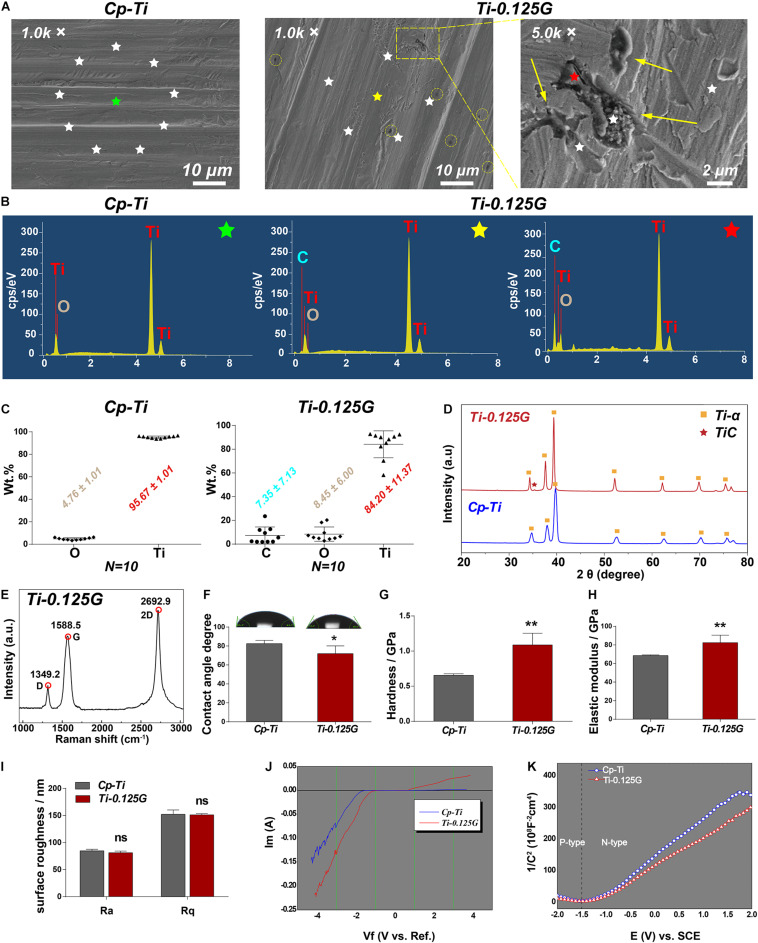
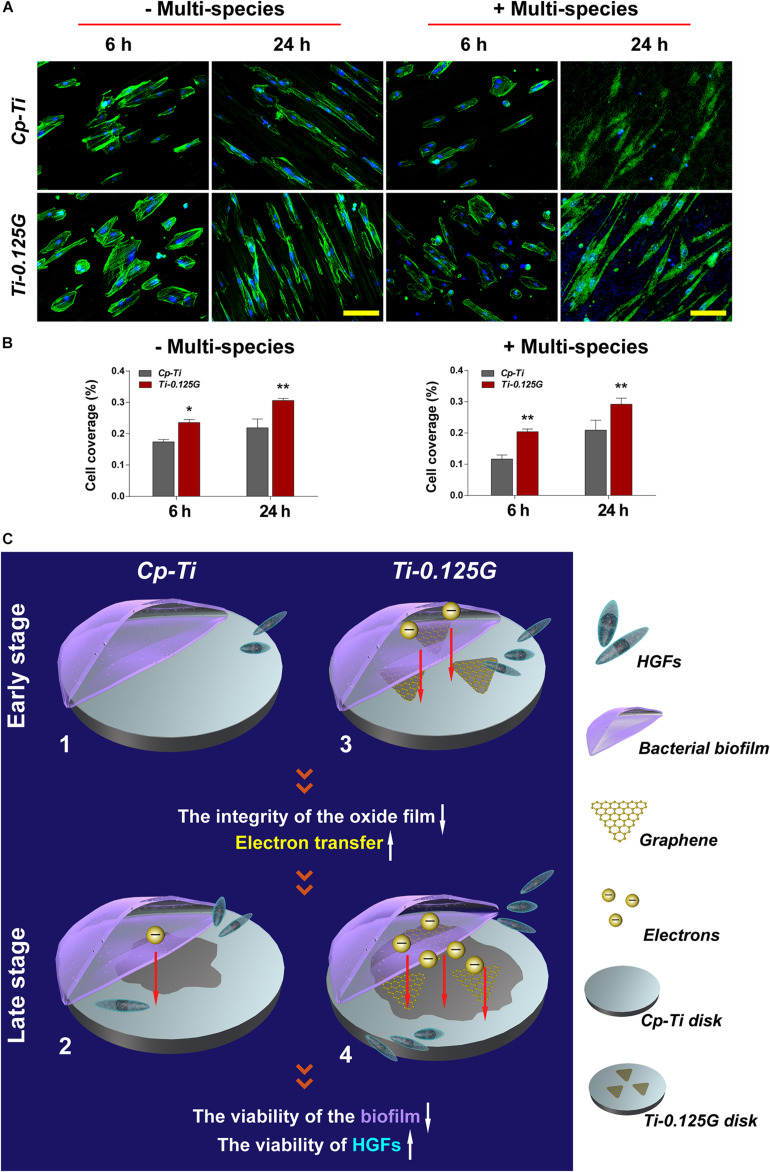
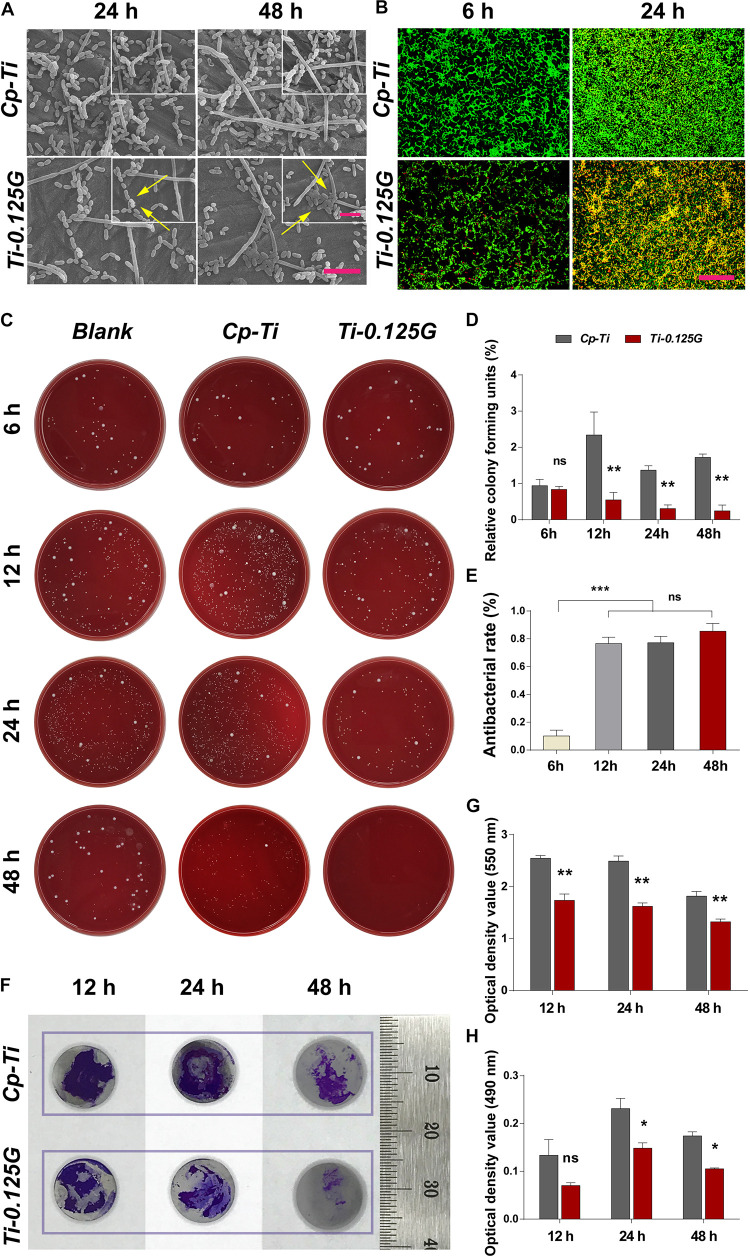
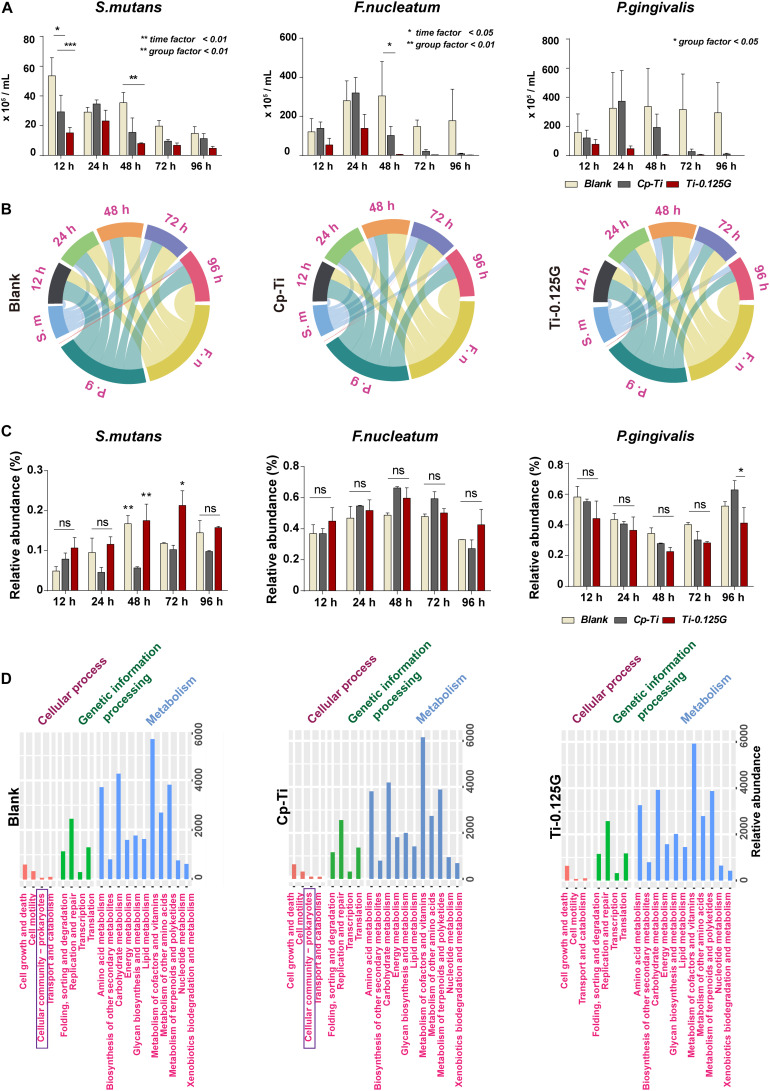
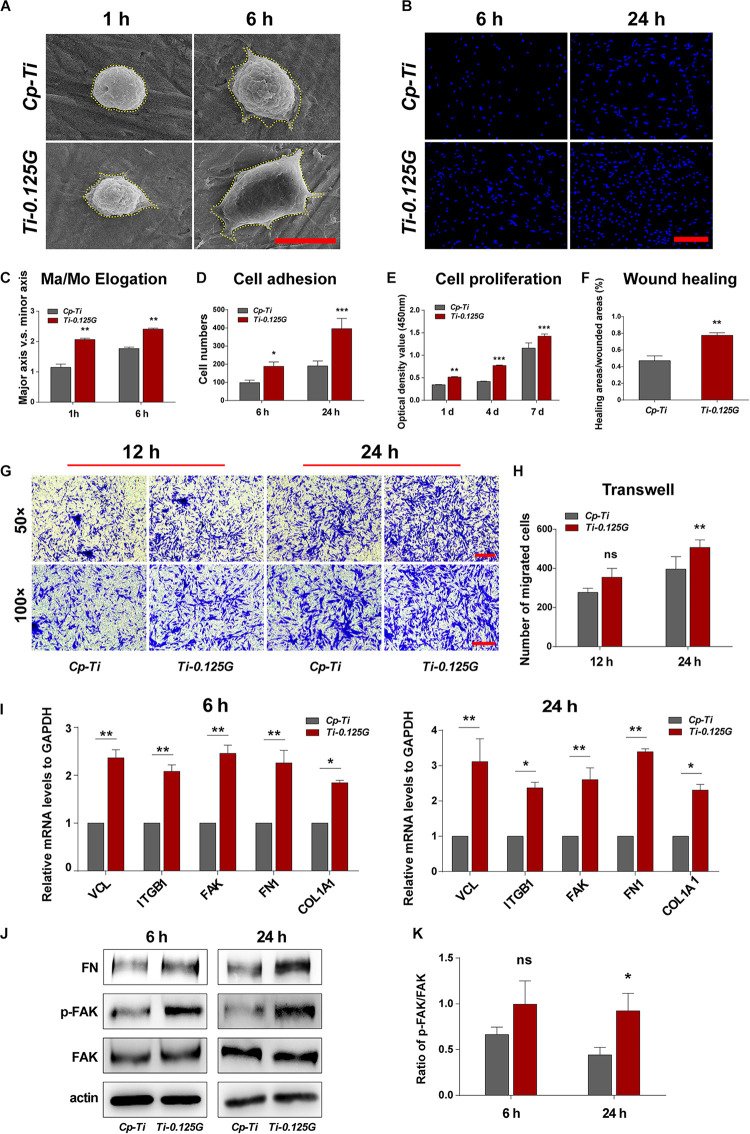
The integrity of soft tissue seal is essential for preventing peri-implant infection, mainly induced by established bacterial biofilms around dental implants. Nowadays, graphene is well-known for its potential in biocompatibility and antisepsis. Herein, a new titanium biomaterial containing graphene (Ti-0.125G) was synthesized using the spark plasma sintering (SPS) technique. After material characteristics detection, the subsequent responses of human gingival fibroblasts (HGFs) and multiple oral pathogens (including , , and ) to the graphene-reinforced sample were assessed, respectively. Also, the dynamic change of the bacterial multispecies volume in biofilms was evaluated using absolute quantification PCR combined with Illumina high-throughput sequencing. Ti-0.125G, in addition to its particularly pronounced inhibitory effect on at 96 h, was broadly effective against multiple pathogens rather than just one strain. The reinforced material's selective responses were also evaluated by a co-culture model involving HGFs and multiple strains. The results disclosed that the graphene-reinforced samples were highly effective in keeping a balance between the favorable fibroblast responses and the suppressive microbial growth, which could account for the optimal soft tissue seal in the oral cavity. Furthermore, the underlying mechanism regarding new material's bactericidal property in the current study has been elucidated as the electron transfer, which disturbed the bacterial respiratory chain and resulted in a decrease of microbial viability. According to the Kyoto Encyclopedia of Genes and Genomes (KEGG) database, the PICRUSt tool was conducted for the prediction of microbial metabolism functions. Consequently, it is inferred that Ti-0.125G has promising potentials for application in implant dentistry, especially in enhancing the integrity of soft tissue and improving its resistance against bacterial infections around oral implants.
软组织封闭的完整性对于预防种植体周围感染至关重要,种植体周围感染主要由牙种植体周围已形成的细菌生物膜引起。如今,石墨烯因其在生物相容性和抗菌方面的潜力而闻名。在此,采用放电等离子体烧结(SPS)技术合成了一种含石墨烯的新型钛生物材料(Ti-0.125G)。在进行材料特性检测后,分别评估了人牙龈成纤维细胞(HGFs)和多种口腔病原体(包括 、 和 )对石墨烯增强样品的后续反应。此外,结合Illumina高通量测序,使用绝对定量PCR评估生物膜中细菌多物种体积的动态变化。Ti-0.125G除了在96小时时对 具有特别显著的抑制作用外,对多种病原体具有广泛的有效性,而不仅仅是针对一种菌株。还通过涉及HGFs和多种菌株的共培养模型评估了增强材料的选择性反应。结果表明,石墨烯增强样品在保持有利的成纤维细胞反应和抑制微生物生长之间的平衡方面非常有效,这可以解释口腔中最佳的软组织封闭。此外,本研究中关于新材料杀菌特性的潜在机制已阐明为电子转移,其干扰了细菌呼吸链并导致微生物活力下降。根据京都基因与基因组百科全书(KEGG)数据库,使用PICRUSt工具预测微生物代谢功能。因此,推断Ti-0.125G在种植牙科领域具有广阔的应用前景,特别是在增强软组织完整性和提高其对口腔种植体周围细菌感染的抵抗力方面。