• 文献检索
  • 文档翻译
  • 深度研究
  • 学术资讯
  • Suppr Zotero 插件Zotero 插件
  • 邀请有礼
  • 套餐&价格
  • 历史记录
应用&插件
Suppr Zotero 插件Zotero 插件浏览器插件Mac 客户端Windows 客户端微信小程序
定价
高级版会员购买积分包购买API积分包
服务
文献检索文档翻译深度研究API 文档MCP 服务
关于我们
关于 Suppr公司介绍联系我们用户协议隐私条款
关注我们

Suppr 超能文献

核心技术专利:CN118964589B侵权必究
粤ICP备2023148730 号-1Suppr @ 2026

文献检索

告别复杂PubMed语法,用中文像聊天一样搜索,搜遍4000万医学文献。AI智能推荐,让科研检索更轻松。

立即免费搜索

文件翻译

保留排版,准确专业,支持PDF/Word/PPT等文件格式,支持 12+语言互译。

免费翻译文档

深度研究

AI帮你快速写综述,25分钟生成高质量综述,智能提取关键信息,辅助科研写作。

立即免费体验

CsbZIP1-CsMYB12通过协调激活-抑制网络介导茶树(Camellia sinensis)中苦味黄酮醇的产生。

CsbZIP1-CsMYB12 mediates the production of bitter-tasting flavonols in tea plants (Camellia sinensis) through a coordinated activator-repressor network.

作者信息

Zhao Xuecheng, Zeng Xiangsheng, Lin Ning, Yu Shuwei, Fernie Alisdair R, Zhao Jian

机构信息

State Key Laboratory of Tea Plant Biology and Utilization, Anhui Agricultural University, 230036, Hefei, China.

College of Agronomy, Anhui Agricultural University, 230036, Hefei, China.

出版信息

Hortic Res. 2021 May 1;8(1):110. doi: 10.1038/s41438-021-00545-8.

DOI:10.1038/s41438-021-00545-8
PMID:33931627
原文链接:https://pmc.ncbi.nlm.nih.gov/articles/PMC8087823/
Abstract

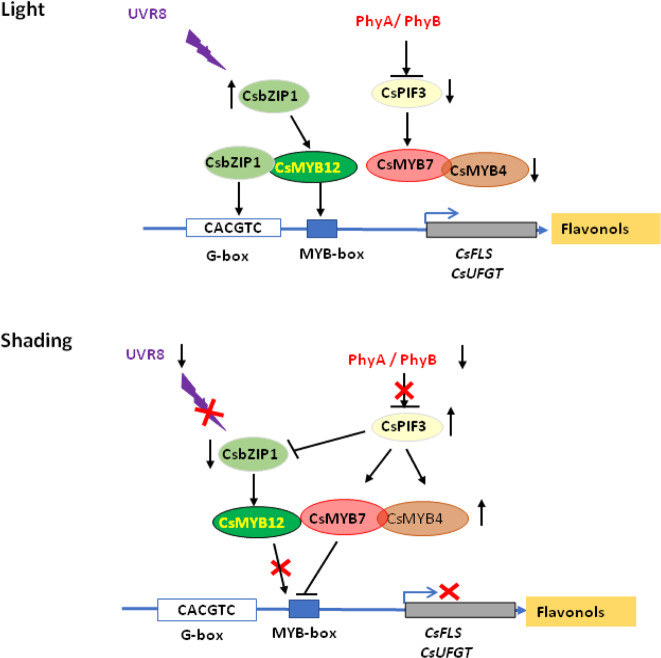
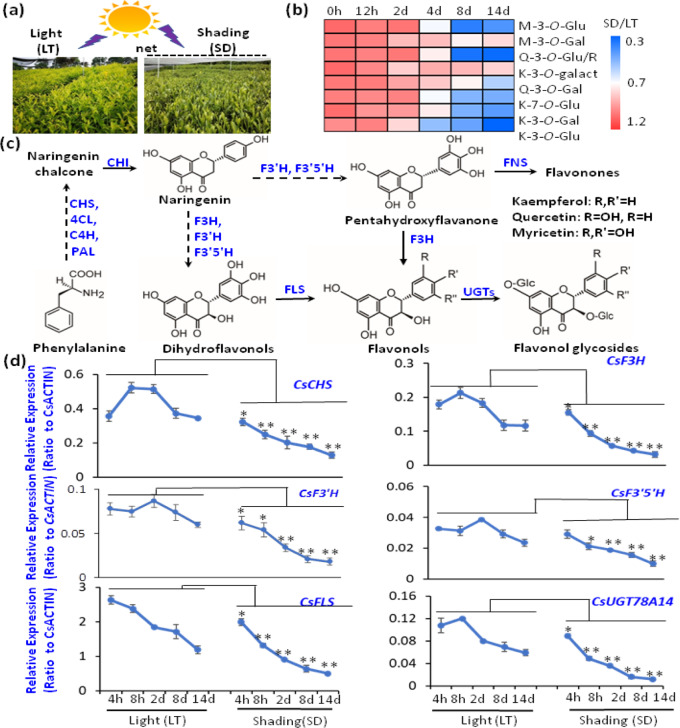
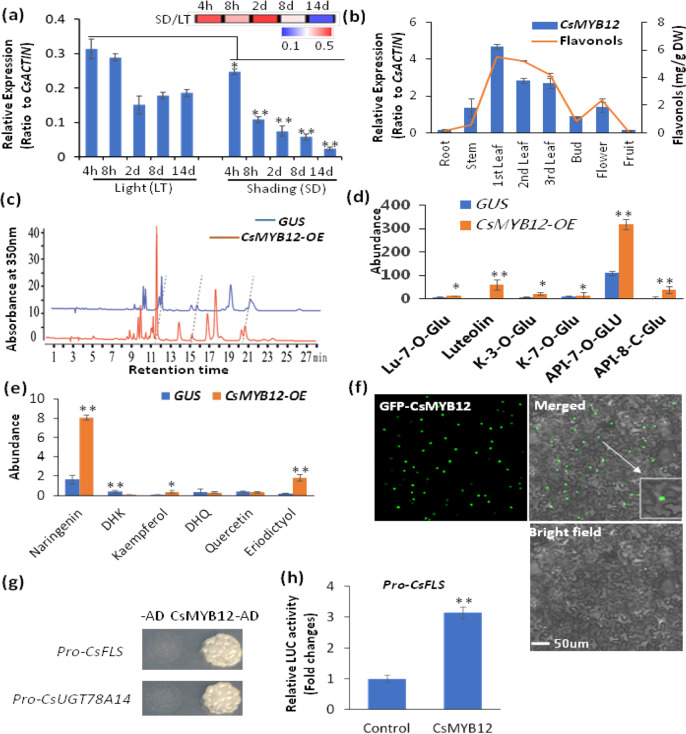
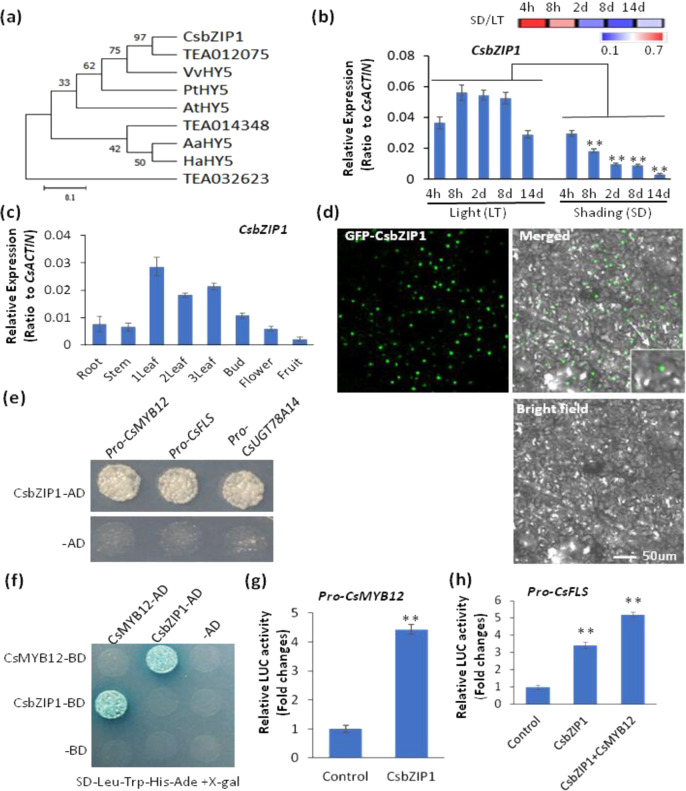
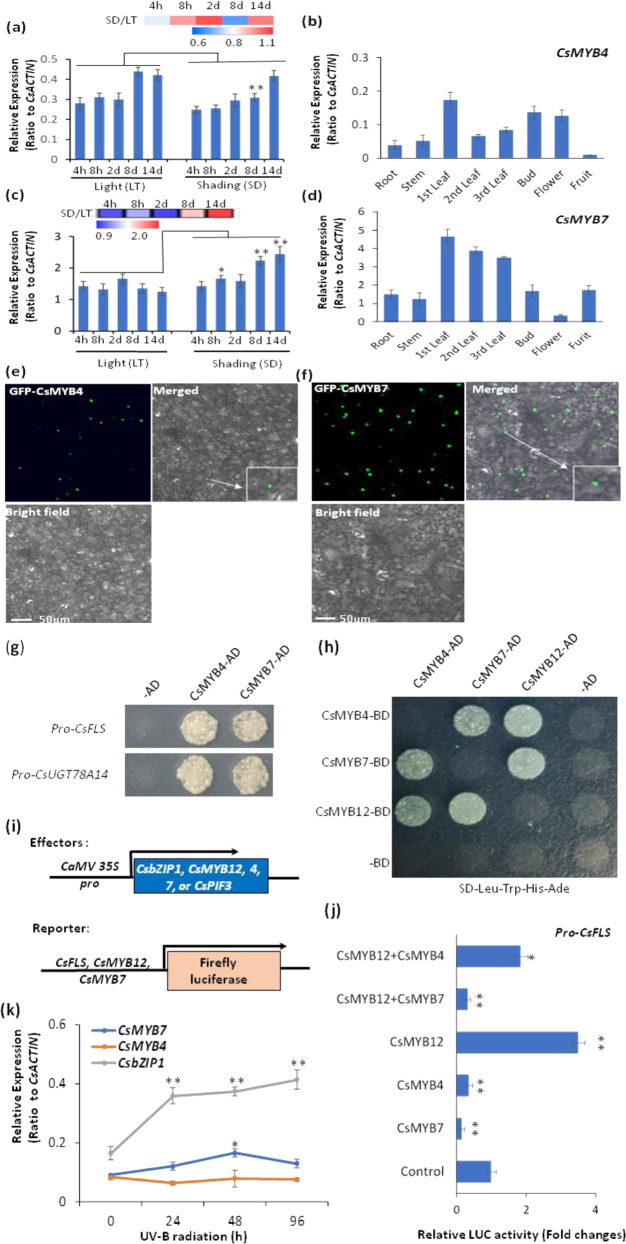
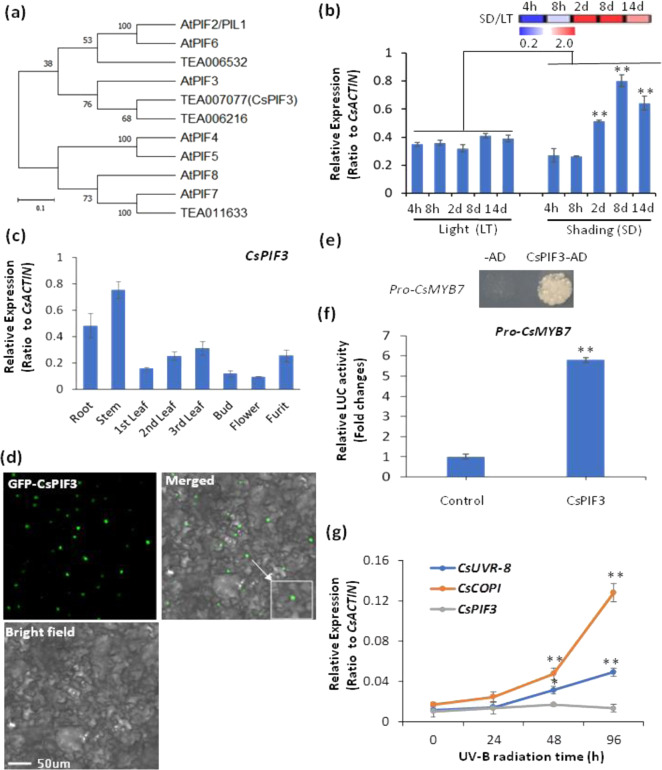
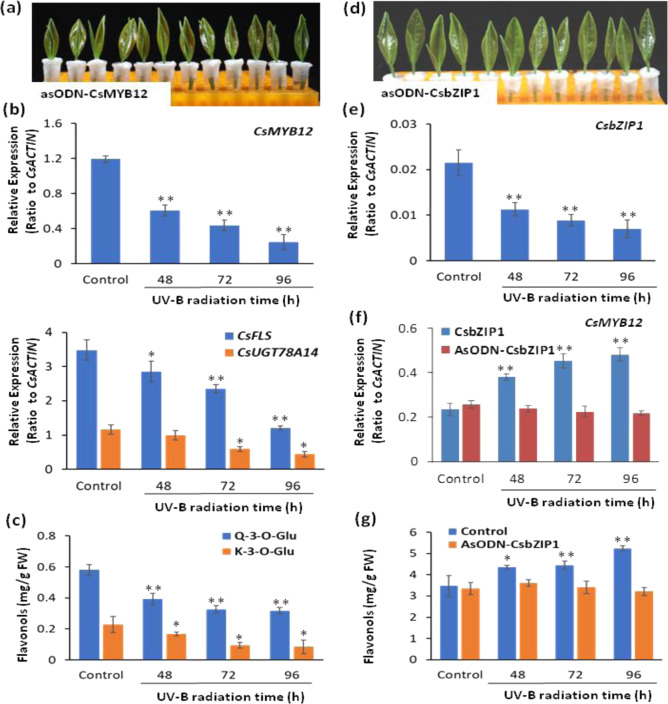
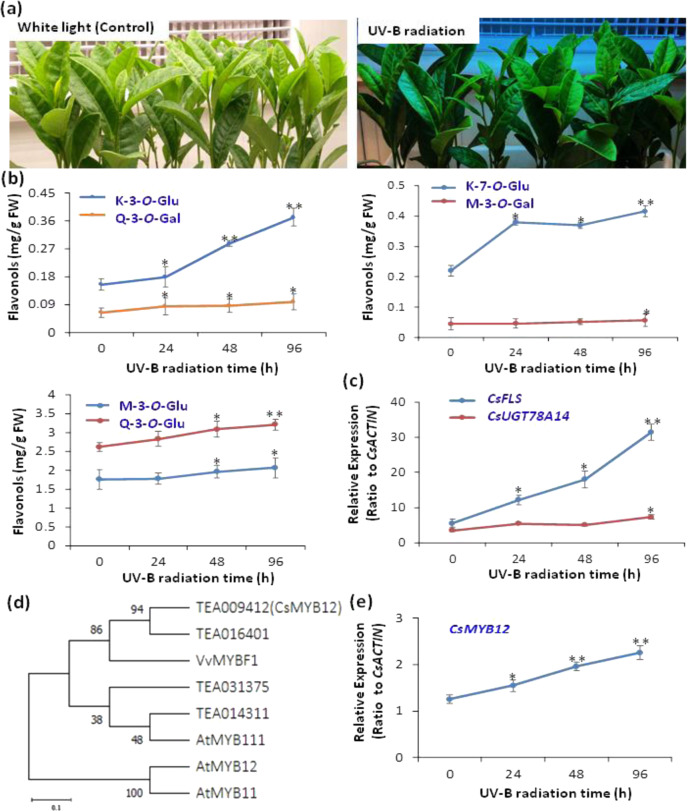
Under high light conditions or UV radiation, tea plant leaves produce more flavonols, which contribute to the bitter taste of tea; however, neither the flavonol biosynthesis pathways nor the regulation of their production are well understood. Intriguingly, tea leaf flavonols are enhanced by UV-B but reduced by shading treatment. CsFLS, CsUGT78A14, CsMYB12, and CsbZIP1 were upregulated by UV-B radiation and downregulated by shading. CsMYB12 and CsbZIP1 bound to the promoters of CsFLS and CsUGT78A14, respectively, and activated their expression individually. CsbZIP1 positively regulated CsMYB12 and interacted with CsMYB12, which specifically activated flavonol biosynthesis. Meanwhile, CsPIF3 and two MYB repressor genes, CsMYB4 and CsMYB7, displayed expression patterns opposite to that of CsMYB12. CsMYB4 and CsMYB7 bound to CsFLS and CsUGT78A14 and repressed their CsMYB12-activated expression. While CsbZIP1 and CsMYB12 regulated neither CsMYB4 nor CsMYB7, CsMYB12 interacted with CsbZIP1, CsMYB4, and CsMYB7, but CsbZIP1 did not physically interact with CsMYB4 or CsMYB7. Finally, CsPIF3 bound to and activated CsMYB7 under shading to repress flavonol biosynthesis. These combined results suggest that UV activation and shading repression of flavonol biosynthesis in tea leaves are coordinated through a complex network involving CsbZIP1 and CsPIF3 as positive MYB activators and negative MYB repressors, respectively. The study thus provides insight into the regulatory mechanism underlying the production of bitter-tasting flavonols in tea plants.

摘要

在高光条件或紫外线辐射下,茶树叶片会产生更多的黄酮醇,这导致了茶叶的苦味;然而,黄酮醇的生物合成途径及其产生的调控机制尚未得到充分了解。有趣的是,UV-B可增强茶叶黄酮醇含量,而遮荫处理则会降低其含量。UV-B辐射可上调CsFLS、CsUGT78A14、CsMYB12和CsbZIP1的表达,而遮荫处理则使其下调。CsMYB12和CsbZIP1分别与CsFLS和CsUGT78A14的启动子结合,并分别激活它们的表达。CsbZIP1正向调控CsMYB12,并与CsMYB12相互作用,特异性激活黄酮醇生物合成。同时,CsPIF3以及两个MYB抑制基因CsMYB4和CsMYB7的表达模式与CsMYB12相反。CsMYB4和CsMYB7与CsFLS和CsUGT78A14结合,并抑制CsMYB12激活的它们的表达。虽然CsbZIP1和CsMYB12对CsMYB4和CsMYB7均无调控作用,但CsMYB12与CsbZIP1、CsMYB4和CsMYB7相互作用,而CsbZIP1与CsMYB4或CsMYB7无直接物理相互作用。最后,CsPIF3在遮荫条件下与CsMYB7结合并激活其表达,从而抑制黄酮醇生物合成。这些综合结果表明,茶树叶片中黄酮醇生物合成的紫外线激活和遮荫抑制是通过一个复杂的网络协调进行的,其中CsbZIP1和CsPIF3分别作为正向MYB激活因子和负向MYB抑制因子。该研究为茶树中苦味黄酮醇产生的调控机制提供了见解。
https://cdn.ncbi.nlm.nih.gov/pmc/blobs/b9f0/8087823/b61562c4e4e5/41438_2021_545_Fig8_HTML.jpg
https://cdn.ncbi.nlm.nih.gov/pmc/blobs/b9f0/8087823/ea81e23a5b70/41438_2021_545_Fig1_HTML.jpg
https://cdn.ncbi.nlm.nih.gov/pmc/blobs/b9f0/8087823/24fa1ccfe99d/41438_2021_545_Fig2_HTML.jpg
https://cdn.ncbi.nlm.nih.gov/pmc/blobs/b9f0/8087823/30667539de87/41438_2021_545_Fig3_HTML.jpg
https://cdn.ncbi.nlm.nih.gov/pmc/blobs/b9f0/8087823/e90d8252d878/41438_2021_545_Fig4_HTML.jpg
https://cdn.ncbi.nlm.nih.gov/pmc/blobs/b9f0/8087823/f63e1da33478/41438_2021_545_Fig5_HTML.jpg
https://cdn.ncbi.nlm.nih.gov/pmc/blobs/b9f0/8087823/b95055f1e5cd/41438_2021_545_Fig6_HTML.jpg
https://cdn.ncbi.nlm.nih.gov/pmc/blobs/b9f0/8087823/60cafa9c1d49/41438_2021_545_Fig7_HTML.jpg
https://cdn.ncbi.nlm.nih.gov/pmc/blobs/b9f0/8087823/b61562c4e4e5/41438_2021_545_Fig8_HTML.jpg
https://cdn.ncbi.nlm.nih.gov/pmc/blobs/b9f0/8087823/ea81e23a5b70/41438_2021_545_Fig1_HTML.jpg
https://cdn.ncbi.nlm.nih.gov/pmc/blobs/b9f0/8087823/24fa1ccfe99d/41438_2021_545_Fig2_HTML.jpg
https://cdn.ncbi.nlm.nih.gov/pmc/blobs/b9f0/8087823/30667539de87/41438_2021_545_Fig3_HTML.jpg
https://cdn.ncbi.nlm.nih.gov/pmc/blobs/b9f0/8087823/e90d8252d878/41438_2021_545_Fig4_HTML.jpg
https://cdn.ncbi.nlm.nih.gov/pmc/blobs/b9f0/8087823/f63e1da33478/41438_2021_545_Fig5_HTML.jpg
https://cdn.ncbi.nlm.nih.gov/pmc/blobs/b9f0/8087823/b95055f1e5cd/41438_2021_545_Fig6_HTML.jpg
https://cdn.ncbi.nlm.nih.gov/pmc/blobs/b9f0/8087823/60cafa9c1d49/41438_2021_545_Fig7_HTML.jpg
https://cdn.ncbi.nlm.nih.gov/pmc/blobs/b9f0/8087823/b61562c4e4e5/41438_2021_545_Fig8_HTML.jpg

相似文献

1
CsbZIP1-CsMYB12 mediates the production of bitter-tasting flavonols in tea plants (Camellia sinensis) through a coordinated activator-repressor network.CsbZIP1-CsMYB12通过协调激活-抑制网络介导茶树(Camellia sinensis)中苦味黄酮醇的产生。
Hortic Res. 2021 May 1;8(1):110. doi: 10.1038/s41438-021-00545-8.
2
CsMYBL2 homologs modulate the light and temperature stress-regulated anthocyanin and catechins biosynthesis in tea plants (Camellia sinensis).CsMYBL2 同源物调节茶树(Camellia sinensis)中光和温度胁迫调节的花青素和儿茶素生物合成。
Plant J. 2023 Aug;115(4):1051-1070. doi: 10.1111/tpj.16279. Epub 2023 May 29.
3
Ambient Ultraviolet B Signal Modulates Tea Flavor Characteristics via Shifting a Metabolic Flux in Flavonoid Biosynthesis.环境紫外线B信号通过改变类黄酮生物合成中的代谢通量来调节茶叶风味特征。
J Agric Food Chem. 2021 Mar 24;69(11):3401-3414. doi: 10.1021/acs.jafc.0c07009. Epub 2021 Mar 15.
4
A functional study reveals CsNAC086 regulated the biosynthesis of flavonols in Camellia sinensis.一项功能研究揭示 CsNAC086 调控了茶树中类黄酮的生物合成。
Planta. 2024 May 7;259(6):147. doi: 10.1007/s00425-024-04426-x.
5
Functional characterization of three flavonol synthase genes from Camellia sinensis: Roles in flavonol accumulation.从茶树中鉴定出三个类黄酮合成酶基因的功能特征:在类黄酮积累中的作用。
Plant Sci. 2020 Nov;300:110632. doi: 10.1016/j.plantsci.2020.110632. Epub 2020 Aug 6.
6
Glucosyltransferase CsUGT78A14 Regulates Flavonols Accumulation and Reactive Oxygen Species Scavenging in Response to Cold Stress in .葡萄糖基转移酶CsUGT78A14响应低温胁迫调控黄酮醇积累和活性氧清除
Front Plant Sci. 2019 Dec 27;10:1675. doi: 10.3389/fpls.2019.01675. eCollection 2019.
7
Functional Analyses of Flavonol Synthase Genes From Reveal Their Roles in Anther Development.来自[具体来源未给出]的黄酮醇合酶基因的功能分析揭示了它们在花药发育中的作用。
Front Plant Sci. 2021 Oct 1;12:753131. doi: 10.3389/fpls.2021.753131. eCollection 2021.
8
Mechanism Underlying the Shading-Induced Chlorophyll Accumulation in Tea Leaves.茶叶中遮光诱导叶绿素积累的潜在机制。
Front Plant Sci. 2021 Dec 2;12:779819. doi: 10.3389/fpls.2021.779819. eCollection 2021.
9
Effects of Different Shading Treatments on the Biomass and Transcriptome Profiles of Tea Leaves ( L.) and the Regulatory Effect on Phytohormone Biosynthesis.不同遮荫处理对茶树叶片生物量、转录组图谱的影响及其对植物激素生物合成的调控作用
Front Plant Sci. 2022 Jun 24;13:909765. doi: 10.3389/fpls.2022.909765. eCollection 2022.
10
Flavonol-Aluminum Complex Formation: Enhancing Aluminum Accumulation in Tea Plants.黄酮醇-铝配合物的形成:增强茶树中的铝积累。
J Agric Food Chem. 2022 Nov 2;70(43):14096-14108. doi: 10.1021/acs.jafc.2c04963. Epub 2022 Oct 18.

引用本文的文献

1
Functional analysis of a UDP-glucosyltransferase gene contributing to biosynthesis of the flavonol triglycoside in tea plants.一个参与茶树黄酮醇三糖苷生物合成的UDP - 葡萄糖基转移酶基因的功能分析
Hortic Res. 2025 May 6;12(9):uhaf149. doi: 10.1093/hr/uhaf149. eCollection 2025 Sep.
2
A model for the adaptation of Euryale ferox leaves to aquatic environments through EfCGT1-controlled flavonoid C-glycoside-specific accumulation in epidermis cells.一种通过EfCGT1控制表皮细胞中黄酮类C-糖苷特异性积累使芡实叶适应水生环境的模型。
Plant Biotechnol J. 2025 Aug;23(8):3333-3348. doi: 10.1111/pbi.70155. Epub 2025 May 26.
3

本文引用的文献

1
Genome-Wide Analysis of Serine Carboxypeptidase-Like Acyltransferase Gene Family for Evolution and Characterization of Enzymes Involved in the Biosynthesis of Galloylated Catechins in the Tea Plant ().茶树中没食子酰化儿茶素生物合成相关酶的丝氨酸羧肽酶样酰基转移酶基因家族的全基因组分析及进化与特性研究()
Front Plant Sci. 2020 Jun 25;11:848. doi: 10.3389/fpls.2020.00848. eCollection 2020.
2
Exploring plant metabolic genomics: chemical diversity, metabolic complexity in the biosynthesis and transport of specialized metabolites with the tea plant as a model.探索植物代谢组学:以茶树为模型,研究化学多样性、代谢复杂性以及特殊代谢物的生物合成和运输。
Crit Rev Biotechnol. 2020 Aug;40(5):667-688. doi: 10.1080/07388551.2020.1752617. Epub 2020 Apr 22.
3
Exploring seasonal differences in taste and nonvolatiles of tea and perceptual interactions between odorants and EGCG via multi-sensory analysis and metabolomics.
通过多感官分析和代谢组学探索茶叶味道和非挥发性成分的季节差异以及气味物质与表没食子儿没食子酸酯(EGCG)之间的感知相互作用。
Food Chem X. 2025 Apr 24;27:102497. doi: 10.1016/j.fochx.2025.102497. eCollection 2025 Apr.
4
CsHY5 Regulates Light-Induced Anthocyanin Accumulation in .CsHY5调控光诱导的花青素积累于…… (原文此处不完整)
Int J Mol Sci. 2025 Apr 1;26(7):3253. doi: 10.3390/ijms26073253.
5
Revealing the Molecular Regulatory Mechanism of Flavonoid Accumulation in Tender Leaves of Tea Plants by Transcriptomic and Metabolomic Analyses.通过转录组学和代谢组学分析揭示茶树嫩叶中黄酮类物质积累的分子调控机制
Plants (Basel). 2025 Feb 19;14(4):625. doi: 10.3390/plants14040625.
6
UV-B induced flavonoid accumulation and related gene expression in blue- grained wheat at different periods of time.UV-B诱导不同时期蓝粒小麦中黄酮类化合物的积累及相关基因表达
Front Plant Sci. 2024 Dec 16;15:1520543. doi: 10.3389/fpls.2024.1520543. eCollection 2024.
7
Tissue-specific transcriptome analyses unveils candidate genes for flavonoid biosynthesis, regulation and transport in the medicinal plant Ilex asprella.组织特异性转录组分析揭示了药用植物岗梅中黄酮类生物合成、调控和转运的候选基因。
Sci Rep. 2024 Dec 2;14(1):29999. doi: 10.1038/s41598-024-81319-9.
8
Gibberellin 2-oxidase 1(CsGA2ox1) involved gibberellin biosynthesis regulates sprouting time in camellia sinensis.赤霉素 2-氧化酶 1(CsGA2ox1)参与赤霉素生物合成,调节茶树的萌发时间。
BMC Plant Biol. 2024 Sep 17;24(1):869. doi: 10.1186/s12870-024-05589-1.
9
A functional study reveals CsNAC086 regulated the biosynthesis of flavonols in Camellia sinensis.一项功能研究揭示 CsNAC086 调控了茶树中类黄酮的生物合成。
Planta. 2024 May 7;259(6):147. doi: 10.1007/s00425-024-04426-x.
10
Transcriptional regulation of flavonol biosynthesis in plants.植物中黄酮醇生物合成的转录调控。
Hortic Res. 2024 Feb 15;11(4):uhae043. doi: 10.1093/hr/uhae043. eCollection 2024 Apr.
The Effects of Ultraviolet A/B Treatments on Anthocyanin Accumulation and Gene Expression in Dark-Purple Tea Cultivar 'Ziyan' ().紫外光 A/B 处理对深紫色茶叶品种“紫阳”()中花色素苷积累和基因表达的影响。
Molecules. 2020 Jan 15;25(2):354. doi: 10.3390/molecules25020354.
4
Tea plant genomics: achievements, challenges and perspectives.茶树基因组学:成就、挑战与展望
Hortic Res. 2020 Jan 1;7:7. doi: 10.1038/s41438-019-0225-4. eCollection 2020.
5
Comprehensive co-expression analysis provides novel insights into temporal variation of flavonoids in fresh leaves of the tea plant (Camellia sinensis).综合共表达分析为研究茶树(Camellia sinensis)新鲜叶片中类黄酮的时间变化提供了新的见解。
Plant Sci. 2020 Jan;290:110306. doi: 10.1016/j.plantsci.2019.110306. Epub 2019 Oct 15.
6
Arabidopsis MYB4 plays dual roles in flavonoid biosynthesis.拟南芥 MYB4 在类黄酮生物合成中发挥双重作用。
Plant J. 2020 Feb;101(3):637-652. doi: 10.1111/tpj.14570. Epub 2019 Dec 22.
7
Evaluation of astringent taste of green tea through mass spectrometry-based targeted metabolic profiling of polyphenols.基于多酚的质谱靶向代谢谱分析评估绿茶的收敛性口感。
Food Chem. 2020 Feb 1;305:125507. doi: 10.1016/j.foodchem.2019.125507. Epub 2019 Sep 10.
8
Flavonol Biosynthesis Genes and Their Use in Engineering the Plant Antidiabetic Metabolite Montbretin A.类黄酮醇生物合成基因及其在工程植物抗糖尿病代谢物芒柄花苷 A 中的应用。
Plant Physiol. 2019 Jul;180(3):1277-1290. doi: 10.1104/pp.19.00254. Epub 2019 Apr 19.
9
The science of tea's mood-altering magic.茶改变情绪的神奇科学。
Nature. 2019 Feb;566(7742):S8-S9. doi: 10.1038/d41586-019-00398-1.
10
Regulation of Growth and Flavonoid Formation of Tea Plants ( Camellia sinensis) by Blue and Green Light.蓝光和绿光对茶树(Camellia sinensis)生长和类黄酮形成的调控。
J Agric Food Chem. 2019 Feb 27;67(8):2408-2419. doi: 10.1021/acs.jafc.8b07050. Epub 2019 Feb 15.