Department of Pharmaceutical Sciences, School of Pharmacy, Bouvé College of Health Sciences, Northeastern University, Boston, Massachusetts, USA.
Department of Pharmaceutical Sciences, School of Pharmacy, Bouvé College of Health Sciences, Northeastern University, Boston, Massachusetts, USA; Center for Drug Discovery, Northeastern University, Boston, Massachusetts, USA.
J Biol Chem. 2021 Jan-Jun;296:100726. doi: 10.1016/j.jbc.2021.100726. Epub 2021 Apr 30.
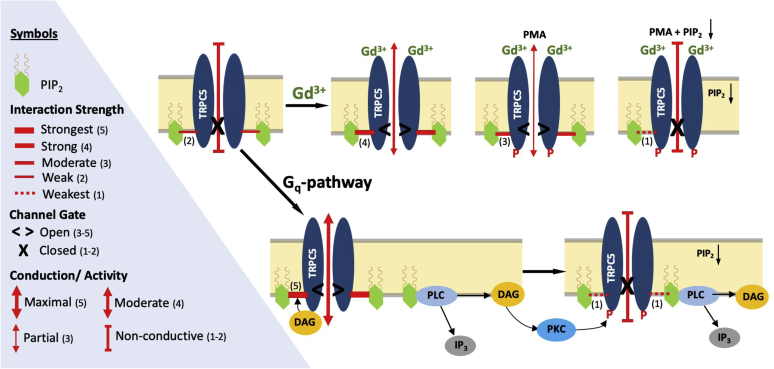
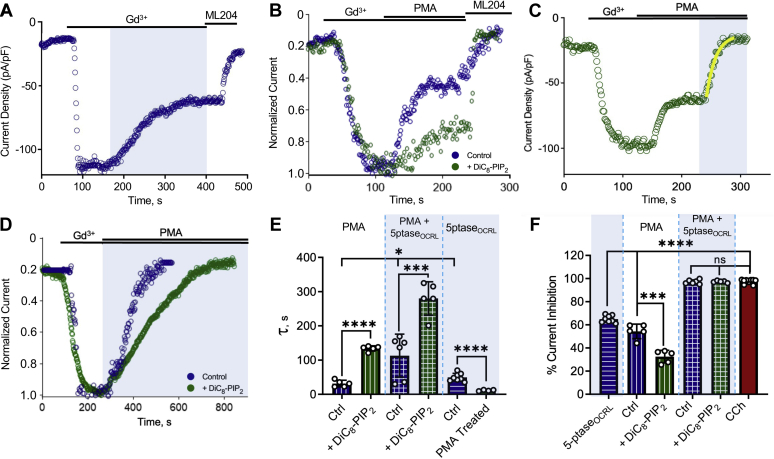
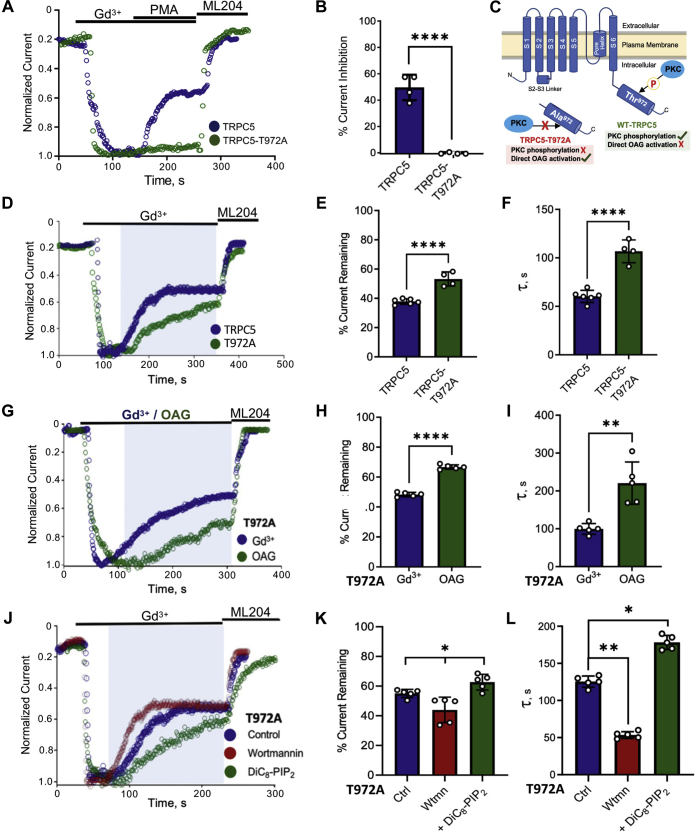
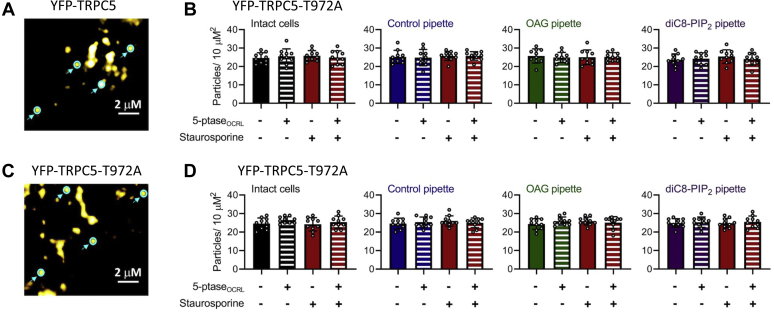
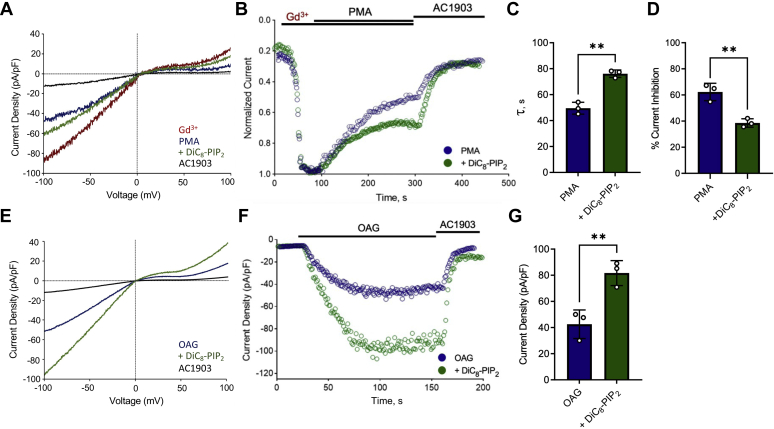
Transient receptor potential canonical type 5 (TRPC5) ion channels are expressed in the brain and kidney and have been identified as promising therapeutic targets whose selective inhibition can protect against diseases driven by a leaky kidney filter, such as focal segmental glomerular sclerosis. TRPC5 channels are activated not only by elevated levels of extracellular Caor lanthanide ions but also by G protein (G) stimulation. Phosphatidylinositol 4,5-bisphosphate (PIP) hydrolysis by phospholipase C enzymes leads to PKC-mediated phosphorylation of TRPC5 channels and their subsequent desensitization. However, the roles of PIP in activation and maintenance of TRPC5 channel activity via its hydrolysis product diacyl glycerol (DAG), as well as the mechanism of desensitization of TRPC5 activity by DAG-stimulated PKC activity, remain unclear. Here, we designed experiments to distinguish between the processes underlying channel activation and inhibition. Employing whole-cell patch-clamp, we used an optogenetic tool to dephosphorylate PIP and assess channel-PIP interactions influenced by activators, such as DAG, or inhibitors, such as PKC phosphorylation. Using total internal reflection microscopy, we assessed channel cell surface density. We show that PIP controls both the PKC-mediated inhibition and the DAG- and lanthanide-mediated activation of TRPC5 currents via control of gating rather than channel cell surface density. These mechanistic insights promise to aid in the development of more selective and precise inhibitors to block TRPC5 channel activity and illuminate new opportunities for targeted therapies for a group of chronic kidney diseases for which there is currently a great unmet need.
瞬时受体电位经典型 5 型(TRPC5)离子通道在大脑和肾脏中表达,并已被确定为有前途的治疗靶点,其选择性抑制可预防由渗漏滤器引起的疾病,如局灶节段性肾小球硬化症。TRPC5 通道不仅被细胞外 Ca 或镧离子的升高所激活,还被 G 蛋白(G)刺激所激活。磷脂酶 C 酶水解磷脂酰肌醇 4,5-二磷酸(PIP)导致蛋白激酶 C(PKC)介导的 TRPC5 通道磷酸化及其随后脱敏。然而,PIP 通过其水解产物二酰基甘油(DAG)在激活和维持 TRPC5 通道活性中的作用,以及 DAG 刺激的 PKC 活性对 TRPC5 活性脱敏的机制,仍然不清楚。在这里,我们设计了实验来区分通道激活和抑制的过程。我们采用全细胞膜片钳技术,使用光遗传学工具去磷酸化 PIP,并评估受激活剂(如 DAG)或抑制剂(如 PKC 磷酸化)影响的通道-PIP 相互作用。我们利用全内反射显微镜评估通道细胞表面密度。我们表明,PIP 通过控制门控而不是通道细胞表面密度,控制 PKC 介导的抑制以及 DAG 和镧系元素介导的 TRPC5 电流的激活。这些机制上的见解有望有助于开发更具选择性和精确性的抑制剂来阻断 TRPC5 通道活性,并为一组目前存在巨大未满足需求的慢性肾脏疾病提供新的靶向治疗机会。