Smith William C
Moray House School of Education and Sport, University of Edinburgh, Edinburgh, UK.
Int Rev Educ. 2021;67(1-2):53-78. doi: 10.1007/s11159-021-09900-2. Epub 2021 Apr 26.
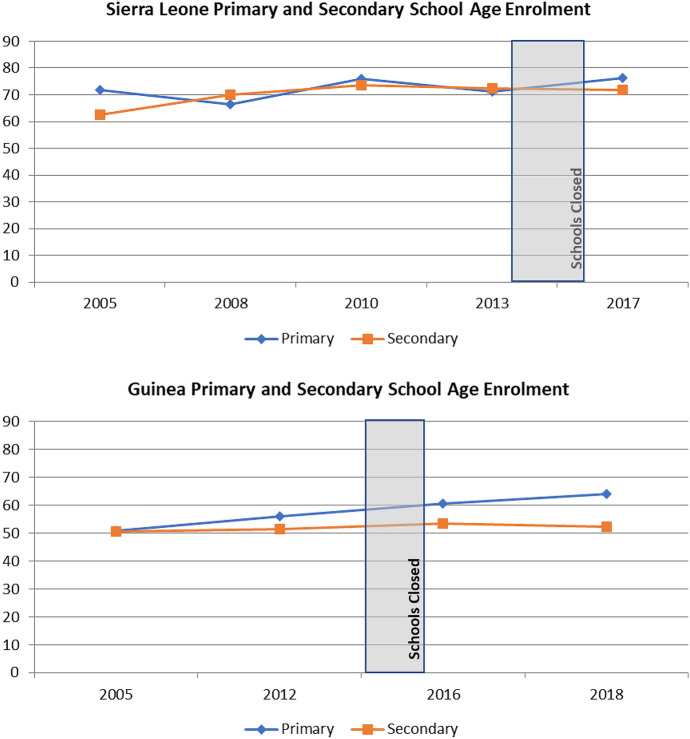
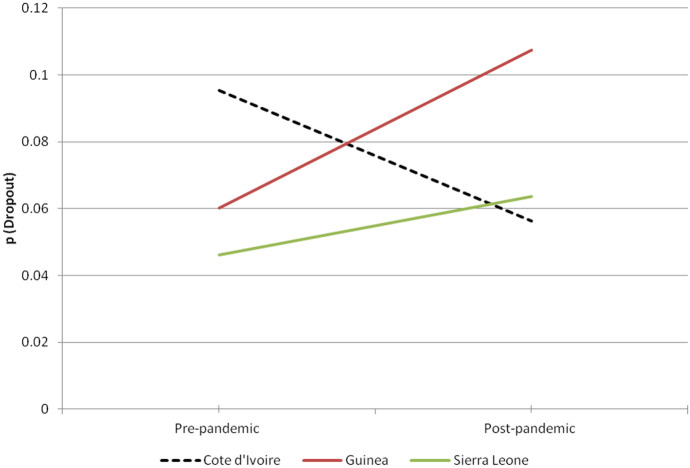
The COVID-19 pandemic has seen an unprecedented shutdown of society. Among the various safety measures taken, much attention has been given to school closure as a non-pharmaceutical mitigation tool to curb the spread of the disease through ensuring "social" (physical) distancing. Nearly 1.725 billion children in over 95% of countries worldwide have been affected by school closures implemented in April 2020 as the virus continued to spread. In the field of education, policymakers' attention has been directed at keeping students on board through remote learning and addressing the immediate needs of schools upon reopening. The study presented in this article focuses on who remains absent after schools resume. Using publicly available survey data from the USAID Demographic Health Surveys Program and the UNICEF Multiple Indicator Cluster Survey from before and after the 2013-2016 Ebola pandemic in Guinea and Sierra Leone in West Africa, the author examined changes in school enrolment and dropout patterns, with targeted consideration given to traditionally marginalised groups. At the time, schools closed for between seven to nine months in the two countries; this length and intensity makes this Ebola pandemic the only health crisis in the recent past to come close to the pandemic-related school closures experienced in 2020. The author's findings suggest that post-Ebola, youth in the poorest households saw the largest increase in school dropout. Exceeding expected pre-Ebola dropout rates, an additional 17,400 of the poorest secondary-age youth were out of school. This evidence is important for minimising the likely post-COVID-19 expansion in inequality. The author's findings point to the need for sustainable planning that looks beyond the reopening of educational institutions to include comprehensive financial support packages for groups most likely to be affected.
新冠疫情导致社会前所未有的停摆。在采取的各种安全措施中,学校关闭作为一种非药物缓解手段备受关注,旨在通过确保“社交”(物理)距离来遏制疾病传播。随着病毒持续蔓延,2020年4月全球95%以上国家的近17.25亿儿童受到学校关闭的影响。在教育领域,政策制定者的注意力集中在通过远程学习让学生继续接受教育,并解决学校重新开学后的紧迫需求。本文介绍的研究聚焦于学校复课后哪些学生仍然缺课。作者利用美国国际开发署人口与健康调查项目以及联合国儿童基金会多指标类集调查在2013 - 2016年西非几内亚和塞拉利昂埃博拉疫情前后的公开调查数据,研究了入学率和辍学模式的变化,并特别关注了传统上被边缘化的群体。当时,这两个国家的学校关闭了七到九个月;这种时长和强度使得此次埃博拉疫情成为近期唯一一次接近2020年因疫情导致学校关闭情况的健康危机。作者的研究结果表明,埃博拉疫情后,最贫困家庭的青少年辍学率增幅最大。超过了埃博拉疫情前的预期辍学率,另外有17400名最贫困的中学适龄青少年失学。这一证据对于尽量减少新冠疫情后不平等现象可能加剧的情况很重要。作者的研究结果指出,需要进行可持续规划,不仅要着眼于教育机构的重新开放,还应包括为最可能受影响群体提供全面的财政支持方案。