Tabacof Laura, Dewil Sophie, Herrera Joseph E, Cortes Mar, Putrino David
Department of Rehabilitation and Human Performance, Icahn School of Medicine at Mount Sinai, New York, NY, United States.
Front Psychol. 2021 Apr 15;12:612350. doi: 10.3389/fpsyg.2021.612350. eCollection 2021.
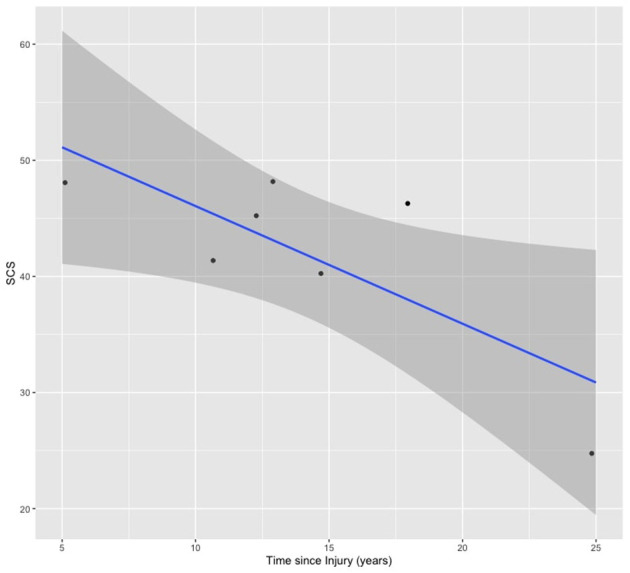
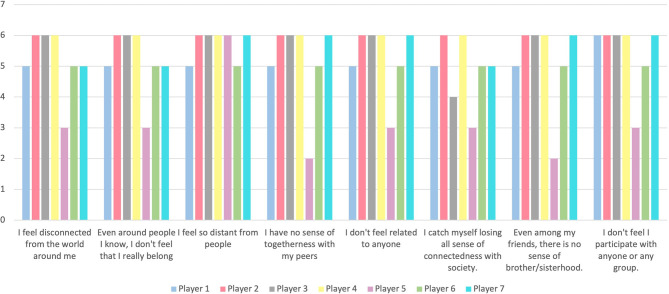
People with Spinal Cord Injury (SCI) are at risk of feeling socially disconnected. Competitive esports present an opportunity for people with SCI to remotely engage in a community. The aim of this study is to discuss barriers to esports participation for people with SCI, present adaptive solutions to these problems, and analyze self-reported changes in social connection. We presented a descriptive data collected in the process of a quality improvement initiative at Mount Sinai Hospital. In 2019, seven individuals with cervical SCI and quadriplegia participated in a special interest group on esports. Group scores were then analyzed for evidence of between subjects variability using a single sample -test. A Pearson's correlation was conducted to determine the relationship between social connectedness and demographic data. All players experienced functional limitations as a result of their injury but managed to design personalized gaming setups with adaptive equipment that allowed them to successfully compete in esports. All players reported a positive change in perceived social connectedness ( < 0.001) after participating in the special interest group. Score on Social Connectedness Scale negatively correlated with Time since injury (years). It is feasible to create adaptive gaming setups that can be used by people with differing degrees and severity of SCI in a competitive esports environment. Technology and adaptive competitive esports have a potential to improve social connectedness and inclusion in people with quadriplegia. Further research on efficacy and effectiveness of these inclusive environments and their effects on quality of life, activity, and participation is warranted.
脊髓损伤(SCI)患者有社交脱节的风险。竞争性电子竞技为脊髓损伤患者提供了远程融入社区的机会。本研究的目的是探讨脊髓损伤患者参与电子竞技的障碍,提出针对这些问题的适应性解决方案,并分析自我报告的社交联系变化。我们展示了在西奈山医院质量改进计划过程中收集的描述性数据。2019年,7名颈髓损伤和四肢瘫痪患者参加了一个电子竞技特别兴趣小组。然后使用单样本检验分析组分数,以寻找受试者间变异性的证据。进行了Pearson相关性分析,以确定社交联系与人口统计学数据之间的关系。所有玩家都因受伤而存在功能限制,但他们设法使用适应性设备设计了个性化的游戏设置,使他们能够在电子竞技中成功竞争。所有玩家在参加特别兴趣小组后报告称,他们感知到的社交联系有积极变化(<0.001)。社交联系量表得分与受伤时间(年)呈负相关。在竞争性电子竞技环境中,为不同程度和严重程度的脊髓损伤患者创建可使用的适应性游戏设置是可行的。技术和适应性竞争性电子竞技有潜力改善四肢瘫痪患者的社交联系和融入度。有必要进一步研究这些包容性环境的功效及其对生活质量、活动和参与的影响。