Department of Applied Animal Science, College of Animal Life Sciences, Kangwon National University, Chuncheon 24341, Kangwon-do, Republic of Korea.
Laboratory of Microbial Genomics and Big Data, College of Animal Life Sciences, Kangwon National University, Chuncheon 24341, Kangwon-do, Republic of Korea.
G3 (Bethesda). 2021 Sep 6;11(9). doi: 10.1093/g3journal/jkab147.
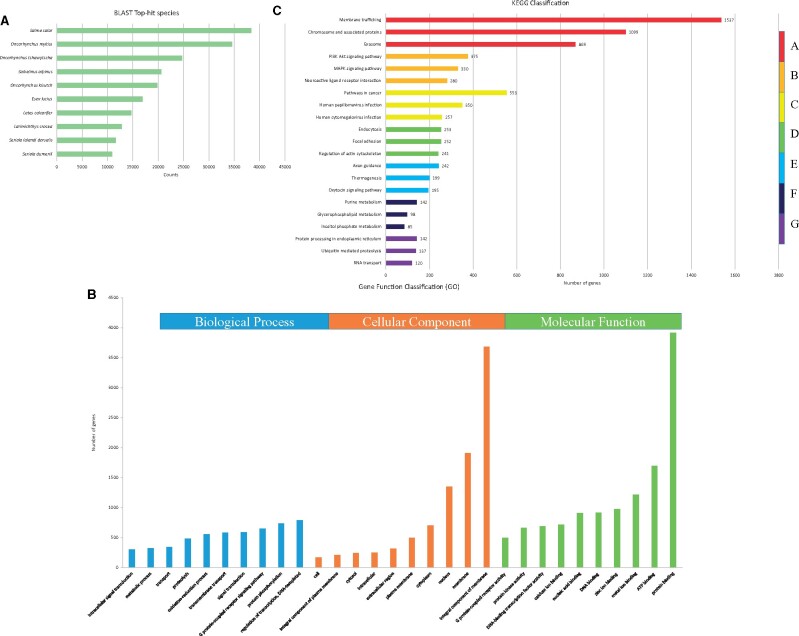
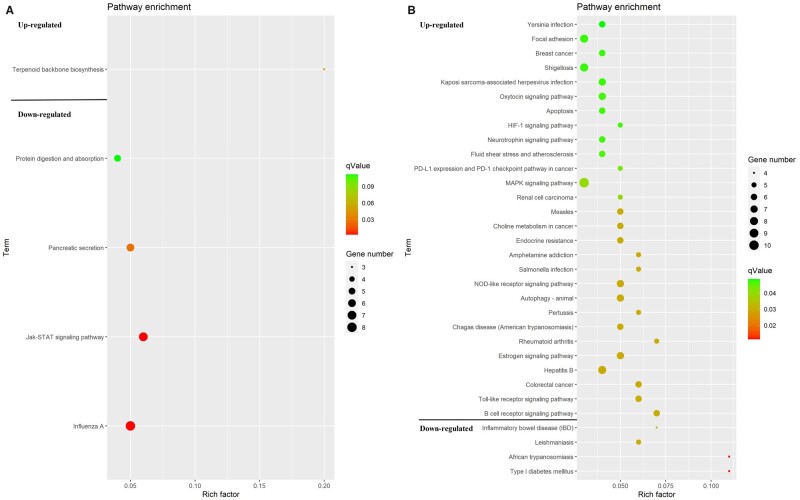
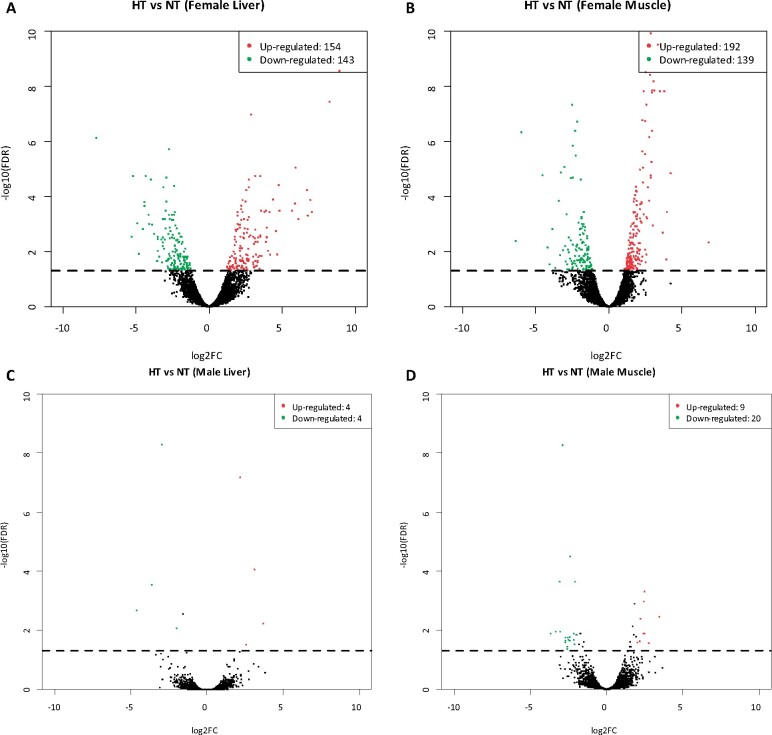
Pond smelt (Hypomesus nipponensis) is a cold-freshwater fish species and a winter economic aquaculture resource in South Korea. Because of its high susceptibility to abnormal water temperature from global warming, a large number of smelt die in hot summers. Here, we present the first draft genome of H. nipponensis and transcriptomic changes in molecular mechanisms or intracellular responses under heat stress. We combined Illumina and PacBio sequencing technologies to generate the draft genome of H. nipponensis. Based on the reference genome, we conducted transcriptome analysis of liver and muscle tissues under normal (NT, 5°C) vs. warm (HT, 23°C) conditions to identify heat stress-induced genes and gene categories. We observed a total of 1987 contigs with N50 of 0.46 Mbp, with the largest contig (3.03 Mbp) in the assembled genome. A total of 20,644 protein-coding genes were predicted, and 19,224 genes were functionally annotated: 15,955 genes for Gene Ontology terms and 11,560 genes for KEGG Orthology. We conducted the lost and gained genes analysis compared with three species that: human, zebrafish, and salmon. In the lost genes analysis, we detected that smelt lost 4461 (22.16%), 2825 (10.62%), and 1499 (3.09%) genes compare with above three species, respectively. In the gained genes analysis, we observed that smelt gained 1133 (5.49%), 1670 (8.09%), and 229 (1.11%) genes compared with the above species, respectively. From transcriptome analysis, a total of 297 and 331 differentially expressed genes (DEGs) with a false discovery rate <0.05 were identified in the liver and muscle tissues, respectively. Gene enrichment analysis of DEGs indicates that upregulated genes were significantly enriched for lipid biosynthetic process (GO:0008610, P < 0.001) and regulation of apoptotic process (GO:0042981, P < 0.01), and genes were downregulated by immune responses such as myeloid cell differentiation (GO:0030099, P < 0.001) in the liver under heat stress. In muscle tissue, upregulated genes were enriched for hypoxia (GO:0001666, P < 0.05), transcription regulator activity (GO:0140110, P < 0.001), and calcium-release channel activity (GO:0015278, P < 0.01), and genes were downregulated for a nicotinamide nucleotide biosynthetic process (GO:0019359, P < 0.01). The results of KEGG pathway analysis were similar to that of gene enrichment analysis. The draft genome and transcriptomic of H. nipponensis will be a useful genetic resource for functional and evolutionary studies. Our findings will improve understanding of molecular mechanisms and heat responses and be useful for predicting survival of the smelt and its closely related species under global warming.
日本七鳃鳗(Hypomesus nipponensis)是一种冷水性鱼类,也是韩国冬季经济水产养殖资源。由于其对全球变暖导致的异常水温高度敏感,大量七鳃鳗在炎热的夏季死亡。在这里,我们呈现了日本七鳃鳗的第一个基因组草图和热应激下分子机制或细胞内反应的转录组变化。我们结合了 Illumina 和 PacBio 测序技术,生成了日本七鳃鳗的基因组草图。基于参考基因组,我们对正常(NT,5°C)和温暖(HT,23°C)条件下的肝脏和肌肉组织进行了转录组分析,以鉴定热应激诱导的基因和基因类别。我们总共观察到 1987 个 contigs,N50 为 0.46 Mbp,组装基因组中最大的 contig 为 3.03 Mbp。共预测了 20644 个蛋白编码基因,其中 19224 个基因被功能注释:15955 个基因用于基因本体论术语,11560 个基因用于 KEGG 直系同源物。我们与人类、斑马鱼和鲑鱼三种物种进行了丢失和获得基因分析。在丢失基因分析中,我们发现与以上三种物种相比,七鳃鳗分别丢失了 4461(22.16%)、2825(10.62%)和 1499(3.09%)个基因。在获得基因分析中,我们观察到与以上三种物种相比,七鳃鳗分别获得了 1133(5.49%)、1670(8.09%)和 229(1.11%)个基因。从转录组分析中,我们分别在肝脏和肌肉组织中鉴定到了总共 297 个和 331 个差异表达基因(DEGs),其错误发现率(FDR)<0.05。DEGs 的基因富集分析表明,上调基因在脂质生物合成过程(GO:0008610,P<0.001)和凋亡过程调控(GO:0042981,P<0.01)中显著富集,在热应激下肝脏中免疫反应如髓样细胞分化(GO:0030099,P<0.001)下调基因。在肌肉组织中,上调基因在缺氧(GO:0001666,P<0.05)、转录调控活性(GO:0140110,P<0.001)和钙释放通道活性(GO:0015278,P<0.01)方面富集,而烟酰胺核苷酸生物合成过程(GO:0019359,P<0.01)下调基因。KEGG 途径分析的结果与基因富集分析相似。日本七鳃鳗的基因组草图和转录组将成为功能和进化研究的有用遗传资源。我们的研究结果将提高对分子机制和热反应的理解,并有助于预测七鳃鳗及其密切相关物种在全球变暖下的生存能力。