Siracusa Valentina, Maimone Giuseppe, Antonelli Vincenzo
Department of Chemical Science, University of Catania, Viale A. Doria 6, 95125 Catania, Italy.
Department of Neurosurgery, Hospital M. Bufalini-AUSL della Romagna, Viale Ghirotti 286, 47521 Cesena, Italy.
Polymers (Basel). 2021 Apr 30;13(9):1452. doi: 10.3390/polym13091452.
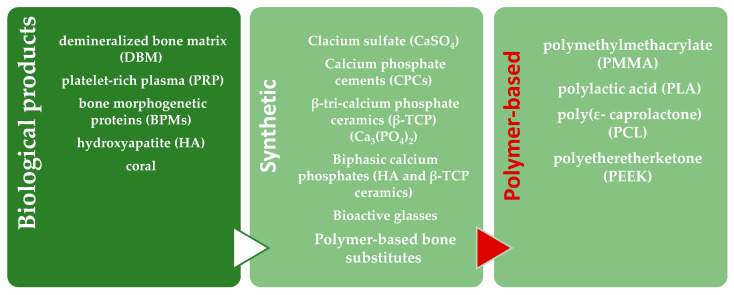
Cranioplasty is the surgical technology employed to repair a traumatic head injury, cerebrovascular disease, oncology resection and congenital anomalies. Actually, different bone substitutes are used, either derived from biological products such as hydroxyapatite and demineralized bone matrix or synthetic ones such as sulfate or phosphate ceramics and polymer-based substitutes. Considering that the choice of the best material for cranioplasty is controversial, linked to the best operation procedure, the intent of this review was to report the outcome of research conducted on materials used for such applications, comparing the most used materials. The most interesting challenge is to preserve the mechanical properties while improving the bioactivity, porosity, biocompatibility, antibacterial properties, lowering thickness and costs. Among polymer materials, polymethylmethacrylate and polyetheretherketone are the most motivating, due to their biocompatibility, rigidity and toughness. Other biomaterials, with ecofriendly attributes, such as polycaprolactone and polylactic acid have been investigated, due to their microstructure that mimic the trabecular bone, encouraging vascularization and cell-cell communications. Taking into consideration that each material must be selected for specific clinical use, the main limitation remains the defects and the lack of vascularization, consequently porous synthetic substitutes could be an interesting way to support a faster and wider vascularization, with the aim to improve patient prognosis.
颅骨成形术是一种用于修复创伤性头部损伤、脑血管疾病、肿瘤切除和先天性畸形的外科技术。实际上,人们使用了不同的骨替代物,它们要么来源于生物制品,如羟基磷灰石和脱矿骨基质,要么是合成材料,如硫酸或磷酸陶瓷以及聚合物基替代物。鉴于颅骨成形术最佳材料的选择存在争议,且与最佳手术程序相关,本综述的目的是报告针对此类应用所使用材料的研究结果,比较最常用的材料。最有趣的挑战是在保持机械性能的同时,提高生物活性、孔隙率、生物相容性、抗菌性能,降低厚度和成本。在聚合物材料中,聚甲基丙烯酸甲酯和聚醚醚酮最具吸引力,因为它们具有生物相容性、刚性和韧性。其他具有生态友好属性的生物材料,如聚己内酯和聚乳酸,因其微观结构模仿松质骨,有利于血管生成和细胞间通讯,也已得到研究。考虑到每种材料都必须针对特定临床用途进行选择,主要限制仍然是缺陷和缺乏血管化,因此多孔合成替代物可能是促进更快、更广泛血管化的一种有趣方式,旨在改善患者预后。