
优质春小麦基因型中雄性和雌性花杂种潜在性状的全基因组关联与预测
Genome-Wide Association and Prediction of Male and Female Floral Hybrid Potential Traits in Elite Spring Bread Wheat Genotypes.
作者信息
El Hanafi Samira, Cherkaoui Souad, Kehel Zakaria, Al-Abdallat Ayed, Tadesse Wuletaw
机构信息
International Center for Agricultural Research in the Dry Areas, B.P. 6299, Rue Hafiane Cherkaoui, Rabat-Institutes, Rabat 10100, Morocco.
Bio-bio Center, Physiology Plant Biotechnology Unit, Faculty of Sciences, Mohammed V University in Rabat, 4 Avenue Ibn Battouta, B.P. 1014, Rabat 10100, Morocco.
出版信息
Plants (Basel). 2021 Apr 29;10(5):895. doi: 10.3390/plants10050895.
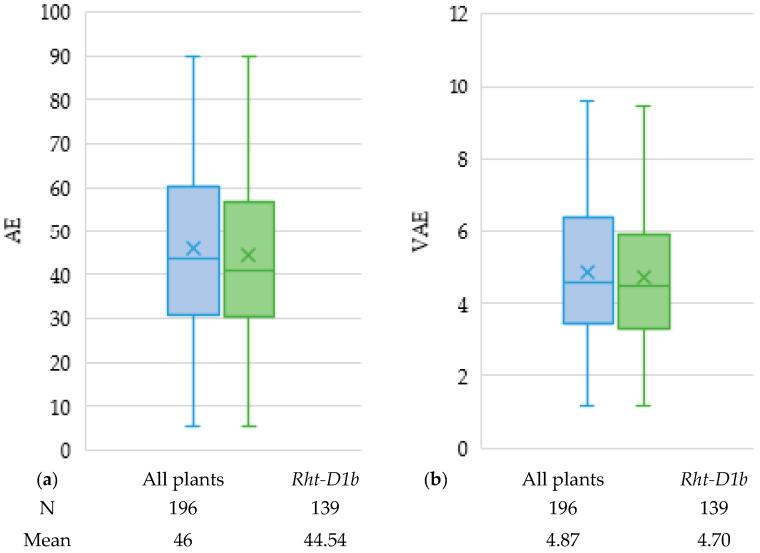
Hybrid wheat breeding is one of the most promising technologies for further sustainable yield increases. However, the cleistogamous nature of wheat displays a major bottleneck for a successful hybrid breeding program. Thus, an optimized breeding strategy by developing appropriate parental lines with favorable floral trait combinations is the best way to enhance the outcrossing ability. This study, therefore, aimed to dissect the genetic basis of various floral traits using genome-wide association study (GWAS) and to assess the potential of genome-wide prediction (GP) for anther extrusion (AE), visual anther extrusion (VAE), pollen mass (PM), pollen shedding (PSH), pollen viability (PV), anther length (AL), openness of the flower (OPF), duration of floret opening (DFO) and stigma length. To this end, we employed 196 ICARDA spring bread wheat lines evaluated for three years and genotyped with 10,477 polymorphic SNP. In total, 70 significant markers were identified associated to the various assessed traits at FDR ≤ 0.05 contributing a minor to large proportion of the phenotypic variance (8-26.9%), affecting the traits either positively or negatively. GWAS revealed multi-marker-based associations among AE, VAE, PM, OPF and DFO, most likely linked markers, suggesting a potential genomic region controlling the genetic association of these complex traits. Of these markers, and deserve particular attention. The consistently significant markers with large effect could be useful for marker-assisted selection. Genomic selection revealed medium to high prediction accuracy ranging between 52% and 92% for the assessed traits with the least and maximum value observed for stigma length and visual anther extrusion, respectively. This indicates the feasibility to implement genomic selection to predict the performance of hybrid floral traits with high reliability.
杂交小麦育种是进一步实现可持续增产的最具前景的技术之一。然而,小麦的闭花受精特性是杂交育种计划成功实施的一个主要瓶颈。因此,通过培育具有优良花部性状组合的合适亲本系来优化育种策略,是提高异交能力的最佳途径。因此,本研究旨在利用全基因组关联研究(GWAS)剖析各种花部性状的遗传基础,并评估全基因组预测(GP)对花药伸出(AE)、可视花药伸出(VAE)、花粉量(PM)、花粉散落(PSH)、花粉活力(PV)、花药长度(AL)、花朵开放度(OPF)、小花开放持续时间(DFO)和柱头长度的潜力。为此,我们使用了196份国际干旱地区农业研究中心(ICARDA)的春小麦品系,对其进行了为期三年的评估,并使用10477个多态性单核苷酸多态性(SNP)进行基因分型。总共鉴定出70个显著标记,这些标记与各种评估性状相关,在错误发现率(FDR)≤0.05时,对表型变异的贡献比例从较小到较大(8 - 26.9%),对性状有正向或负向影响。GWAS揭示了AE、VAE、PM、OPF和DFO之间基于多标记的关联,很可能是连锁标记,表明存在一个潜在的基因组区域控制这些复杂性状的遗传关联。在这些标记中,[具体标记1]和[具体标记2]值得特别关注。具有显著大效应的一致性标记可用于标记辅助选择。基因组选择显示,对于评估的性状,预测准确率从中等到高,范围在52%至92%之间,柱头长度和可视花药伸出分别观察到最小值和最大值。这表明实施基因组选择以高度可靠地预测杂交花部性状表现的可行性。

 Zotero 插件