Alberta Health Services, Strategic Clinical Networks, Alberta Health Services Corporate Office, Seventh Street Plaza, 14th Floor, North Tower, 10030 - 107 Street NW, Edmonton, AB, T5J 3E4, Canada.
Department of Emergency Medicine, University of Alberta, 790 University Terrace Building, 8303 - 112 Street, Edmonton, AB, T6G 2T4, Canada.
BMC Health Serv Res. 2021 May 4;21(1):423. doi: 10.1186/s12913-021-06415-2.
Worse health outcomes are consistently reported for First Nations people in Canada. Social, political and economic inequities as well as inequities in health care are major contributing factors to these health disparities. Emergency care is an important health services resource for First Nations people. First Nations partners, academic researchers, and health authority staff are collaborating to examine emergency care visit characteristics for First Nations and non-First Nations people in the province of Alberta.
We conducted a population-based retrospective cohort study examining all Alberta emergency care visits from April 1, 2012 to March 31, 2017 by linking administrative data. Patient demographics and emergency care visit characteristics for status First Nations persons in Alberta, and non-First Nations persons, are reported. Frequencies and percentages (%) describe patients and visits by categorical variables (e.g., Canadian Triage and Acuity Scale). Means, medians, standard deviations and interquartile ranges describe continuous variables (e.g., age).
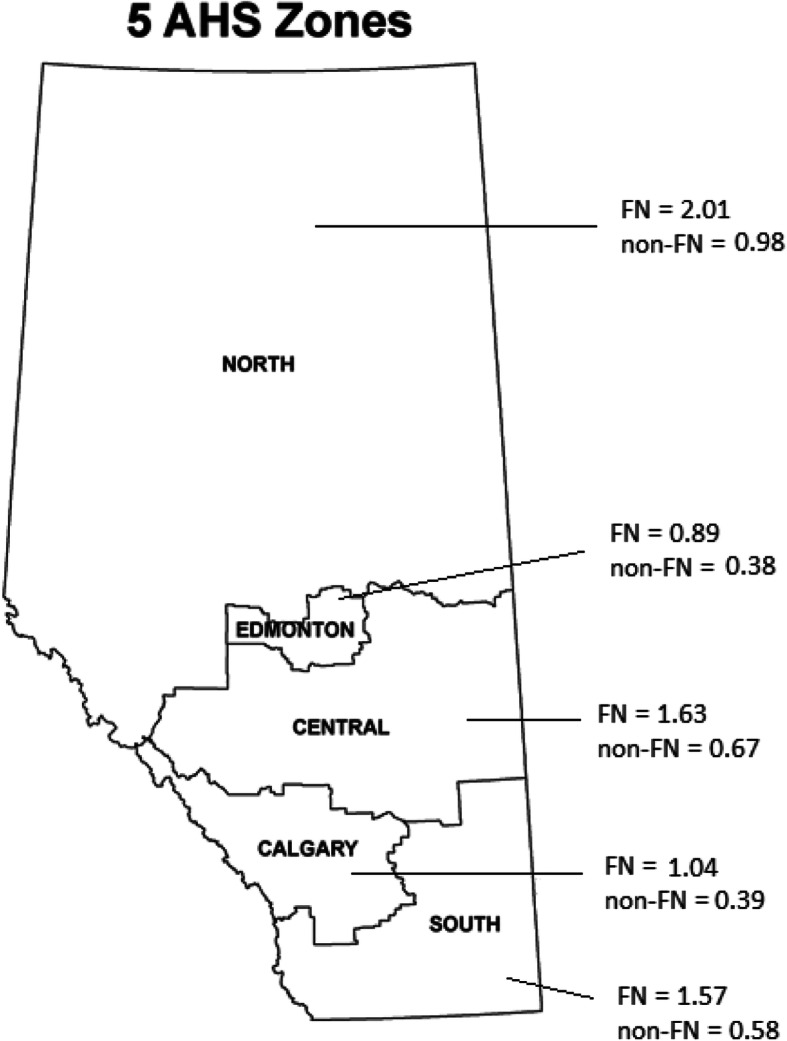
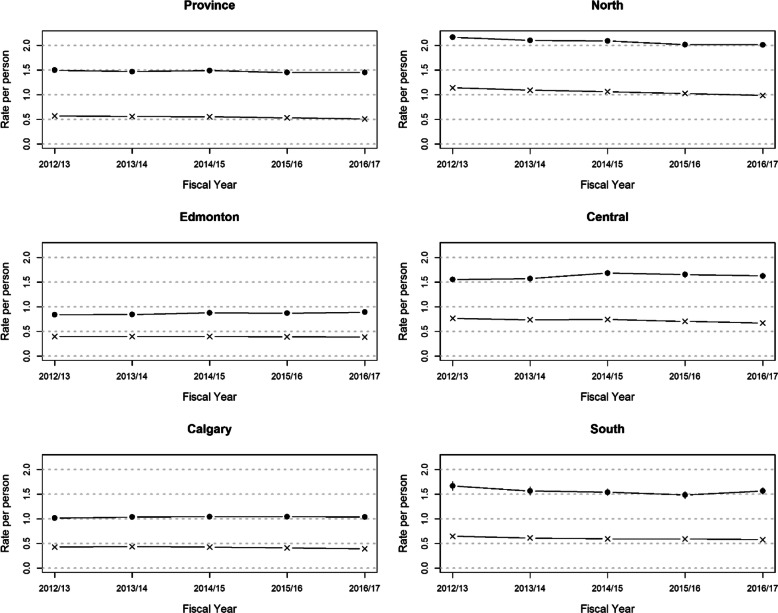
The dataset contains 11,686,288 emergency care visits by 3,024,491 unique persons. First Nations people make up 4% of the provincial population and 9.4% of provincial emergency visits. The population rate of emergency visits is nearly 3 times higher for First Nations persons than non-First Nations persons. First Nations women utilize emergency care more than non-First Nations women (54.2% of First Nations visits are by women compared to 50.9% of non-First Nations visits). More First Nations visits end in leaving without completing treatment (6.7% v. 3.6%).
Further research is needed on the impact of First Nations identity on emergency care drivers and outcomes, and on emergency care for First Nations women.
加拿大的第一民族人群的健康状况一直较差。社会、政治和经济不平等以及医疗保健方面的不平等是造成这些健康差距的主要因素。急救是第一民族人群重要的卫生服务资源。第一民族合作伙伴、学术研究人员和卫生当局工作人员正在合作,研究艾伯塔省的第一民族和非第一民族人群的急诊就诊特征。
我们通过链接行政数据进行了一项基于人群的回顾性队列研究,调查了 2012 年 4 月 1 日至 2017 年 3 月 31 日期间艾伯塔省的所有急诊就诊情况。报告了艾伯塔省第一民族和非第一民族人群的患者人口统计学和急诊就诊特征。通过分类变量(例如加拿大分诊和急症分类量表)描述患者和就诊情况的频率和百分比(%)。通过连续变量(例如年龄)描述平均值、中位数、标准差和四分位距。
该数据集包含 11686288 次急诊就诊和 3024491 个独特患者。第一民族占全省人口的 4%,占全省急诊就诊的 9.4%。第一民族人群的急诊就诊人口率几乎是非第一民族人群的 3 倍。第一民族女性比非第一民族女性更频繁地使用急诊(54.2%的第一民族就诊是女性,而非第一民族就诊中女性占 50.9%)。更多的第一民族就诊以未完成治疗离开告终(6.7%比 3.6%)。
需要进一步研究第一民族身份对急诊就诊驱动因素和结果的影响,以及对第一民族女性的急诊护理。