Department of Psychiatry, Weill Cornell Medicine, New York, NY, USA.
Departments of Neurology and Psychiatry, University of California San Francisco, San Francisco, CA, USA.
Transl Psychiatry. 2021 May 4;11(1):269. doi: 10.1038/s41398-021-01386-8.
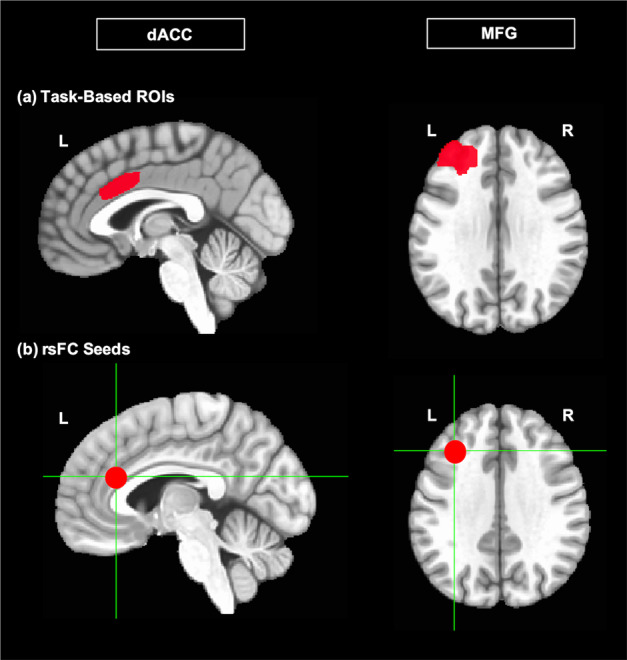
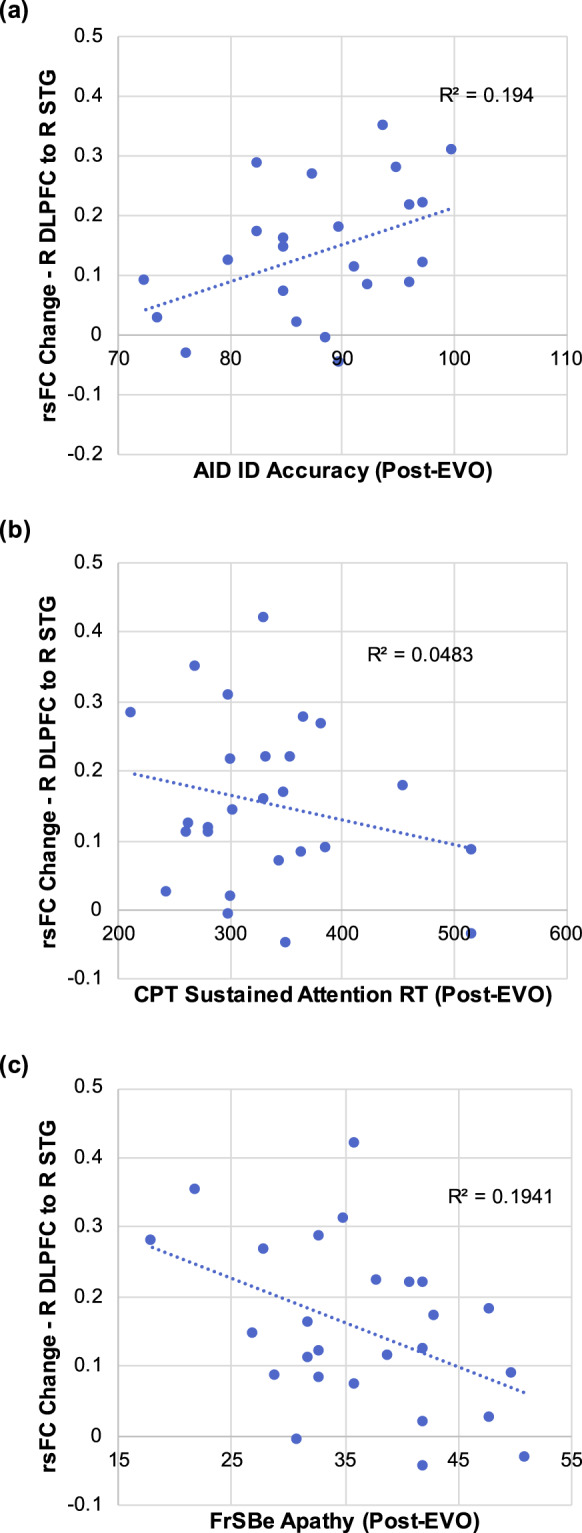
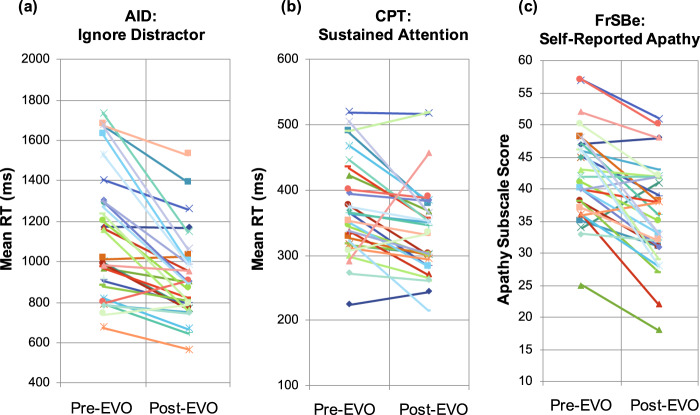
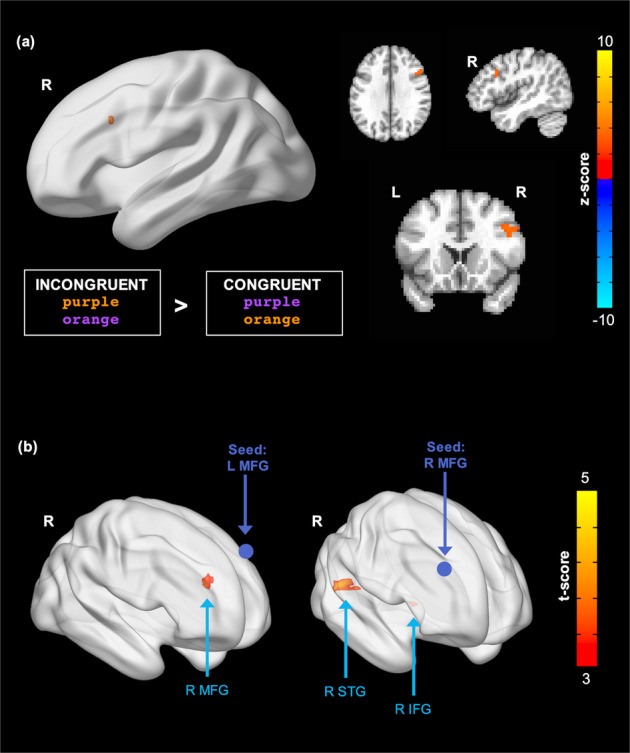
Nonpharmacological interventions targeting putative network mechanisms of major depressive disorder (MDD) may represent novel treatments. This mechanistic study investigates how a video game-like intervention, designed to improve cognitive control network (CCN) functioning by targeting multitasking, influences the CCN of middle-aged and older adults with MDD. The sample consisted of 34 adults aged 45-75 with SCID-defined diagnosis of MDD, Hamilton depression rating scale scores ≥20, and a deficit in cognitive control. Participants were instructed to play at home for 20-25 min per day, at least 5 times per week, for 4 weeks. Evidence of target engagement was defined a priori as >2/3 of participants showing CCN improvement. CCN engagement was defined as a change in a Z score of ≥0.5 on functional magnetic resonance imaging (fMRI) in activation and functional connectivity of the CCN during task-based and resting-state fMRI, respectively. 74% of participants showed a change in activation of the CCN, and 72% showed an increase in resting-state functional connectivity. Sixty-eight percent demonstrated improved cognitive control function, measured as either improvement on sustained attention or working memory performance or reduced self-reported symptoms of apathy on the frontal systems behavioral scale (FrsBe). Participants also reported a significant reduction in mood symptoms measured by PHQ-9. A remotely deployed neuroscience-informed video game-like intervention improves both CCN functions and mood in middle-aged and older adults with MDD. This easily-disseminated intervention may rescue CCN dysfunction present in a substantial subset of middle-aged and older adults with MDD.
针对重性抑郁障碍(MDD)假定网络机制的非药物干预措施可能代表新的治疗方法。这项机制研究调查了一种类似视频游戏的干预措施如何通过针对多任务来改善认知控制网络(CCN)的功能,从而影响中年和老年 MDD 患者的 CCN。该样本由 34 名年龄在 45-75 岁之间的成年人组成,这些成年人的 SCID 诊断为 MDD,汉密尔顿抑郁评定量表评分≥20,并且存在认知控制缺陷。参与者被指示在家中每天至少进行 5 次,每次 20-25 分钟,持续 4 周。目标参与的证据是预先定义的,即> 2/3 的参与者表现出 CCN 改善。CCN 参与被定义为在任务基和静息状态 fMRI 中分别对 CCN 的激活和功能连接进行 fMRI 时,Z 分数变化≥0.5。74%的参与者显示 CCN 的激活发生变化,72%的参与者显示静息状态功能连接增加。68%的人表现出认知控制功能的改善,这可以通过持续注意力或工作记忆表现的提高或额叶系统行为量表(FrsBe)上的冷漠症状自我报告减少来衡量。参与者还报告说,PHQ-9 测量的情绪症状显著减轻。远程部署的神经科学启发式类似视频游戏的干预措施可改善中年和老年 MDD 患者的 CCN 功能和情绪。这种易于传播的干预措施可能会挽救大量中年和老年 MDD 患者中存在的 CCN 功能障碍。