Christian Doppler Laboratory for Optimized Expression of Carbohydrate-Active Enzymes, Institute of Chemical, Environmental and Bioscience Engineering, TU Wien, Gumpendorfer Str. 1a, A-1060, Vienna, Austria.
Institute of Chemical, Environmental and Bioscience Engineering, TU Wien, Gumpendorfer Str. 1a, A-1060, Vienna, Austria.
Appl Microbiol Biotechnol. 2021 May;105(10):4017-4031. doi: 10.1007/s00253-021-11314-x. Epub 2021 May 5.
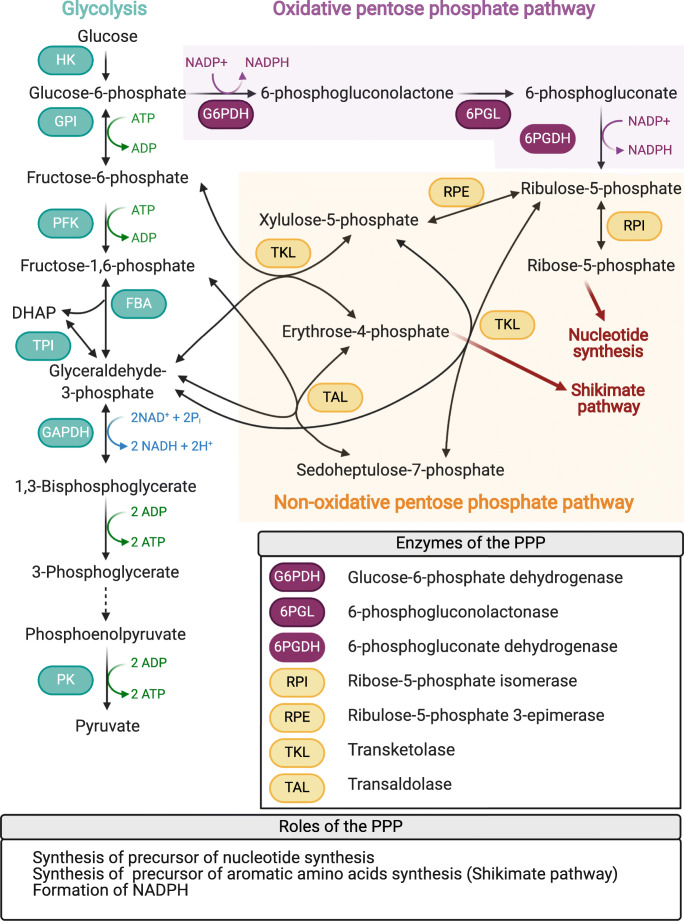
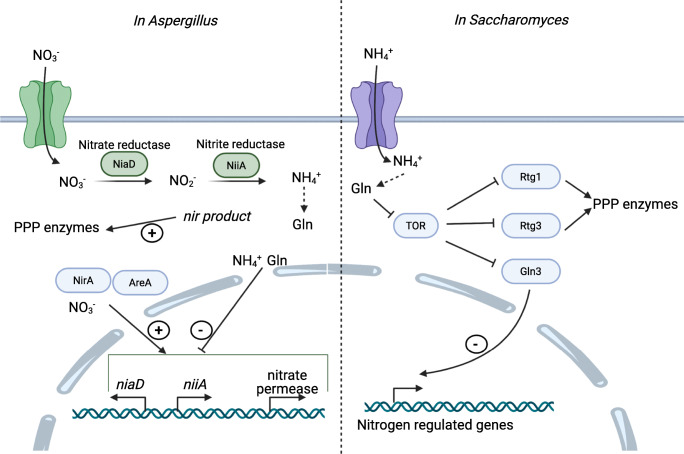
The pentose phosphate pathway (PPP) is one of the most targeted pathways in metabolic engineering. This pathway is the primary source of NADPH, and it contributes in fungi to the production of many compounds of interest such as polyols, biofuels, carotenoids, or antibiotics. However, the regulatory mechanisms of the PPP are still not fully known. This review provides an insight into the current comprehension of the PPP in fungi and the limitations of this current understanding. It highlights how this knowledge contributes to targeted engineering of the PPP and thus to better performance of industrially used fungal strains. KEY POINTS: • Type of carbon and nitrogen source as well as oxidative stress influence the PPP. • A complex network of transcription factors regulates the PPP. • Improved understanding of the PPP will allow to increase yields of bioprocesses.
戊糖磷酸途径(PPP)是代谢工程中靶向性最强的途径之一。该途径是 NADPH 的主要来源,在真菌中有助于产生许多有价值的化合物,如多元醇、生物燃料、类胡萝卜素或抗生素。然而,PPP 的调节机制仍不完全清楚。本文综述了真菌中 PPP 的最新认识以及目前理解的局限性。本文强调了这方面的知识如何有助于 PPP 的靶向工程,从而提高工业用真菌菌株的性能。关键点:• 碳源和氮源的种类以及氧化应激都会影响 PPP。• 转录因子的复杂网络调节 PPP。• 对 PPP 的深入了解将有助于提高生物工艺的产量。