INRAP (Institut National de Recherches Archéologiques Préventives), Cesson-Sévigné, France.
CNRS, CAGT, UMR 5288, Université Paul Sabatier, 31000, Toulouse, France.
PLoS One. 2021 May 5;16(5):e0248086. doi: 10.1371/journal.pone.0248086. eCollection 2021.
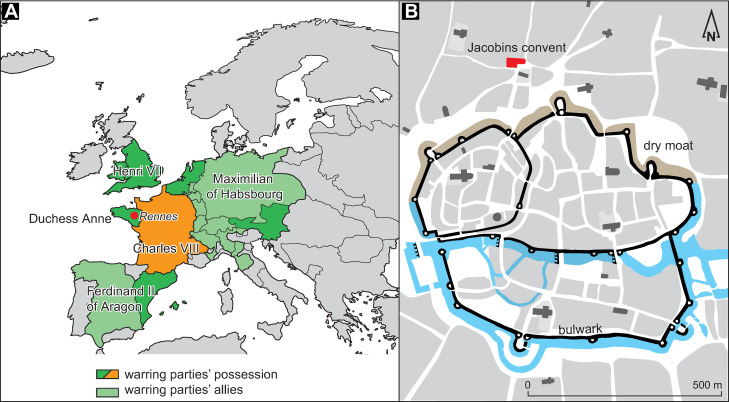
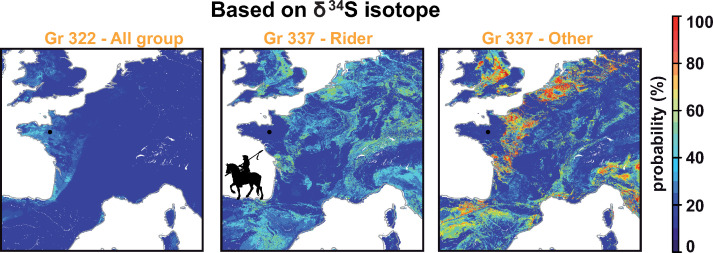
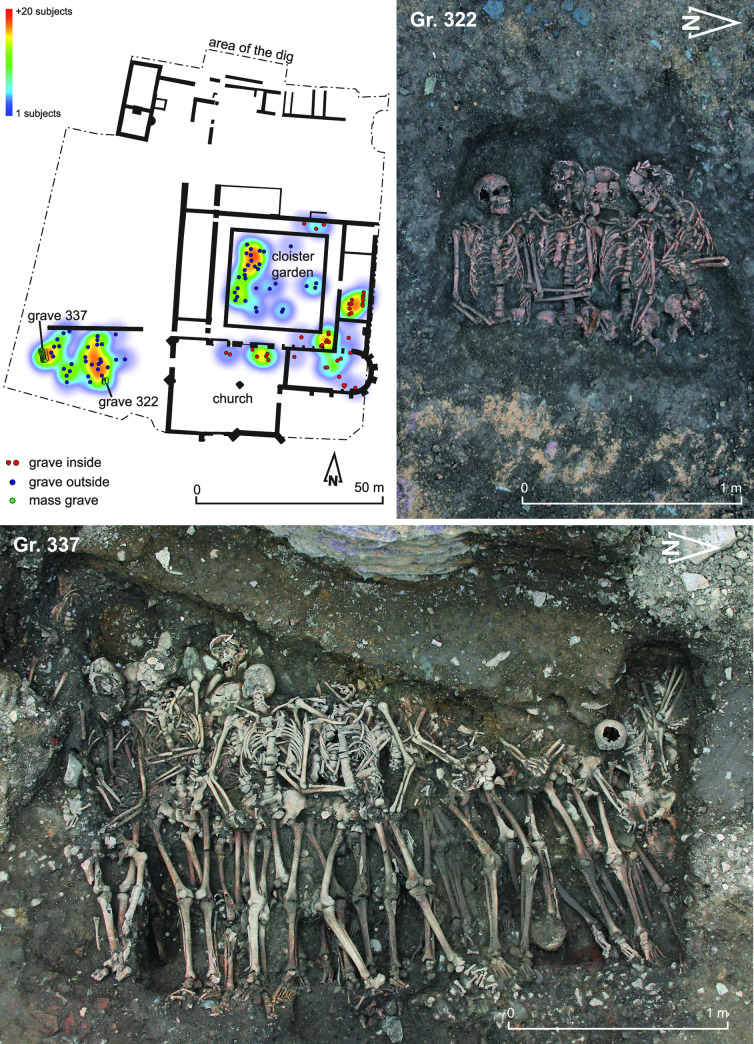
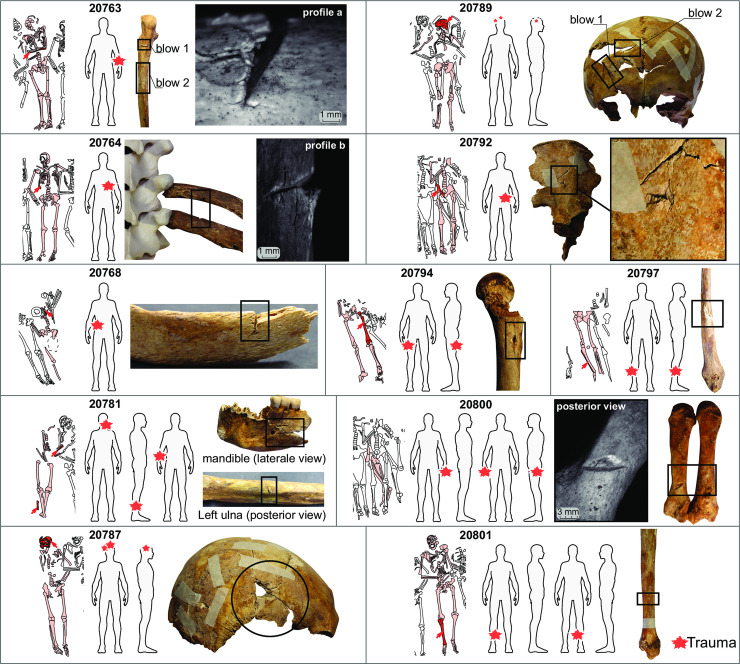
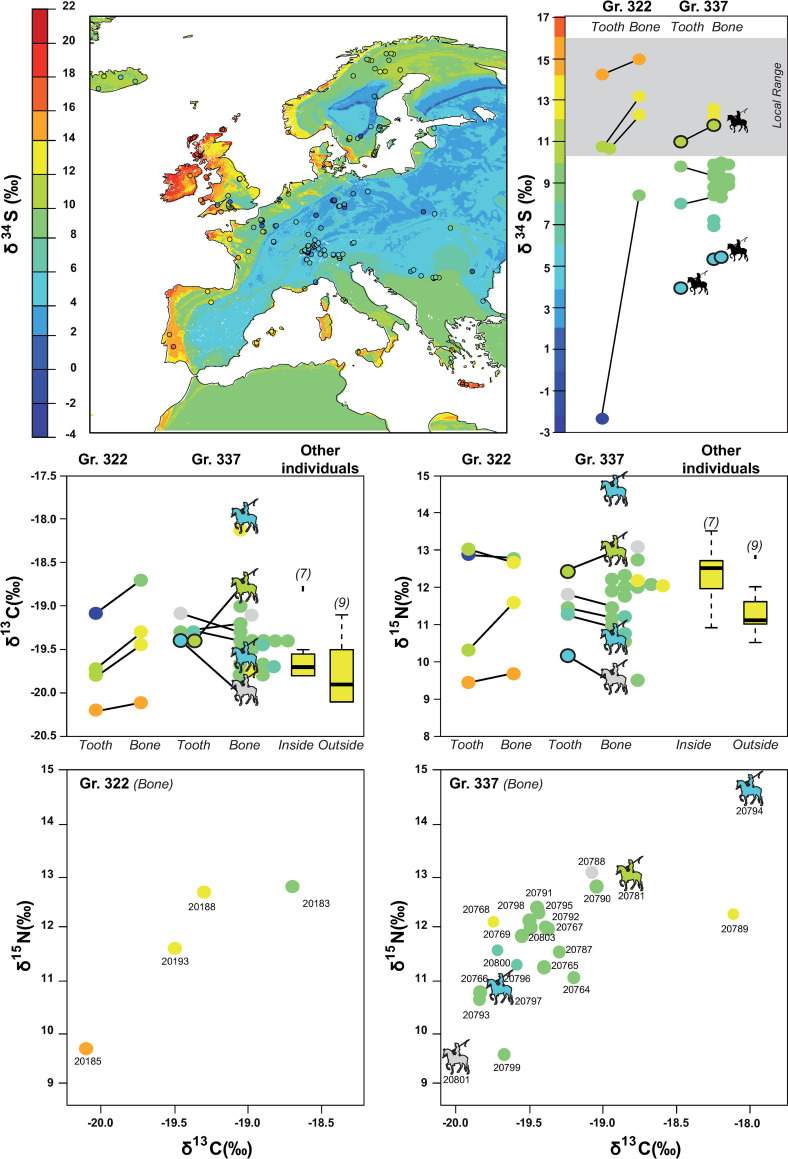
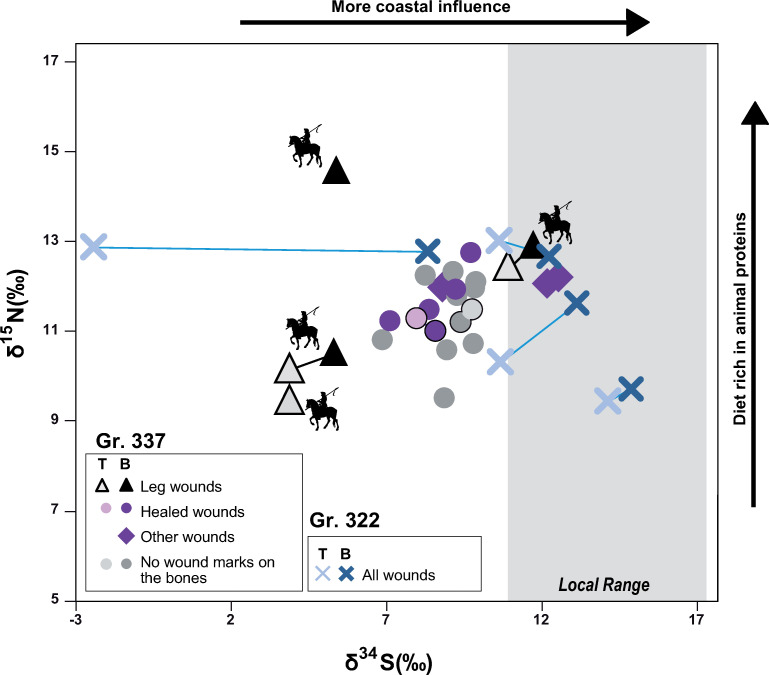
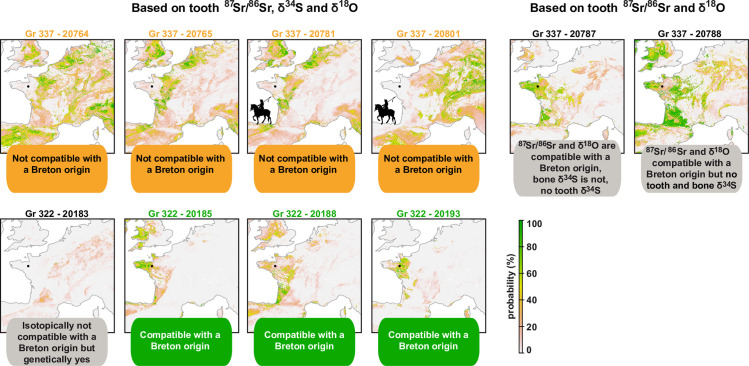
Mass graves are usually key historical markers with strong incentive for archeological investigations. The identification of individuals buried in mass graves has long benefitted from traditional historical, archaeological, anthropological and paleopathological techniques. The addition of novel methods including genetic, genomic and isotopic geochemistry have renewed interest in solving unidentified mass graves. In this study, we demonstrate that the combined use of these techniques allows the identification of the individuals found in two Breton historical mass graves, where one method alone would not have revealed the importance of this discovery. The skeletons likely belong to soldiers from the two enemy armies who fought during a major event of Breton history: the siege of Rennes in 1491, which ended by the wedding of the Duchess of Brittany with the King of France and signaled the end of the independence of the region. Our study highlights the value of interdisciplinary approaches with a particular emphasis on increasingly accurate isotopic markers. The development of the sulfur isoscape and testing of the triple isotope geographic assignment are detailed in a companion paper [13].
乱葬岗通常是具有强烈考古调查动机的重要历史标志物。对乱葬坑中埋葬的个体的鉴定长期以来一直受益于传统的历史、考古、人类学和古病理学技术。包括遗传、基因组和同位素地球化学在内的新方法的加入重新激发了人们对解决未识别乱葬坑的兴趣。在这项研究中,我们证明了这些技术的结合使用可以识别在两个布列塔尼历史乱葬坑中发现的个体,仅使用一种方法就无法揭示这一发现的重要性。这些骨骼可能属于在布列塔尼历史上的一次重大事件中作战的两支敌军士兵:1491 年的雷恩围攻战,这场战争以布列塔尼公爵夫人与法国国王的联姻而结束,并标志着该地区独立的结束。我们的研究强调了跨学科方法的价值,特别强调日益精确的同位素标记。硫同位素分布的发展和三重同位素地理分配的测试在一篇相关论文[13]中进行了详细说明。