Laboratory of Neurobiology, Kazan Federal University, Kazan, 420000, Russia.
Laboratory of Neuromorphic computing and neurosimulations, Institute of Information Technology and Intelligent Systems, Kazan Federal University, Kazan, 420000, Russia.
Sci Rep. 2021 May 5;11(1):9567. doi: 10.1038/s41598-021-88461-8.
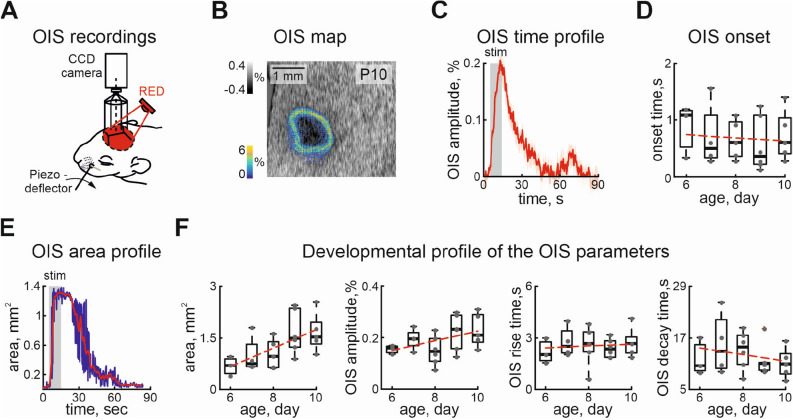
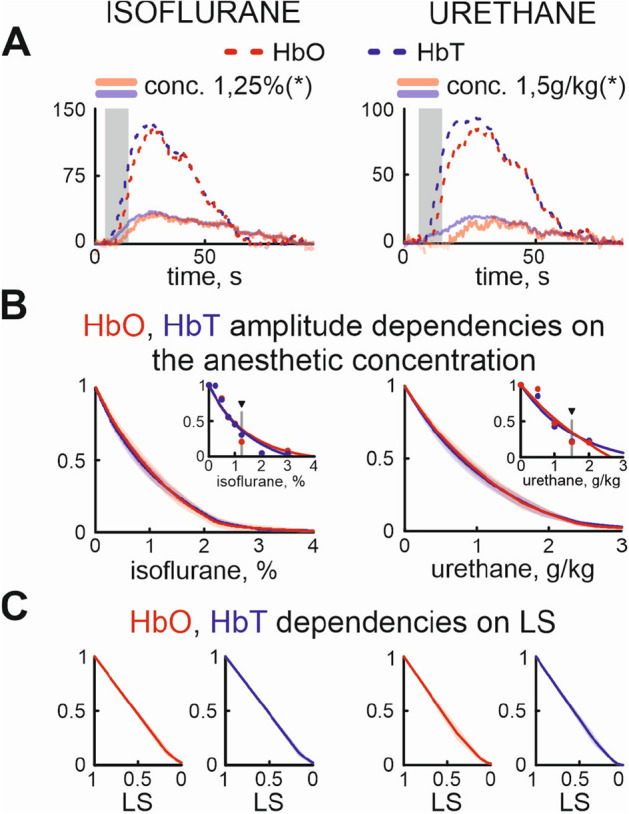
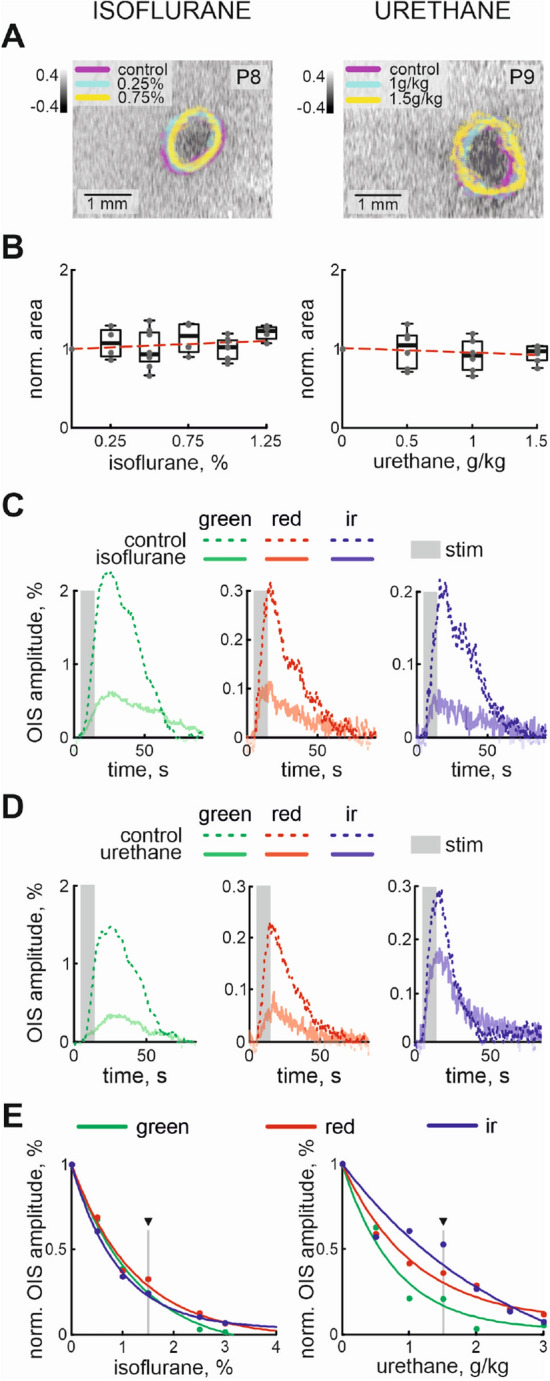
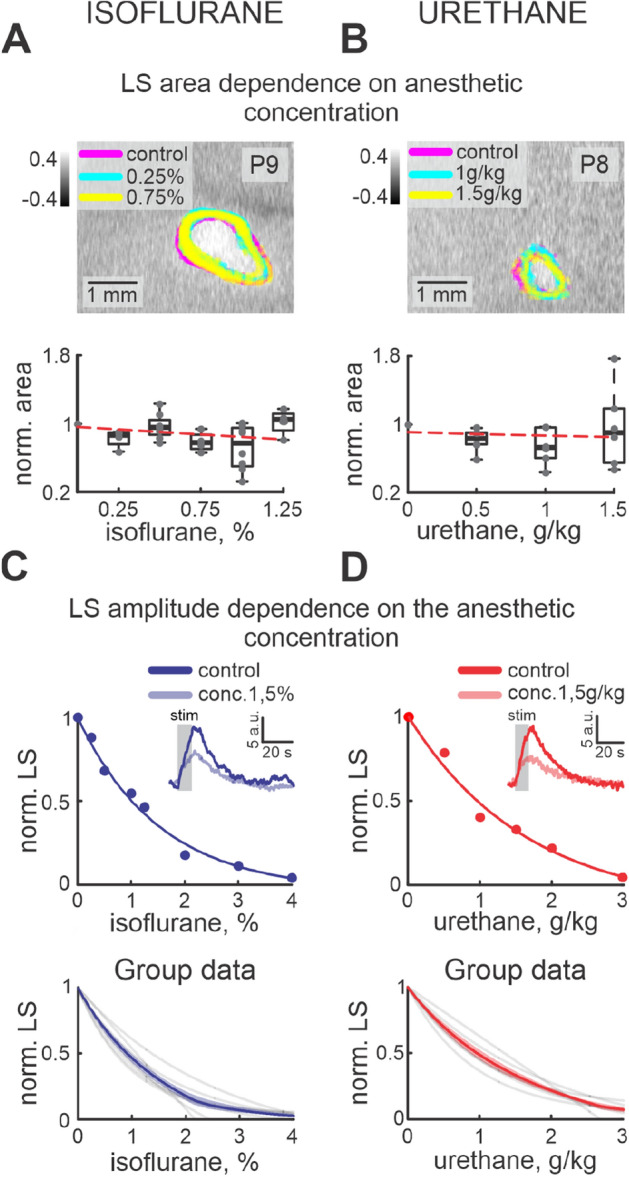
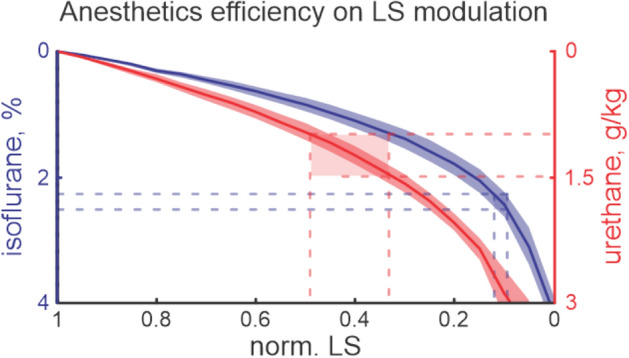
Functional studies in the central nervous system are often conducted using anesthesia. While the dose-dependent effects of anesthesia on neuronal activity have been extensively characterized in adults, little is known about the effects of anesthesia on cortical activity and cerebral blood flow in the immature central nervous system. Substitution of electrophysiological recordings with the less-invasive technique of optical intrinsic signal imaging (OIS) in vivo allowed simultaneous recordings of sensory-evoked functional response and local blood flow changes in the neonatal rat barrel cortex. Using OIS we characterize the effects of two widely used anesthetics-urethane and isoflurane. We found that both anesthetics suppressed the sensory-evoked optical intrinsic signal in a dose-dependent manner. Dependence of the cortical response suppression matched the exponential decay model. At experimental levels of anesthesia, urethane affected the evoked cortical response less than isoflurane, which is in agreement with the results of electrophysiological recordings demonstrated by other authors. Changes in oxygenation and local blood flow also showed negative correlation with both anesthetics. The high similarity in immature patterns of activity recorded in different regions of the developing cortex suggested similar principles of development regardless of the cortical region. Therefore the indicated results should be taken into account during functional explorations in the entire developing cortex. Our results also point to urethane as the anesthetic of choice in non-survival experimental recordings in the developing brain as it produces less prominent impairment of cortical neuronal activity in neonatal animals.
功能研究在中枢神经系统中经常使用麻醉。虽然麻醉对神经元活性的剂量依赖性影响在成年人中得到了广泛的描述,但对于麻醉对未成熟中枢神经系统皮质活动和脑血流的影响知之甚少。用侵入性较小的光学内源性信号成像(OIS)技术代替电生理记录,允许在新生大鼠桶状皮层中同时记录感觉诱发电位的功能反应和局部血流变化。使用 OIS,我们描述了两种广泛使用的麻醉剂-尿烷和异氟醚的作用。我们发现,两种麻醉剂均以剂量依赖性方式抑制感觉诱发性光内源性信号。皮质反应抑制的依赖性与指数衰减模型相匹配。在实验麻醉水平下,尿烷对诱发性皮质反应的影响小于异氟醚,这与其他作者的电生理记录结果一致。氧合和局部血流的变化也与两种麻醉剂呈负相关。在发育皮层的不同区域记录到的未成熟活动模式高度相似,表明无论皮层区域如何,发育都遵循类似的原则。因此,在整个发育皮层的功能探索中应该考虑到这些结果。我们的结果还表明,尿烷作为发育中大脑非存活实验记录的首选麻醉剂,因为它在新生动物中产生的皮质神经元活性损伤不那么明显。