Olson Anthony W, Stratton Timothy P, Isetts Brian J, Vaidyanathan Rajiv, C Van Hooser Jared, Schommer Jon C
Research Division, Essentia Institute of Rural Health, Duluth, MN, USA.
Department of Pharmacy Practice and Pharmaceutical Sciences, University of Minnesota - College of Pharmacy, Duluth, MN, USA.
J Multidiscip Healthc. 2021 Apr 29;14:973-986. doi: 10.2147/JMDH.S299765. eCollection 2021.
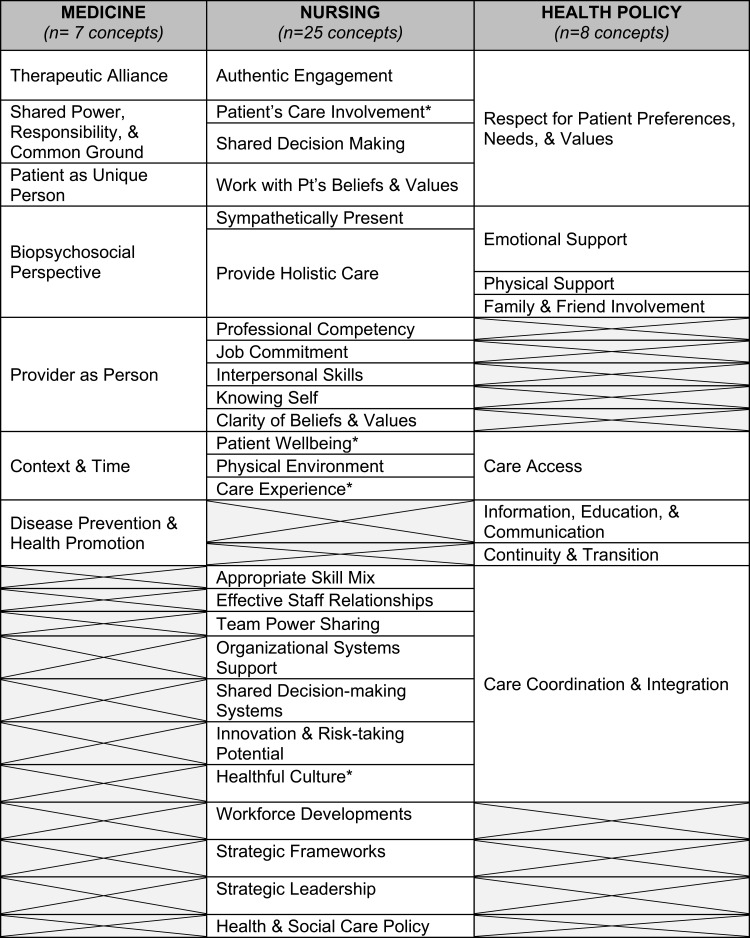
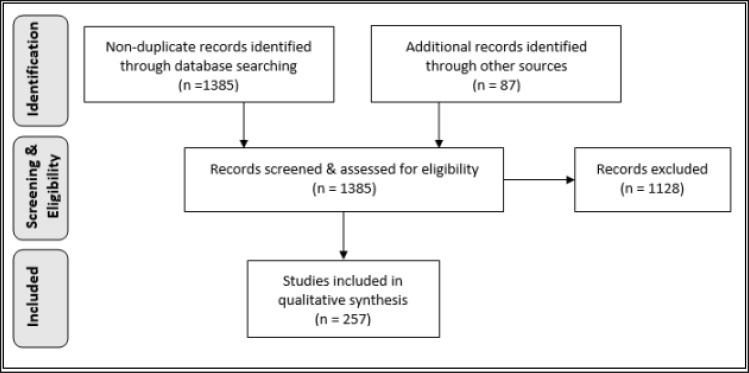
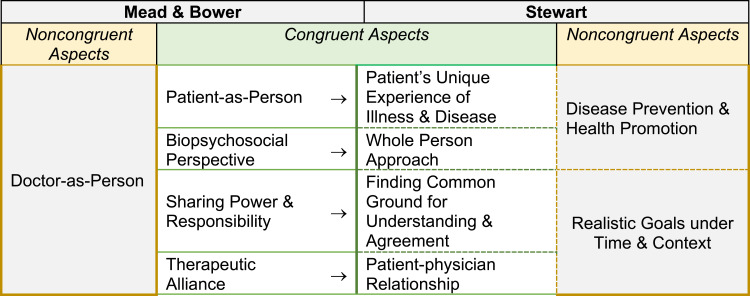
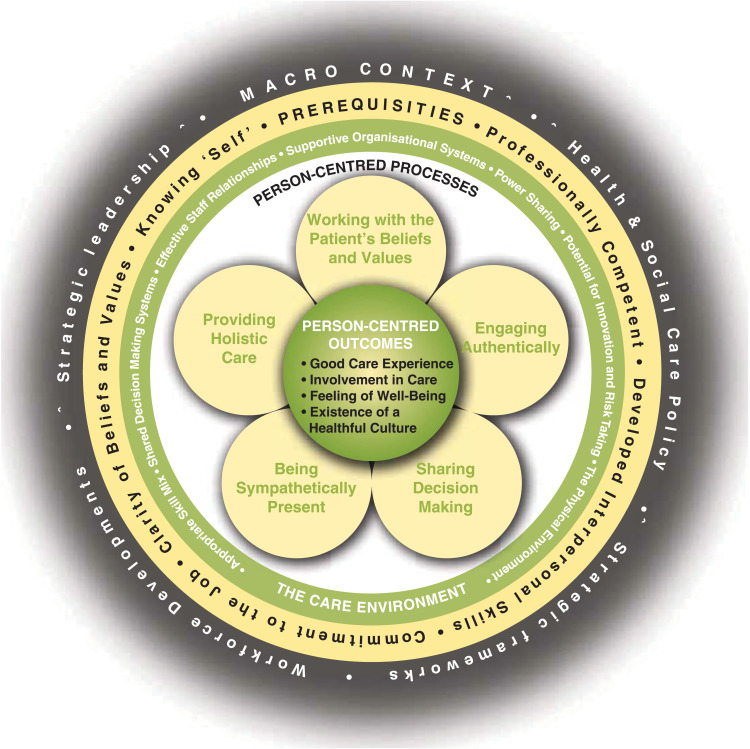
"Patient-Centeredness" (PC) is a theoretical construct made up of a diverse constellation of distinct concepts, processes, practices, and outcomes that have been developed, arranged, and prioritized heterogeneously by different communities of professional healthcare practice, research, and policy. It is bound together by a common ethos that puts the holistic individual at the functional and symbolic center of their care, a quality deemed essential for chronic disease management and health promotion. Several important contributions to the PC research space have adeptly integrated seminal PC conceptualizations to improve conceptual clarity, measurement, implementation, and evaluation in research and practice. This systematic scoping review builds on that work, but with a purpose to explicitly identify, compare, and contrast the seminal PC conceptualizations arising from the different healthcare professional groups. The rationale for this work is that a deeper examination of the underlying development and corresponding assumptions from each respective conceptualization will lead to a more informed understanding of and meaningful contributions to PC research and practice, especially for healthcare professional groups newer to the topic area like pharmacy. The literature search identified four seminal conceptualizations from the healthcare professions of Medicine, Nursing, and Health Policy. A compositional comparison across the seminal conceptualizations revealed a shared ethos but also six distinguishing features: (1) organizational structure; (2) predominant level of care; (3) methodological approach; (4) care setting origin; (5) outcomes of interest; and (6) language. The findings illuminate PC's stable theoretical foundations and distinctive nuances needed to appropriately understand, apply, and evaluate the construct's operationalization in contemporary healthcare research and practice. These considerations hold important implications for future research into the fundamental aims of healthcare, how it should look when practiced, and what should reasonably be required of it.
“以患者为中心”(PC)是一个理论构建,由一系列不同的概念、过程、实践和结果组成,这些内容在专业医疗实践、研究和政策的不同群体中以异质的方式发展、排列并确定优先级。它由一种共同的理念凝聚在一起,这种理念将整体的个体置于其护理的功能和象征中心,这一品质被认为是慢性病管理和健康促进的关键。对PC研究领域的几项重要贡献巧妙地整合了开创性的PC概念,以提高研究和实践中概念的清晰度、测量、实施和评估。本系统综述在这项工作的基础上展开,但目的是明确识别、比较和对比不同医疗专业群体提出的开创性PC概念。开展这项工作的理由是,对每个概念化背后的发展和相应假设进行更深入的研究,将有助于更全面地理解PC研究和实践,并做出有意义的贡献,特别是对于像药学这样刚接触该主题领域的医疗专业群体。文献检索确定了医学、护理和卫生政策等医疗专业领域的四个开创性概念。对这些开创性概念的成分比较揭示了一种共同的理念,但也有六个显著特征:(1)组织结构;(2)主要护理层面;(3)方法论方法;(4)护理环境来源;(5)关注的结果;(6)语言。这些发现阐明了PC稳定的理论基础以及在当代医疗研究和实践中适当理解、应用和评估该构建的实施所需的独特细微差别。这些考虑对未来关于医疗保健基本目标、实践中应如何呈现以及对其合理要求的研究具有重要意义。