Texas A&M AgriLife Extension, Texas A&M University, San Angelo, TX, 76901, USA.
Department of Animal, Veterinary and Food Science, University of Idaho, Moscow, ID, 83844, USA.
Anim Genet. 2021 Aug;52(4):395-408. doi: 10.1111/age.13067. Epub 2021 May 6.
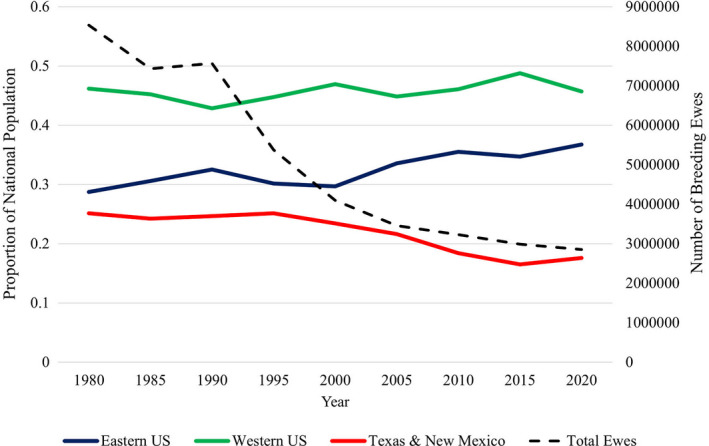
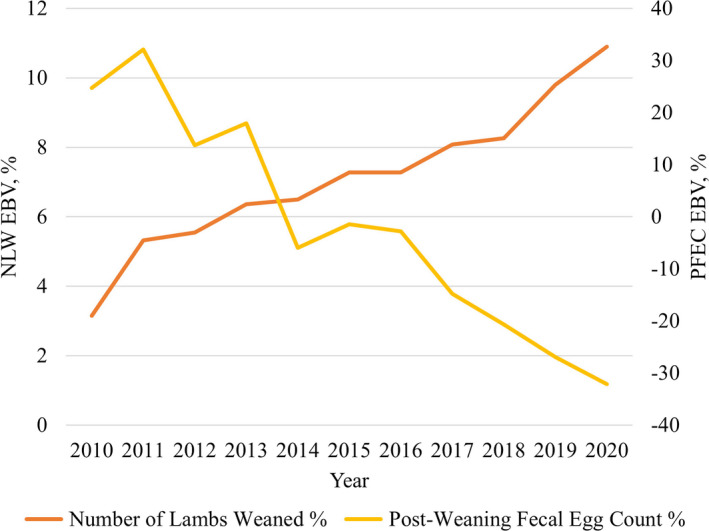
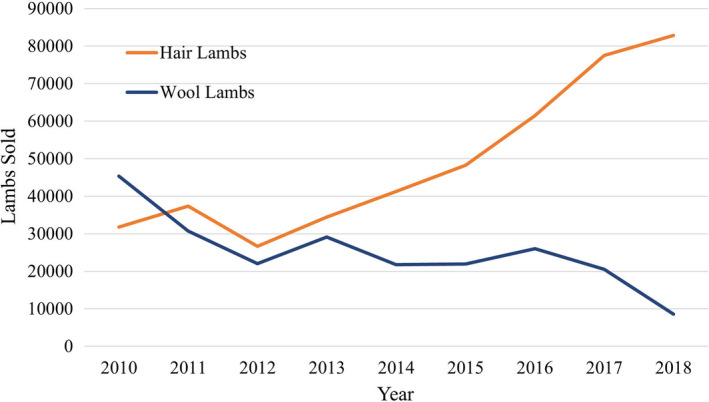
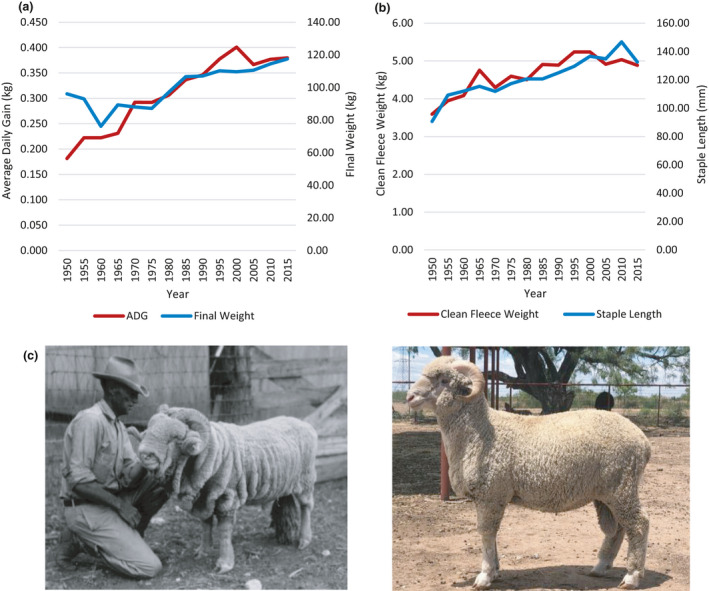
The continuous development and application of technology for genetic improvement is a key element for advancing sheep production in the United States. The US sheep industry has contracted over time but appears to be at a juncture where a greater utilization of technology can facilitate industry expansion to new markets and address inefficiencies in traditional production practices. Significant transformations include the increased value of lamb in relation to wool, and a downtrend in large-scale operations but a simultaneous rise in small flocks. Additionally, popularity of hair breeds not requiring shearing has surged, particularly in semi-arid and subtropical US environments. A variety of domestically developed composite breeds and newly established technological approaches are now widely available for the sheep industry to use as it navigates these ongoing transformations. These genetic resources can also address long-targeted areas of improvement such as growth, reproduction and parasite resistance. Moderate progress in production efficiency has been achieved by producers who have employed estimated breeding values, but widespread adoption of this technology has been limited. Genomic marker panels have recently shown promise for reducing disease susceptibility, identifying parentage and providing a foundation for marker-assisted selection. As the ovine genome is further explored and genomic assemblies are improved, the sheep research community in the USA can capitalize on new-found information to develop and apply genetic technologies to improve the production efficiency and profitability of the sheep industry.
遗传改良技术的不断发展和应用是推动美国绵羊生产的关键因素。美国的绵羊产业随着时间的推移而萎缩,但似乎正处于一个关键时刻,即更多地利用技术可以促进向新市场扩张,并解决传统生产实践中的效率低下问题。重大转变包括羊毛与羊肉价值的差距不断缩小,大规模经营减少,但小群经营同时增加。此外,无需剪毛的毛用品种越来越受欢迎,特别是在美国半干旱和亚热带地区。随着绵羊产业应对这些持续的转型,各种国内开发的复合品种和新建立的技术方法现在广泛可供其使用。这些遗传资源还可以解决长期以来的改良目标领域,如生长、繁殖和寄生虫抗性。生产者利用估计育种值已经在生产效率方面取得了适度的进展,但这项技术的广泛采用受到限制。基因组标记面板最近在降低疾病易感性、鉴定亲缘关系和为标记辅助选择提供基础方面显示出了希望。随着对绵羊基因组的进一步探索和基因组组装的改进,美国的绵羊研究界可以利用新发现的信息来开发和应用遗传技术,提高绵羊产业的生产效率和盈利能力。