Department of Respiratory and Critical Care Medicine, Beijing Chao-Yang Hospital, Capital Medical University, No. 5 Jingyuan Road, Shijingshan District, Beijing 100043, China.
Institute for Infectious Disease and Endemic Disease Control, Beijing Center for Disease Prevention and Control, Beijing, China.
Bull World Health Organ. 2021 May 1;99(5):374-380. doi: 10.2471/BLT.20.265918. Epub 2021 Mar 2.
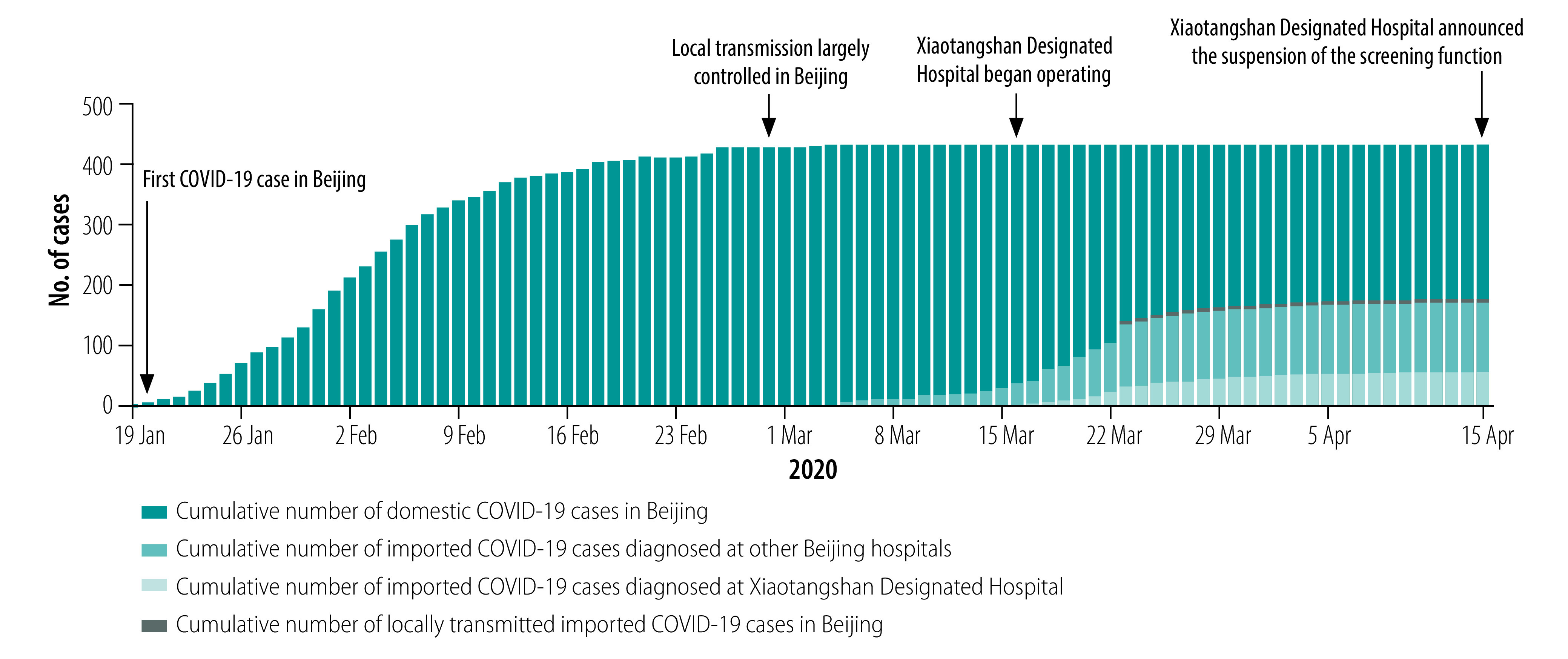
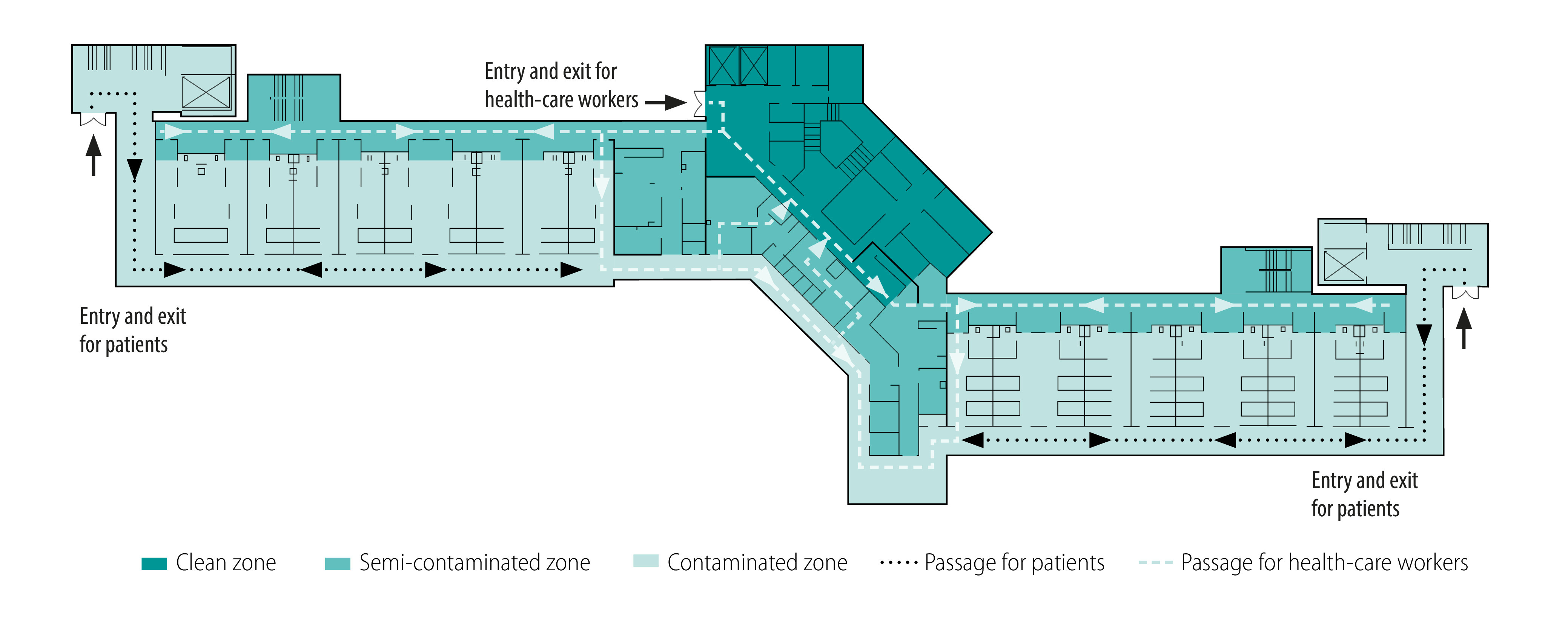
A surge in the number of international arrivals awaiting coronavirus disease 2019 (COVID-19) screening overwhelmed health-care workers and depleted medical resources in designated hospitals in Beijing, China in March 2020. The People's Government of Beijing Municipality therefore issued a policy which required the mandatory transfer of all asymptomatic passengers arriving from a foreign country to designated quarantine hotels, and the transfer of passengers with fever or respiratory symptoms to designated hospitals. Xiaotangshan Designated Hospital, a severe acute respiratory syndrome hospital in 2003, was rapidly renovated and put into operation with the main tasks of screening and isolating symptomatic international arrivals at Beijing Capital International Airport, providing basic medical care for mild to moderate COVID-19-positive cases, and rapidly referring severe to critical COVID-19-positive cases to higher-level hospitals. During the month-long period of its operation, 2171 passengers were screened and 53 were confirmed as having COVID-19 (six severe to critical). We describe how the use of Xiaotangshan Designated Hospital in this way enabled the efficient grouping and assessment of passengers arriving from a foreign country, the provision of optimal patient care without compromising public safety and the prioritization of critically ill patients requiring life-saving treatment. The designated hospital is a successful example of the World Health Organization's recommendation to renovate existing medical infrastructures to improve the COVID-19 response capacity. The flexible design of Xiaotangshan Designated Hospital means that it can be repurposed and reopened at any time to respond to the changing pandemic conditions.
2020 年 3 月,中国北京的指定医院内,因等候新型冠状病毒疾病(COVID-19)筛查的国际入境人数激增,医疗工作者不堪重负,医疗资源消耗殆尽。因此,北京市人民政府发布政策,要求将所有从国外抵达的无症状乘客强制转移到指定的隔离酒店,并将有发热或呼吸道症状的乘客转移到指定医院。小汤山定点医院是 2003 年非典时期的一家急性呼吸综合征医院,经过快速翻修并投入使用,主要任务是对从北京首都国际机场入境的有症状的国际旅客进行筛查和隔离,为 COVID-19 阳性轻症和中度患者提供基本医疗服务,并迅速将重症和危重症 COVID-19 阳性患者转诊到上级医院。在运营的一个月期间,共筛查 2171 名乘客,确诊 53 例 COVID-19(6 例重症至危重症)。本文介绍了如何利用小汤山定点医院对入境旅客进行高效分组和评估,在不影响公共安全的情况下为患者提供最佳护理,并优先考虑需要救命治疗的重症患者。小汤山定点医院是世界卫生组织(WHO)建议翻新现有医疗基础设施以提高 COVID-19 应对能力的成功范例。小汤山定点医院的灵活设计意味着它可以随时重新用于应对不断变化的大流行情况。