Abuduaini Abudujilili, Lu Xueying, Zang Deng, Wu Tao, Aisa Haji Akbar
State Key Laboratory Basis of Xinjiang Indigenous Medicinal Plants Resource Utilization, and Key Laboratory of Plant Resources and Chemistry in Arid Regions, Xinjiang Technical Institute of Physics and Chemistry, Chinese Academy of Sciences, Urumqi 830011, China.
University of Chinese Academy of Sciences, Beijing 100039, China.
Evid Based Complement Alternat Med. 2021 Apr 19;2021:6675657. doi: 10.1155/2021/6675657. eCollection 2021.
Kursi Karwiya or caraway tablet (CWT), a traditional medicine formula, is widely used in Xinjiang, China, for treating vitiligo, a common autoimmune disease for which there is currently no satisfactory cure. Clinical interventions include pharmacological treatment with psoralens, often in conjunction with UVA radiation, but toxic side effects limit this application. Studies on the activities and mechanisms of CWT are scarce.
To investigate the in vitro and in vivo effects of CWT in B16 cell line and in animal models of vitiligo, further exploring its mechanisms of regulating melanogenesis.
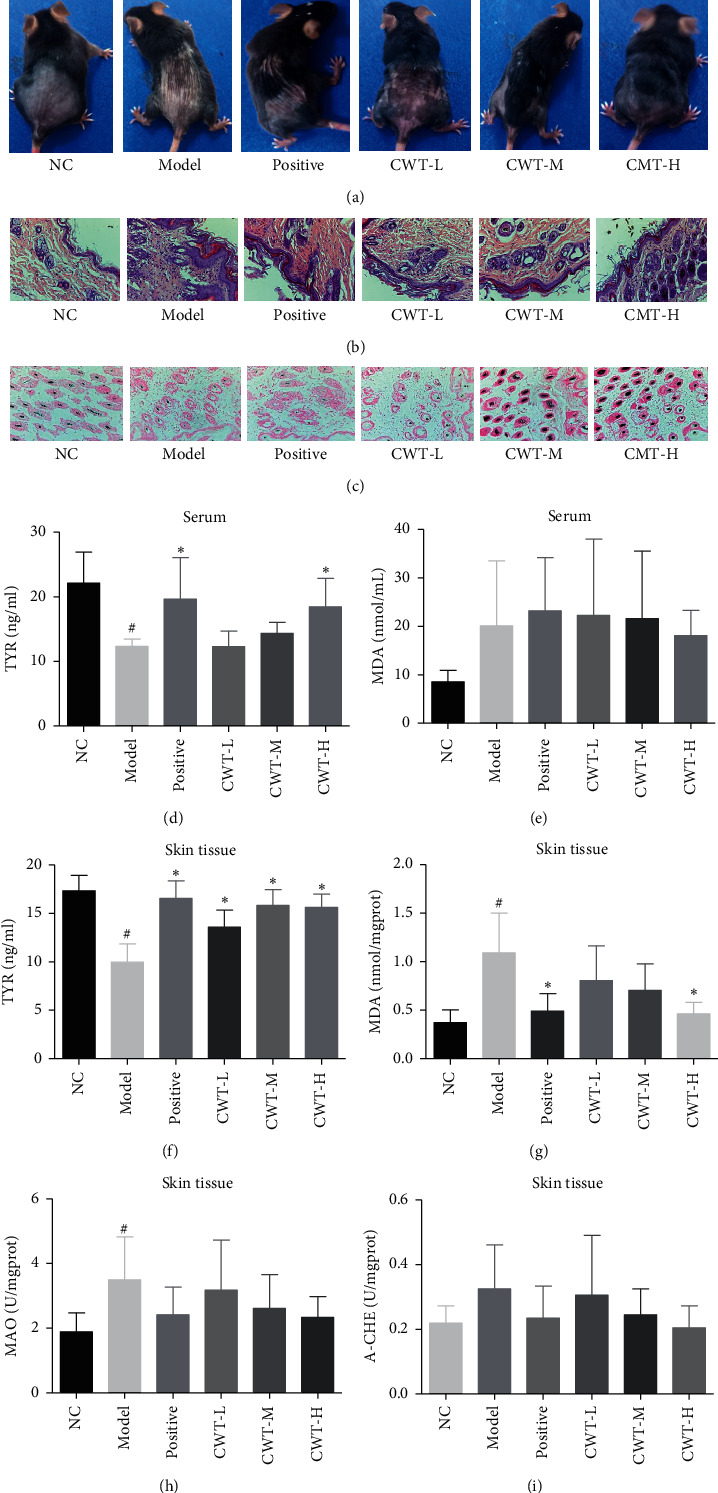
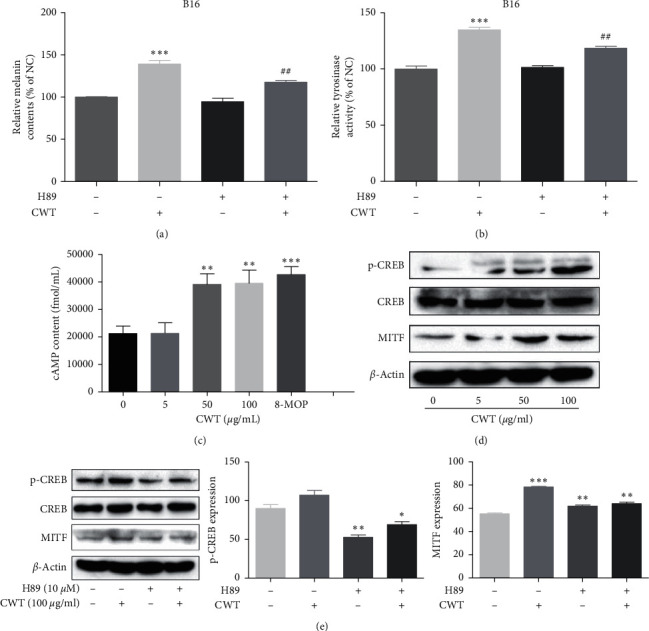
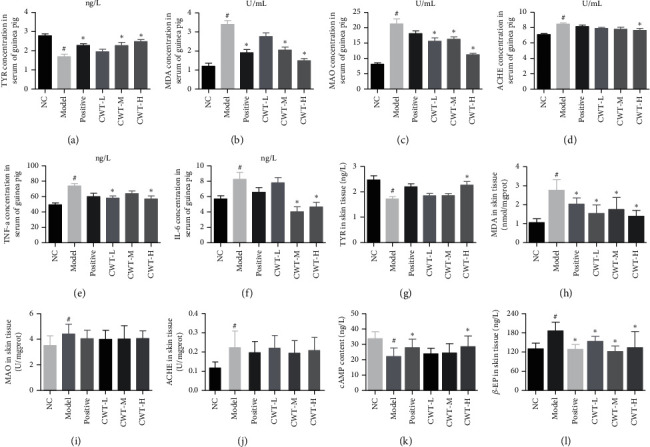
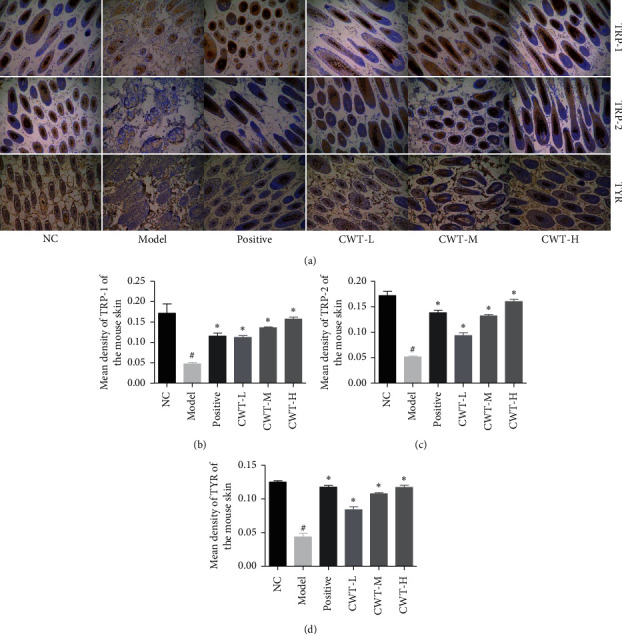
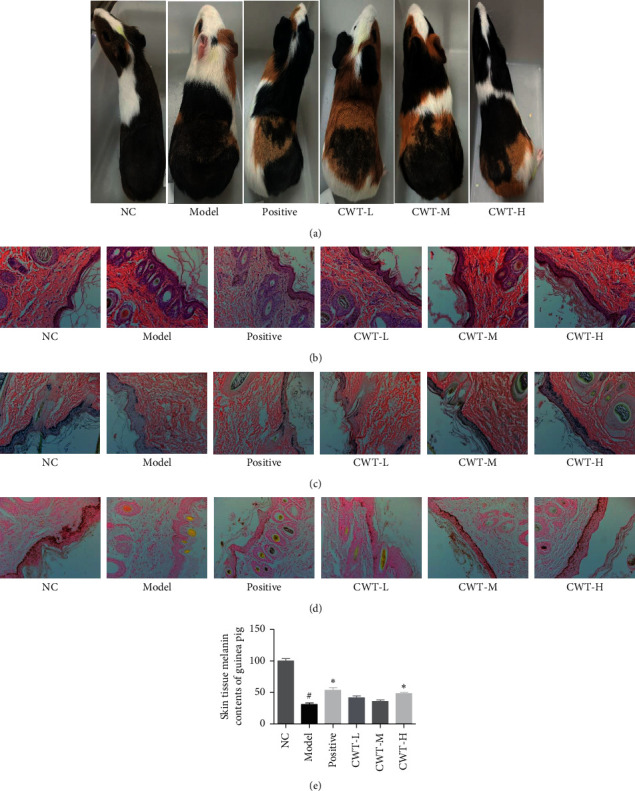
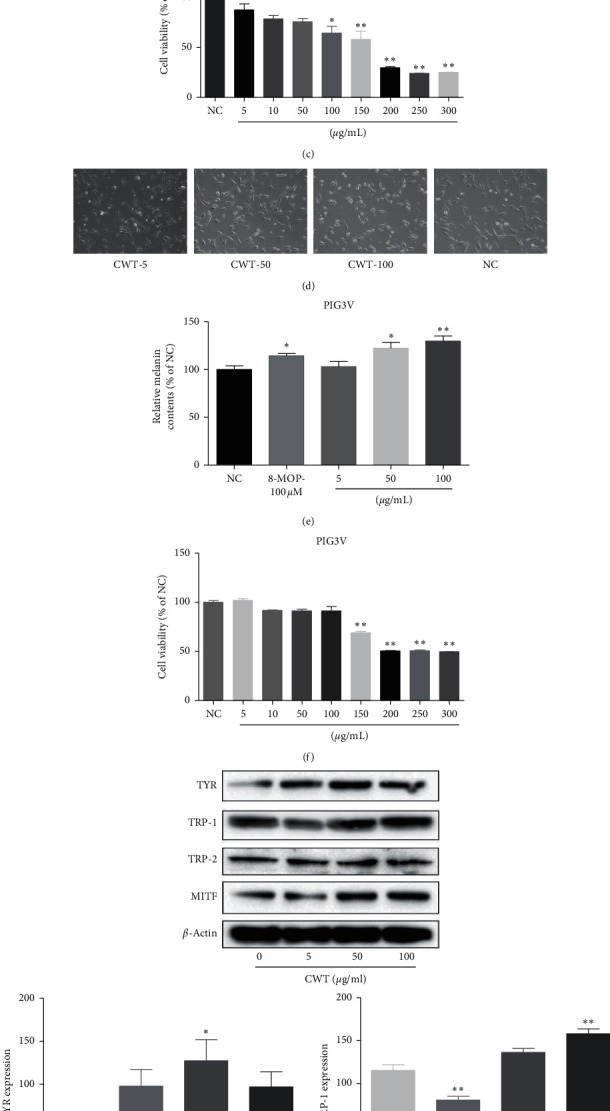
Effects of CWT on melanin synthesis in B16 cells and mushroom tyrosinase activity were investigated in vitro. The signaling pathway of melanogenesis in murine B16 melanoma cells was examined by Western blotting. Two different animal models were used, vitiligo induced by hydroquinone in the mouse model and by hydrogen peroxide in the guinea pig model. Relevant biochemical parameters in blood and skin tissue were measured, and visual inspection, histopathology, and immunohistochemical analysis of treated areas were carried out.
CWT produced changes in biochemical parameters including TYR, MDA, MAO, AChE, IL-6, INF-, -EP, and cAMP in blood and/or skin tissue and in regulating melanogenesis. After treatment with CTW, skin color, melanin containing hair follicles, and expression of TYR, TRP-1, and TRP-2 in the skin of animals were significantly affected.
CWT alleviated many of detrimental effects in both models of vitiligo. Tyrosinase activity and melanin content in B16 cells were increased, at least in part, via activation of the PKA p38 MAPK signaling pathways. Our results show that CWT produces beneficial effects on parameters of vitiligo and is worthy of further investigation for use in this distressing autoimmune disorder which currently has no effective cure.
库尔西卡尔维亚或葛缕子片(CWT)是一种传统医学配方,在中国新疆被广泛用于治疗白癜风,这是一种常见的自身免疫性疾病,目前尚无令人满意的治愈方法。临床干预措施包括使用补骨脂素进行药物治疗,通常与紫外线A照射联合使用,但毒副作用限制了这种应用。关于CWT活性和作用机制的研究很少。
研究CWT在B16细胞系和白癜风动物模型中的体内外作用,进一步探讨其调节黑色素生成的机制。
体外研究CWT对B16细胞黑色素合成和蘑菇酪氨酸酶活性的影响。通过蛋白质免疫印迹法检测小鼠B16黑色素瘤细胞中黑色素生成的信号通路。使用两种不同的动物模型,即对苯二酚诱导的小鼠白癜风模型和过氧化氢诱导的豚鼠白癜风模型。测量血液和皮肤组织中的相关生化参数,并对治疗区域进行外观检查、组织病理学和免疫组织化学分析。
CWT在血液和/或皮肤组织中引起了包括酪氨酸酶(TYR)、丙二醛(MDA)、单胺氧化酶(MAO)、乙酰胆碱酯酶(AChE)、白细胞介素-6(IL-6)、干扰素-γ(INF-γ)、β-内啡肽(β-EP)和环磷酸腺苷(cAMP)等生化参数的变化,并调节黑色素生成。用CWT治疗后,动物皮肤颜色、含黑色素的毛囊以及皮肤中TYR、酪氨酸相关蛋白-1(TRP-1)和酪氨酸相关蛋白-2(TRP-2)的表达均受到显著影响。
CWT减轻了两种白癜风模型中的许多有害影响。B16细胞中的酪氨酸酶活性和黑色素含量至少部分通过蛋白激酶A(PKA)/p38丝裂原活化蛋白激酶(MAPK)信号通路的激活而增加。我们的结果表明,CWT对白癜风参数产生有益影响,对于这种目前尚无有效治愈方法的令人苦恼 的自身免疫性疾病,值得进一步研究其应用。