Edinburgh Medical School, College of Medicine and Veterinary Medicine, The University of Edinburgh, Edinburgh, UK.
Centre for Medical Informatics, Usher Institute, The University of Edinburgh, Edinburgh, UK.
J Glob Health. 2021 Apr 24;11:10003. doi: 10.7189/jogh.11.10003.
As SARS-CoV-2 continues to spread worldwide, it has already resulted in over 110 million cases and 2.5 million deaths. Currently, there are no effective COVID-19 treatments, although numerous studies are under way. SARS-CoV-2, however, is not the first coronavirus to cause serious outbreaks. COVID-19 can be compared with previous human coronavirus diseases, such as Severe Acute Respiratory Syndrome (SARS) and Middle East Respiratory Syndrome (MERS), to better understand the development of treatments.
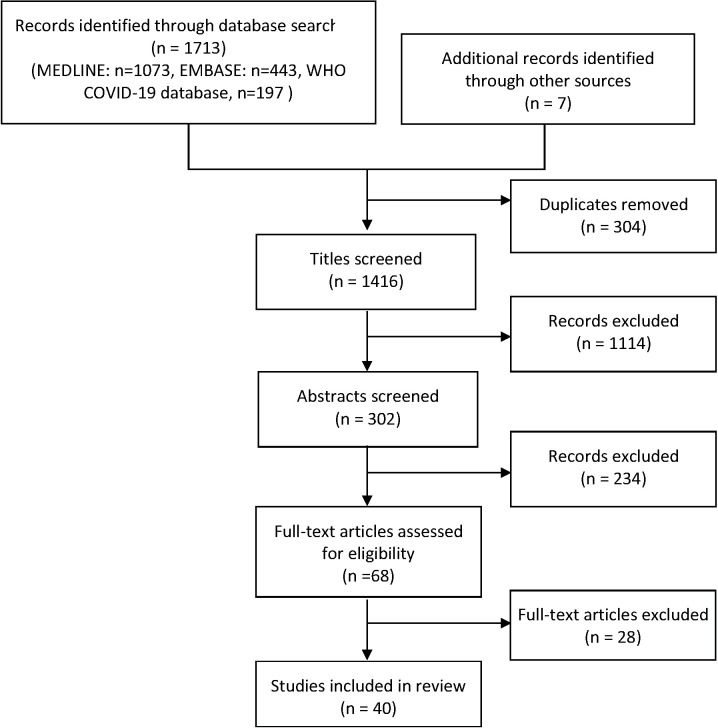
Databases Medline, Embase and WHO COVID-19 was systematically searched on 9 February 2021 for studies reporting on therapeutic effect of COVID-19 treatments. Clinical trials, case reports, observational studies and systematic reviews in the English language were eligible.
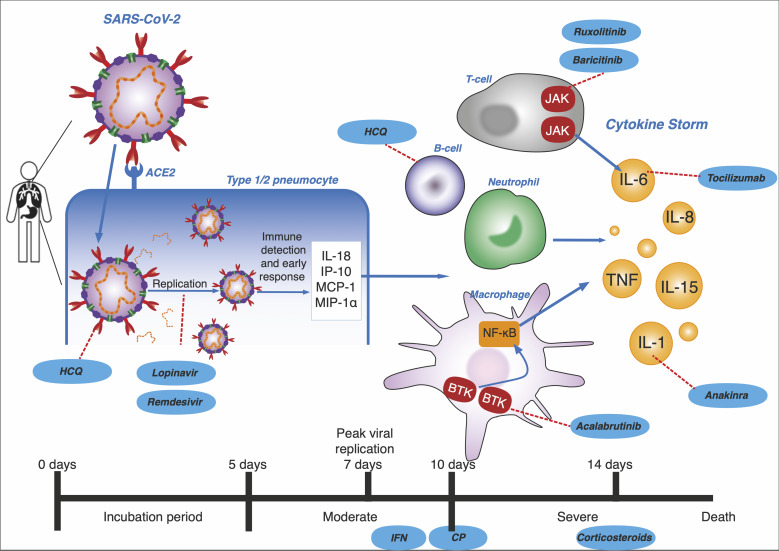
1416 studies were identified and 40 studies were included in this review. Therapies included are: remdesivir, convalescent plasma, hydroxychloroquine, lopinavir/ ritonavir, interferon, corticosteroids, cytokine storm inhibitors and monoclonal antibodies. Remdesivir, convalescent plasma and interferon seems to provide some clinical benefits such as faster recovery time and reduced mortality, but these effects are not clinically significant. Some corticosteroids are effective in reducing mortality in severe COVID-19 patients. Hydroxychloroquine do not convey any beneficial, and therapies such as cytokine storm inhibitors and monoclonal antibodies were also not effective and require further investigation.
There is no single therapy effective against COVID-19. However, a combination of therapies administered at different stages of infection may provide some benefit. This conclusion is reflected in the limited effects of these treatments in previous human coronaviruses.
随着 SARS-CoV-2 在全球范围内持续传播,已导致超过 1.1 亿例病例和 250 万人死亡。目前,虽然有许多研究正在进行,但尚无有效的 COVID-19 治疗方法。然而,SARS-CoV-2 并不是第一个导致严重疫情的冠状病毒。通过将 COVID-19 与以前的人类冠状病毒疾病(如严重急性呼吸综合征[SARS]和中东呼吸综合征[MERS])进行比较,可以更好地了解治疗方法的发展。
2021 年 2 月 9 日,系统地在 Medline、Embase 和世界卫生组织 COVID-19 数据库中检索报告 COVID-19 治疗效果的研究。符合条件的研究包括临床试验、病例报告、观察性研究和英语系统评价。
共确定了 1416 项研究,其中有 40 项研究纳入本综述。纳入的治疗方法包括:瑞德西韦、恢复期血浆、羟氯喹、洛匹那韦/利托那韦、干扰素、皮质类固醇、细胞因子风暴抑制剂和单克隆抗体。瑞德西韦、恢复期血浆和干扰素似乎提供了一些临床益处,如更快的恢复时间和降低死亡率,但这些效果无临床意义。一些皮质类固醇在治疗重症 COVID-19 患者的死亡率方面有效。羟氯喹没有带来任何益处,细胞因子风暴抑制剂和单克隆抗体等治疗方法也没有效果,需要进一步研究。
目前尚无针对 COVID-19 的单一有效疗法。然而,在感染的不同阶段联合应用多种疗法可能会提供一些益处。这一结论反映在这些疗法对以前的人类冠状病毒的有限疗效上。