Sport and Exercise Medicine Division, Department of Medicine, University of Padova, Padua, Italy.
NUTRIM School of Nutrition and Translational Research in Metabolism, Department of Human Biology, Maastricht University, Maastricht, The Netherlands.
Obes Rev. 2021 Jul;22 Suppl 4(Suppl 4):e13269. doi: 10.1111/obr.13269. Epub 2021 May 6.
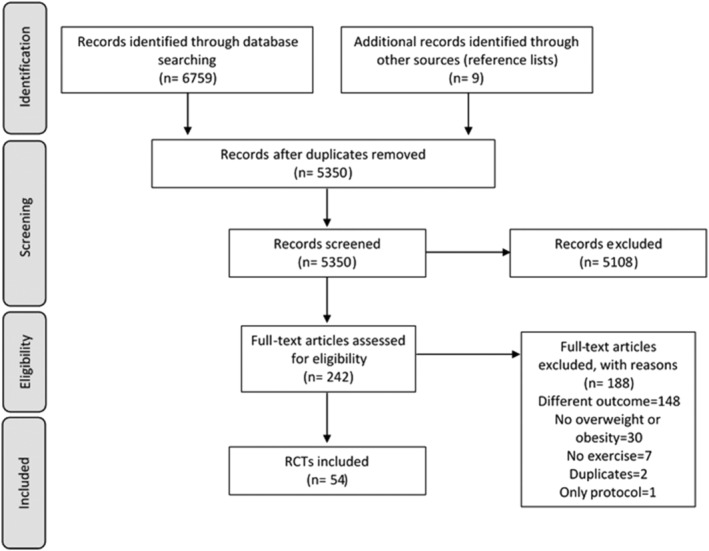
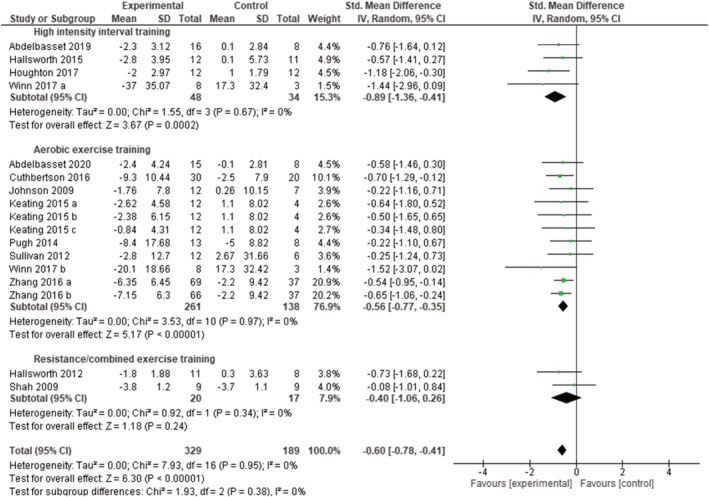
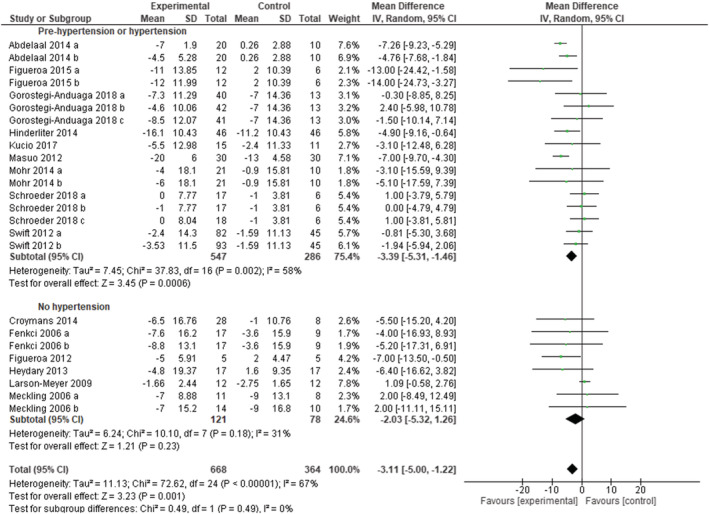
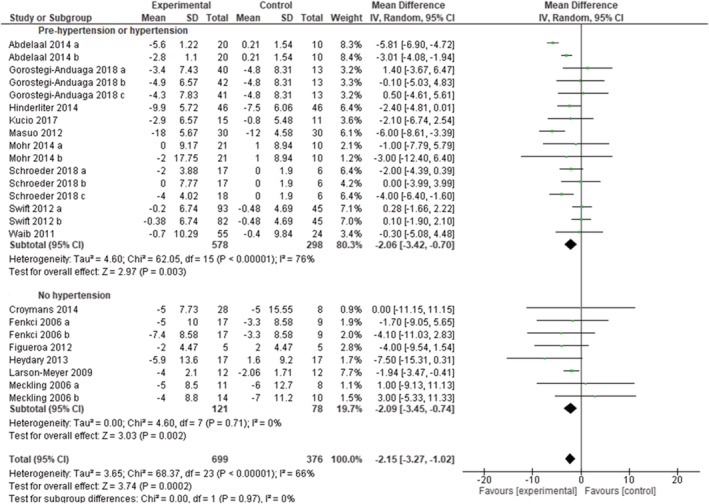
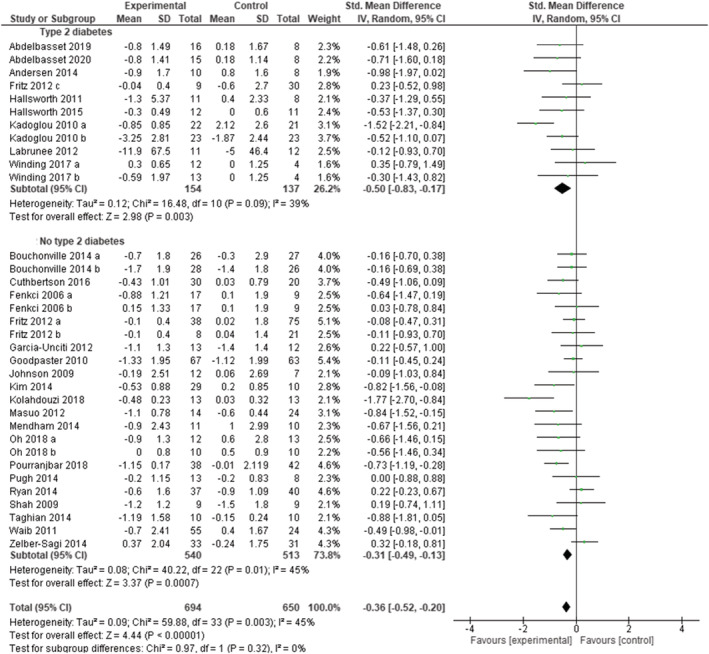
This systematic review examined the impact of exercise intervention programs on selected cardiometabolic health indicators in adults with overweight or obesity. Three electronic databases were explored for randomized controlled trials (RCTs) that included adults with overweight or obesity and provided exercise-training interventions. Effects on blood pressure, insulin resistance (homeostasis model of insulin resistance, HOMA-IR), and magnetic resonance measures of intrahepatic fat in exercise versus control groups were analyzed using random effects meta-analyses. Fifty-four articles matched inclusion criteria. Exercise training reduced systolic and diastolic blood pressure (mean difference, MD = -2.95 mmHg [95% CI -4.22, -1.68], p < 0.00001, I = 63% and MD = -1.93 mmHg [95% CI -2.73, -1.13], p < 0.00001, I = 54%, 60 and 58 study arms, respectively). Systolic and diastolic blood pressure decreased also when considering only subjects with hypertension. Exercise training significantly decreased HOMA-IR (standardized mean difference, SMD = -0.34 [-0.49, -0.18], p < 0.0001, I = 48%, 37 study arms), with higher effect size in subgroup of patients with type 2 diabetes (SMD = -0.50 [95% CI: -0.83, -0.17], p = 0.003, I = 39%). Intrahepatic fat decreased significantly after exercise interventions (SMD = -0.59 [95% CI: -0.78, -0.41], p < 0.00001, I = 0%), with a larger effect size after high-intensity interval training. In conclusion, exercise training is effective in improving cardiometabolic health in adults with overweight or obesity also when living with comorbitidies.
本系统评价研究了运动干预方案对超重或肥胖成年人选定的心血管代谢健康指标的影响。研究人员在三个电子数据库中搜索了纳入超重或肥胖成年人并提供运动训练干预的随机对照试验(RCT)。使用随机效应荟萃分析,分析了运动组与对照组之间血压、胰岛素抵抗(稳态模型的胰岛素抵抗,HOMA-IR)和肝脏内脂肪的磁共振测量值的变化。有 54 篇文章符合纳入标准。运动训练可降低收缩压和舒张压(平均差异,MD = -2.95mmHg [95%CI -4.22, -1.68],p < 0.00001,I ² = 63%和 MD = -1.93mmHg [95%CI -2.73, -1.13],p < 0.00001,I ² = 54%,分别有 60 和 58 个研究臂)。当仅考虑高血压患者时,收缩压和舒张压也会降低。运动训练还显著降低了 HOMA-IR(标准化均数差,SMD = -0.34 [-0.49, -0.18],p < 0.0001,I ² = 48%,37 个研究臂),在 2 型糖尿病患者亚组中效果更大(SMD = -0.50 [95%CI:-0.83, -0.17],p = 0.003,I ² = 39%)。运动干预后肝脏内脂肪显著减少(SMD = -0.59 [95%CI:-0.78, -0.41],p < 0.00001,I ² = 0%),高强度间歇训练后效果更大。总之,运动训练可有效改善超重或肥胖成年人的心血管代谢健康,即使患有合并症也是如此。