Division of Cardiology, Department of Medicine, David Geffen School of Medicine at University of California, Los Angeles, CA, United States of America.
Division of Biomedical Sciences, School of Medicine, University of California, Riverside, CA, United States of America.
Sci Total Environ. 2021 Jul 20;779:146464. doi: 10.1016/j.scitotenv.2021.146464. Epub 2021 Mar 16.
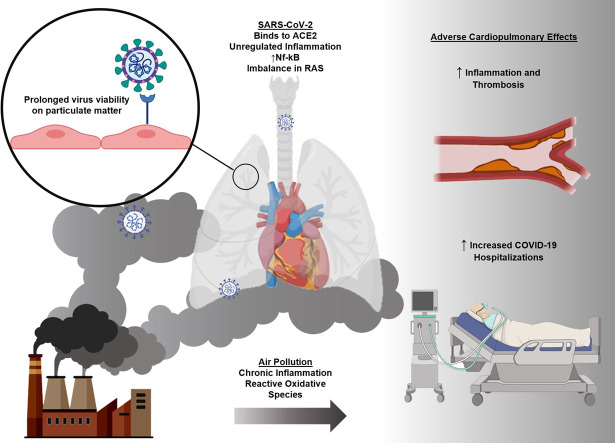
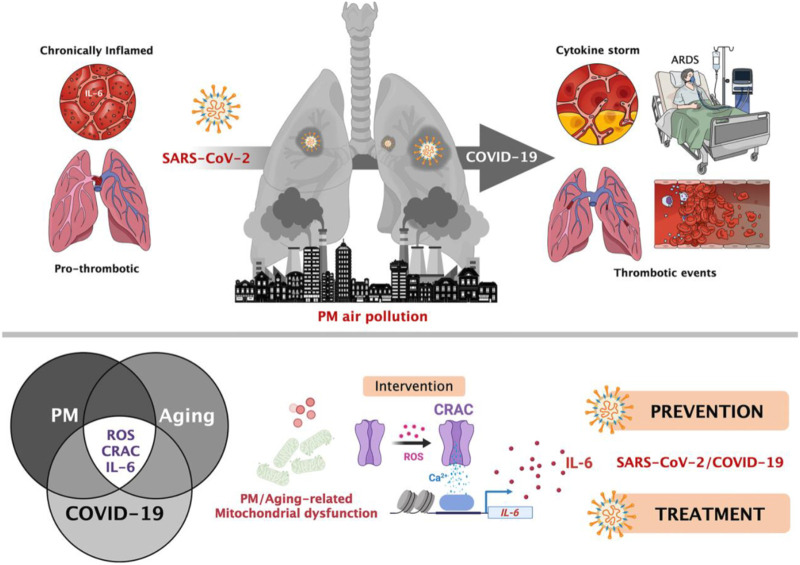
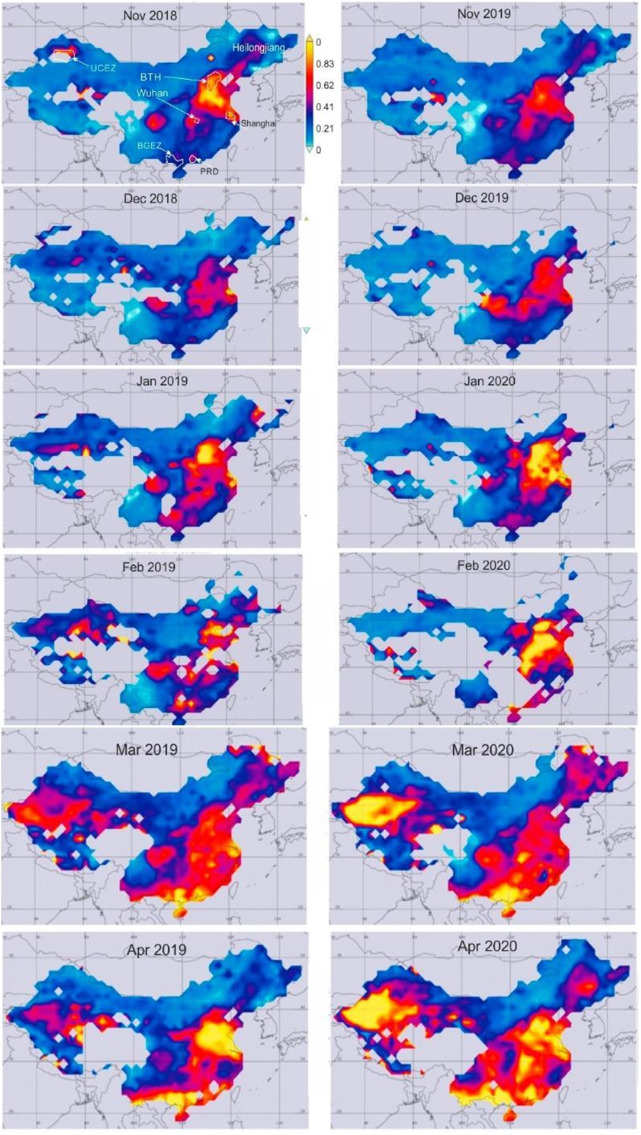
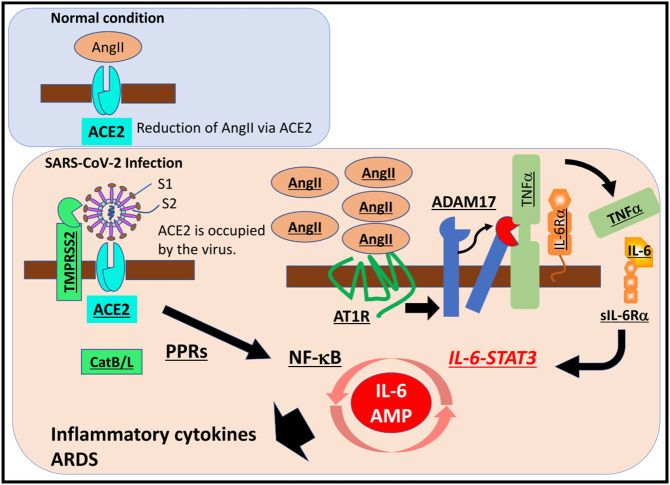
Ambient air pollution contributes to 7 million premature deaths annually. Concurrently, the ongoing coronavirus disease 2019 (COVID-19) pandemic, complicated with S-protein mutations and other variants, caused by the novel severe acute respiratory syndrome coronavirus 2 (SARS-CoV-2), has resulted in over 2.5 million deaths globally. Chronic air pollution-mediated cardiopulmonary diseases have been associated with an increased incidence of hospitalization and mechanical ventilation following COVID-19 transmission. While the underlying mechanisms responsible for this association remain elusive, air pollutant-induced vascular oxidative stress and inflammatory responses have been implicated in amplifying COVID-19-mediated cytokine release and vascular thrombosis. In addition, prolonged exposure to certain types of particulate matter (PM, d < 2.5 μm) has also been correlated with increased lung epithelial and vascular endothelial expression of the angiotensin-converting enzyme-2 (ACE2) receptors to which the SARS-CoV-2 spike glycoproteins (S) bind for fusion and internalization into host cells. Emerging literature has linked high rates of SARS-CoV-2 infection to regions with elevated levels of PM, suggesting that COVID-19 lockdowns have been implicated in regional reductions in air pollutant-mediated cardiopulmonary effects. Taken together, an increased incidence of SARS-CoV-2-mediated cardiopulmonary diseases seems to overlap with highly polluted regions. To this end, we will review the redox-active components of air pollutants, the pathophysiology of SARS-CoV-2 transmission, and the key oxidative mechanisms and ACE2 overexpression underlying air pollution-exacerbated SARS-CoV-2 transmission.
大气污染每年导致 700 万人过早死亡。与此同时,新型严重急性呼吸系统综合征冠状病毒 2(SARS-CoV-2)引起的持续的 2019 年冠状病毒病(COVID-19)大流行,加上 S 蛋白突变和其他变异,已导致全球超过 250 万人死亡。慢性空气污染介导的心肺疾病与 COVID-19 传播后住院和机械通气的发生率增加有关。虽然导致这种关联的潜在机制尚不清楚,但空气污染物引起的血管氧化应激和炎症反应被认为放大了 COVID-19 介导的细胞因子释放和血管血栓形成。此外,长期暴露于某些类型的颗粒物(PM,d<2.5μm)也与肺上皮细胞和血管内皮细胞中血管紧张素转换酶 2(ACE2)受体的表达增加有关,SARS-CoV-2 的刺突糖蛋白(S)结合 ACE2 受体进行融合和内化进入宿主细胞。新出现的文献将高 SARS-CoV-2 感染率与 PM 水平升高的地区联系起来,这表明 COVID-19 封锁与区域空气污染介导的心肺效应减少有关。综上所述,SARS-CoV-2 介导的心肺疾病的发病率似乎与污染严重的地区重叠。为此,我们将回顾空气污染物的氧化还原活性成分、SARS-CoV-2 传播的病理生理学,以及空气污染物加剧 SARS-CoV-2 传播的关键氧化机制和 ACE2 过表达。