Department of Precision Medicine, University of Campania L. Vanvitelli, Naples, Italy.
Department of Advanced Medical and Surgical Sciences, University of Campania L. Vanvitelli, Piazza Miraglia, 2, 80138, Naples, Italy.
Cardiovasc Diabetol. 2021 May 7;20(1):99. doi: 10.1186/s12933-021-01286-7.
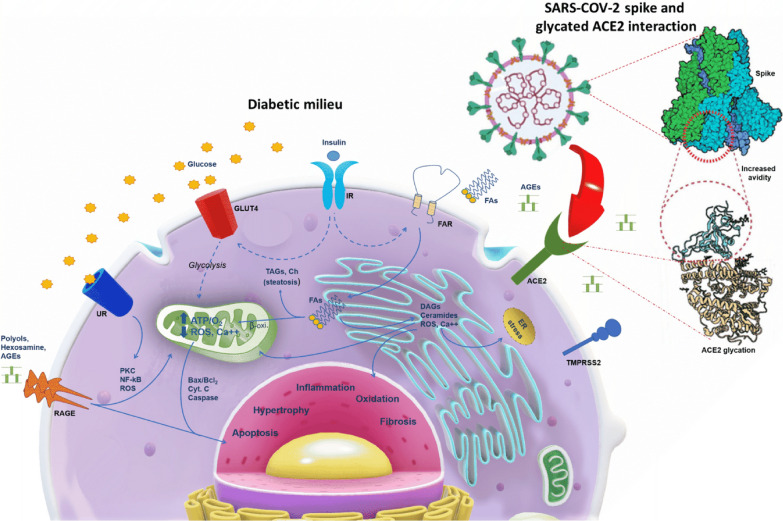
About 50% of hospitalized coronavirus disease 2019 (COVID-19) patients with diabetes mellitus (DM) developed myocardial damage. The mechanisms of direct SARS-CoV-2 cardiomyocyte infection include viral invasion via ACE2-Spike glycoprotein-binding. In DM patients, the impact of glycation of ACE2 on cardiomyocyte invasion by SARS-CoV-2 can be of high importance.
To evaluate the presence of SARS-CoV-2 in cardiomyocytes from heart autopsy of DM cases compared to Non-DM; to investigate the role of DM in SARS-COV-2 entry in cardiomyocytes.
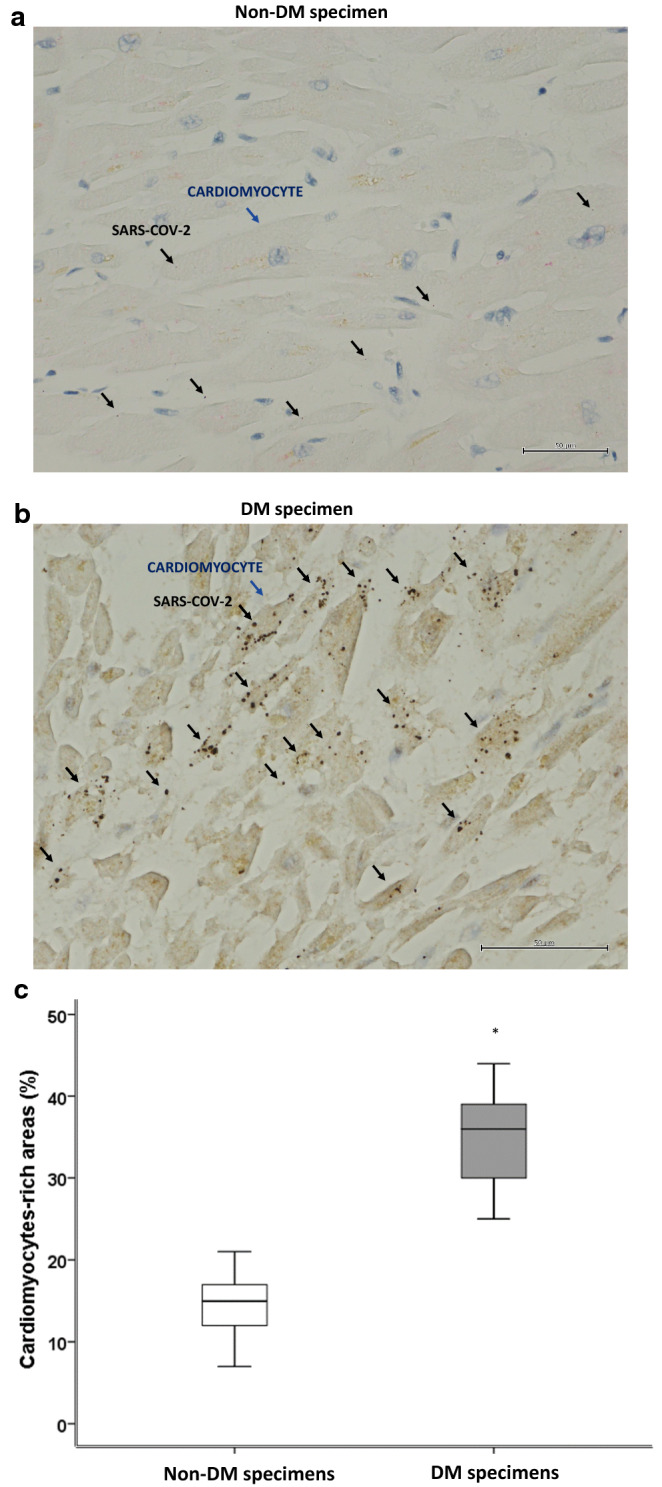
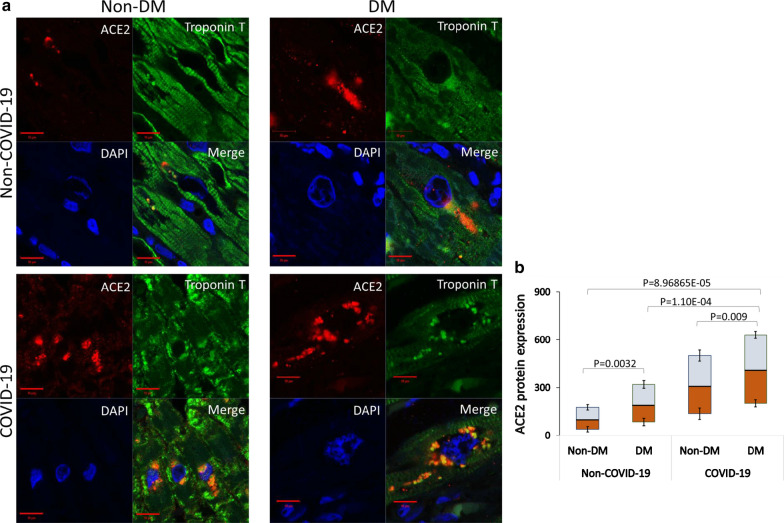
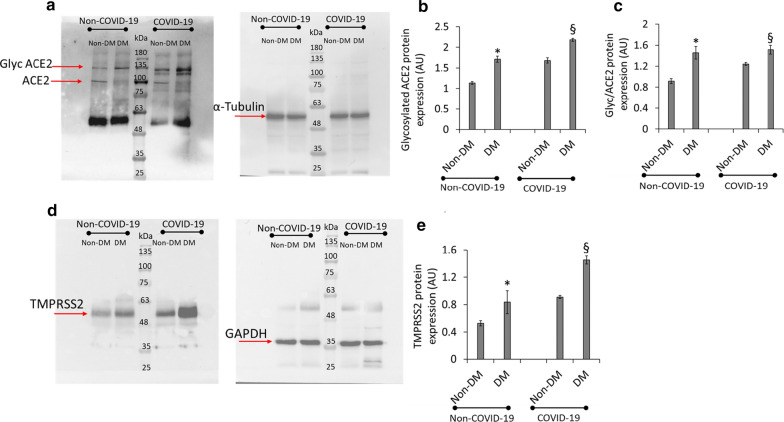
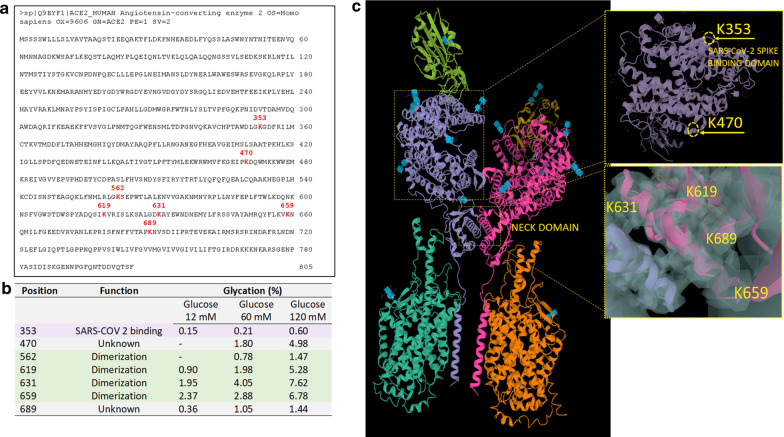
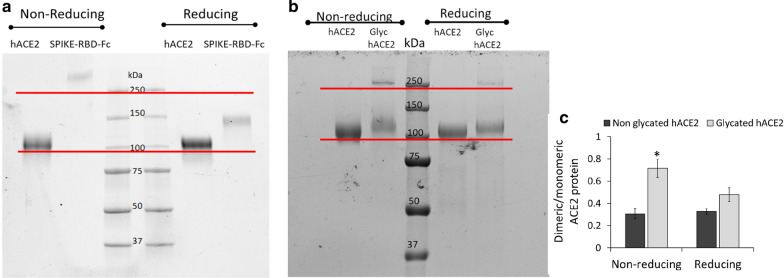
We evaluated consecutive autopsy cases, deceased for COVID-19, from Italy between Apr 30, 2020 and Jan 18, 2021. We evaluated SARS-CoV-2 in cardiomyocytes, expression of ACE2 (total and glycosylated form), and transmembrane protease serine protease-2 (TMPRSS2) protein. In order to study the role of diabetes on cardiomyocyte alterations, independently of COVID-19, we investigated ACE2, glycosylated ACE2, and TMPRSS2 proteins in cardiomyocytes from DM and Non-DM explanted-hearts. Finally, to investigate the effects of DM on ACE2 protein modification, an in vitro glycation study of recombinant human ACE2 (hACE2) was performed to evaluate the effects on binding to SARS-CoV-2 Spike protein. The authors included cardiac tissue from 97 autopsies. DM was diagnosed in 37 patients (38%). Fourth-seven out of 97 autopsies (48%) had SARS-CoV-2 RNA in cardiomyocytes. Thirty out of 37 DM autopsy cases (81%) and 17 out of 60 Non-DM autopsy cases (28%) had SARS-CoV-2 RNA in cardiomyocytes. Total ACE2, glycosylated ACE2, and TMPRSS2 protein expressions were higher in cardiomyocytes from autopsied and explanted hearts of DM than Non-DM. In vitro exposure of monomeric hACE2 to 120 mM glucose for 12 days led to non-enzymatic glycation of four lysine residues in the neck domain affecting the protein oligomerization.
The upregulation of ACE2 expression (total and glycosylated forms) in DM cardiomyocytes, along with non-enzymatic glycation, could increase the susceptibility to COVID-19 infection in DM patients by favouring the cellular entry of SARS-CoV2.
约 50%住院的 2019 年冠状病毒病(COVID-19)合并糖尿病(DM)患者发生心肌损伤。直接的 SARS-CoV-2 心肌细胞感染的机制包括通过 ACE2-刺突糖蛋白结合的病毒入侵。在 DM 患者中,ACE2 的糖化对 SARS-CoV-2 进入心肌细胞的影响可能非常重要。
评估 DM 病例心脏尸检的心肌细胞中是否存在 SARS-CoV-2,与非 DM 病例进行比较;研究 DM 对 SARS-COV-2 进入心肌细胞的作用。
我们评估了 2020 年 4 月 30 日至 2021 年 1 月 18 日期间意大利连续的 COVID-19 死亡尸检病例。我们评估了心肌细胞中的 SARS-CoV-2、ACE2(总形式和糖基化形式)和跨膜蛋白酶丝氨酸蛋白酶-2(TMPRSS2)蛋白的表达。为了研究糖尿病对心肌细胞改变的影响,而不考虑 COVID-19,我们研究了 DM 和非 DM 心脏移植病例的心肌细胞中的 ACE2、糖基化 ACE2 和 TMPRSS2 蛋白。最后,为了研究糖尿病对 ACE2 蛋白修饰的影响,我们对重组人 ACE2(hACE2)进行了体外糖化研究,以评估其对与 SARS-CoV-2 刺突蛋白结合的影响。作者纳入了 97 例尸检的心脏组织。37 例患者(38%)诊断为 DM。47 例尸检中的 97 例(48%)心肌细胞中存在 SARS-CoV-2 RNA。37 例 DM 尸检中有 30 例(81%)和 60 例非 DM 尸检中有 17 例(28%)心肌细胞中存在 SARS-CoV-2 RNA。DM 尸检和心脏移植病例的心肌细胞中总 ACE2、糖基化 ACE2 和 TMPRSS2 蛋白表达均高于非 DM 病例。体外将单体 hACE2 暴露于 120mM 葡萄糖中 12 天导致颈部结构域中的四个赖氨酸发生非酶糖基化,影响蛋白寡聚化。
DM 心肌细胞中 ACE2 表达(总形式和糖基化形式)的上调,以及非酶糖基化,可能通过促进 SARS-CoV2 进入细胞而增加 DM 患者感染 COVID-19 的易感性。