Jabbour Christia R, Parker Luke A, Hutter Eline M, Weckhuysen Bert M
Inorganic Chemistry and Catalysis group, Debye Institute for Nanomaterials Science, Faculty of Science, Utrecht University, Utrecht, Netherlands.
Nat Rev Chem. 2021;5(6):370-387. doi: 10.1038/s41570-021-00275-4. Epub 2021 May 5.
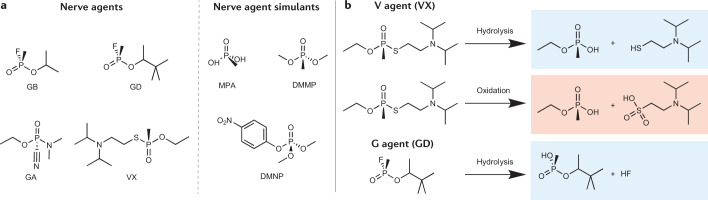
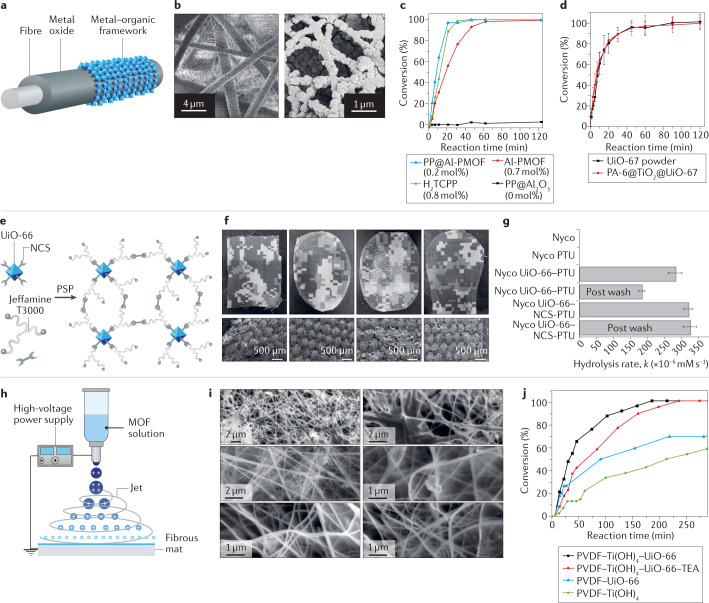
The most recent global health and economic crisis caused by the SARS-CoV-2 outbreak has shown us that it is vital to be prepared for the next global threat, be it caused by pollutants, chemical toxins or biohazards. Therefore, we need to develop environments in which infectious diseases and dangerous chemicals cannot be spread or misused so easily. Especially, those who put themselves in situations of most exposure - doctors, nurses and those protecting and caring for the safety of others - should be adequately protected. In this Review, we explore how the development of coatings for surfaces and functionalized fabrics can help to accelerate the inactivation of biological and chemical toxins. We start by looking at recent advancements in the use of metal and metal-oxide-based catalysts for the inactivation of pathogenic threats, with a focus on identifying specific chemical bonds that can be targeted. We then discuss the use of metal-organic frameworks on textiles for the capture and degradation of various chemical warfare agents and their simulants, their long-term efficacy and the challenges they face.
由严重急性呼吸综合征冠状病毒2(SARS-CoV-2)爆发引发的最新全球健康和经济危机向我们表明,为应对下一次全球威胁做好准备至关重要,无论这种威胁是由污染物、化学毒素还是生物危害引起的。因此,我们需要营造这样的环境,使传染病和危险化学品不容易传播或被滥用。特别是那些处于接触风险最高的人群——医生、护士以及那些保护和照顾他人安全的人员——应该得到充分的保护。在本综述中,我们探讨表面涂层和功能化织物的发展如何有助于加速生物和化学毒素的失活。我们首先着眼于金属和金属氧化物基催化剂在灭活致病威胁方面的最新进展,重点是确定可以靶向的特定化学键。然后,我们讨论金属有机框架在纺织品上用于捕获和降解各种化学战剂及其模拟物的应用、它们的长期功效以及所面临的挑战。