Wang Linbang, He Tao, Liu Jingkun, Tai Jiaojiao, Wang Bing, Chen Zhiyu, Quan Zhengxue
Department of Orthopedic Surgery, The First Affiliated Hospital of Chongqing Medical University, Chongqing, 400016, China.
Honghui Hospital, Xi'an Jiaotong University, 555 Youyi Dong Road, Beilin, Xi'an, 710054, Shaanxi, China.
Exp Hematol Oncol. 2021 May 10;10(1):31. doi: 10.1186/s40164-021-00226-1.
Tumor-associated macrophages (TAMs) are abundant in the tumor microenvironment (TME). However, their contribution to the immunosuppressive status of the TME remains unclear.
We integrated single-cell sequencing and transcriptome data from different tumor types to uncover the molecular features of TAMs. In vitro experiments and prospective clinical tests confirmed the results of these analysis.
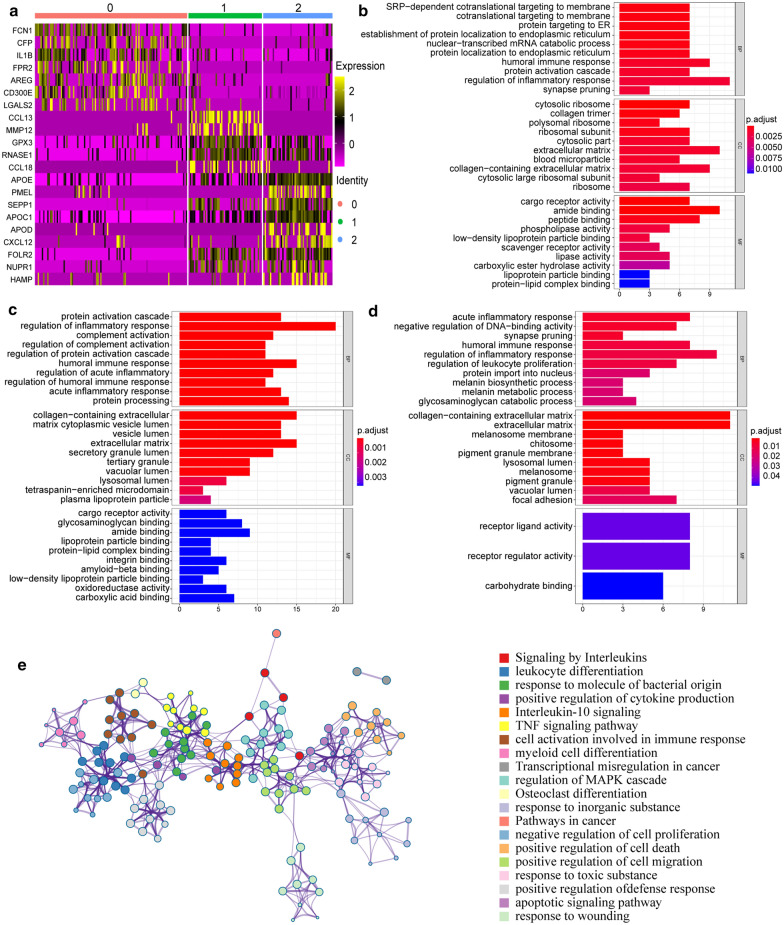
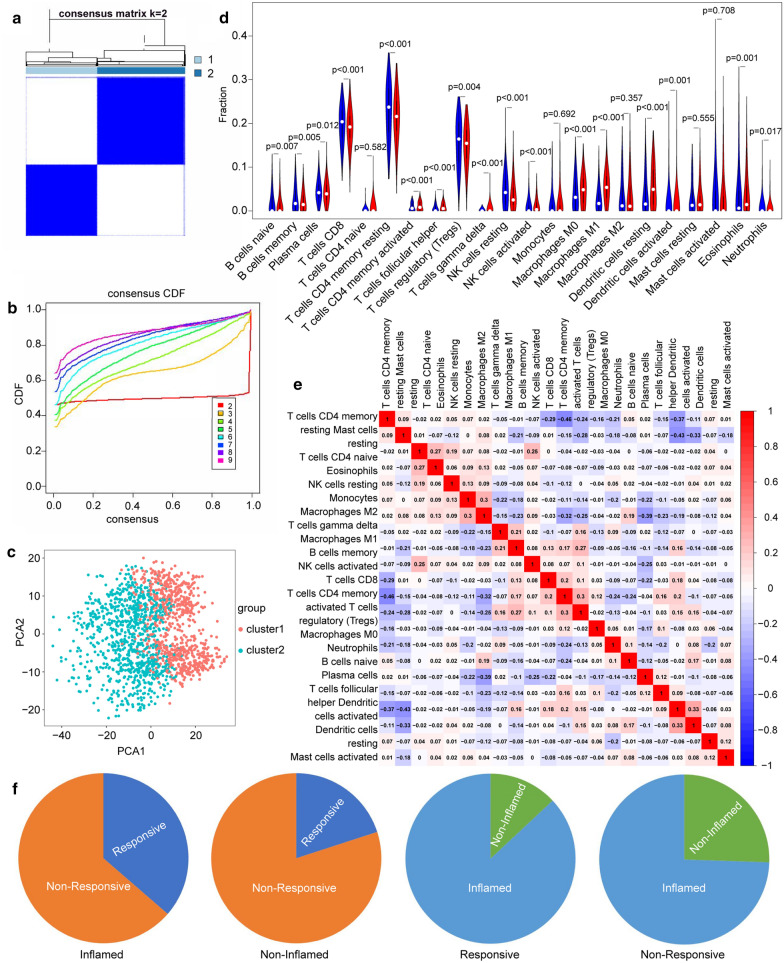
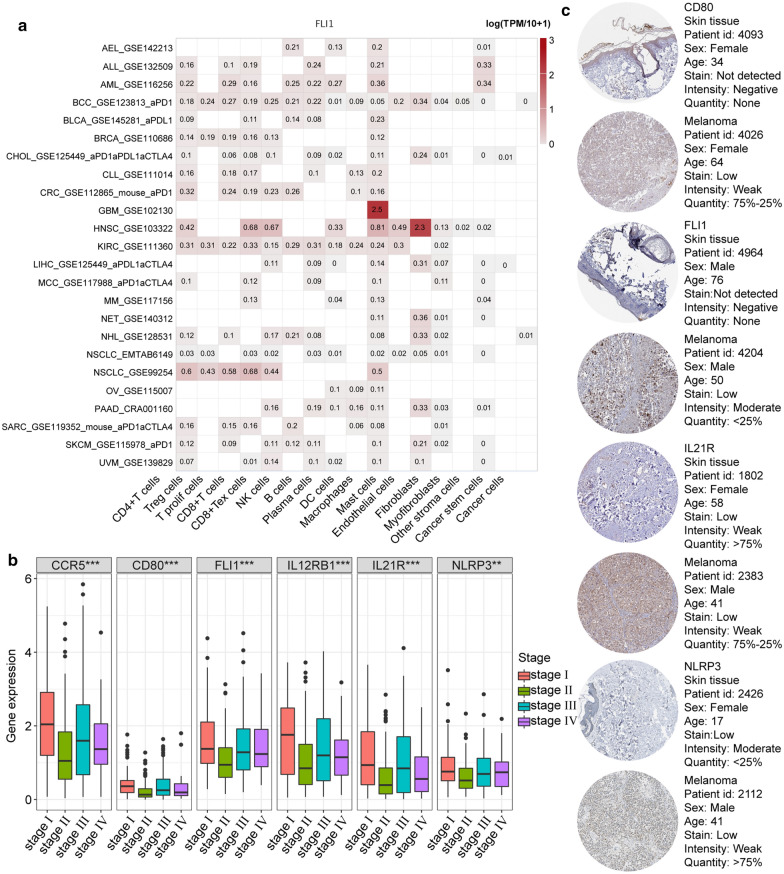
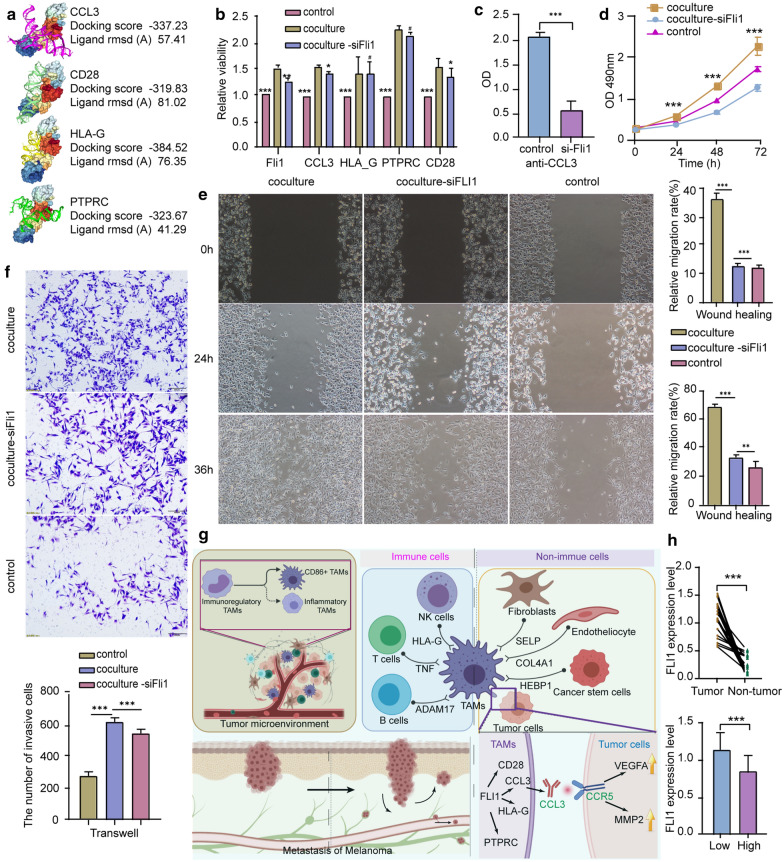
We first detected intra- and inter-tumoral heterogeneities between TAM subpopulations and their functions, with CD86 TAMs playing a crucial role in tumor progression. Next, we focused on the ligand-receptor interactions between TAMs and tumor cells in different TME phenotypes and discovered that aberrant expressions of six hub genes, including FLI1, are involved in this process. A TAM-tumor cell co-culture experiment proved that FLI1 was involved in tumor cell invasion, and FLI1 also showed a unique pattern in patients. Finally, TAMs were discovered to communicate with immune and stromal cells.
We determined the role of TAMs in the TME by focusing on their communication pattern with other TME components. Additionally, the screening of hub genes revealed potential therapeutic targets.
肿瘤相关巨噬细胞(TAM)在肿瘤微环境(TME)中大量存在。然而,它们对TME免疫抑制状态的作用仍不清楚。
我们整合了来自不同肿瘤类型的单细胞测序和转录组数据,以揭示TAM的分子特征。体外实验和前瞻性临床试验证实了这些分析结果。
我们首先检测到TAM亚群之间的肿瘤内和肿瘤间异质性及其功能,其中CD86+ TAM在肿瘤进展中起关键作用。接下来,我们关注不同TME表型中TAM与肿瘤细胞之间的配体-受体相互作用,发现包括FLI1在内的六个枢纽基因的异常表达参与了这一过程。TAM-肿瘤细胞共培养实验证明FLI1参与肿瘤细胞侵袭,并且FLI1在患者中也呈现出独特模式。最后,发现TAM与免疫细胞和基质细胞存在交流。
我们通过关注TAM与其他TME成分的交流模式,确定了TAM在TME中的作用。此外,枢纽基因的筛选揭示了潜在的治疗靶点。