Department of Psychiatry and Behavioral Sciences, Division of Neurobiology, Johns Hopkins University School of Medicine, CMSC 8-121, 600 N. Wolfe St, Baltimore, MD, 21287, USA.
Department of Neurology, Johns Hopkins University School of Medicine, Baltimore, MD, USA.
Sci Rep. 2021 May 10;11(1):9865. doi: 10.1038/s41598-021-89312-2.
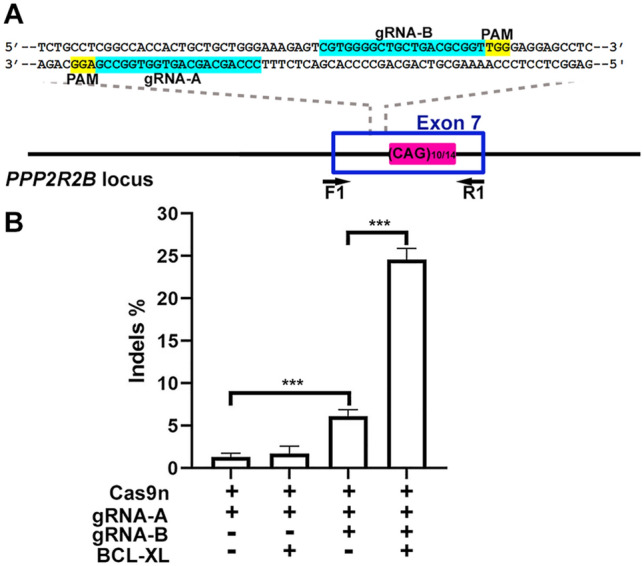
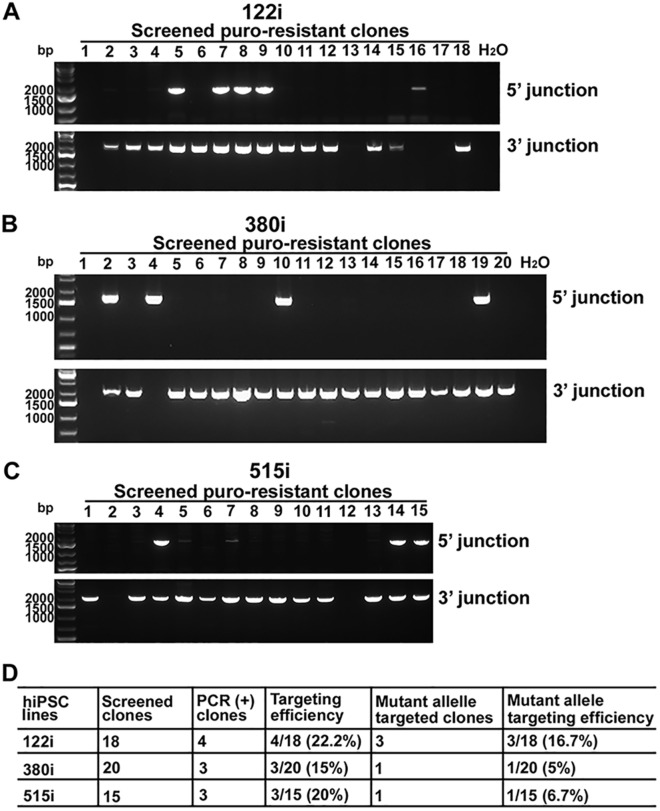
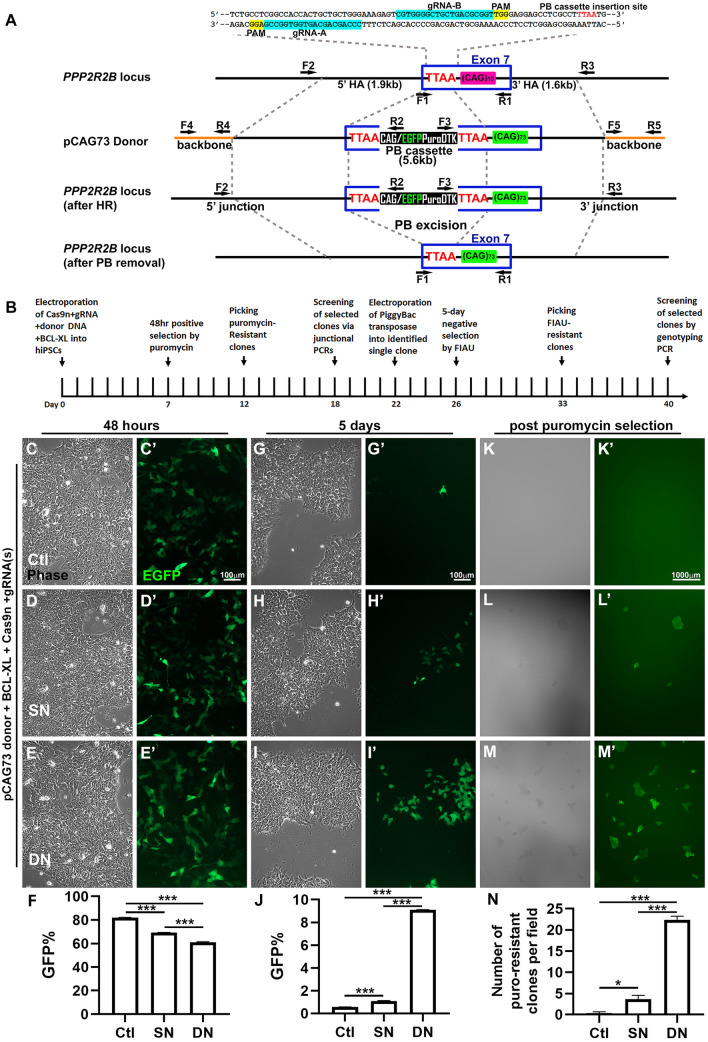
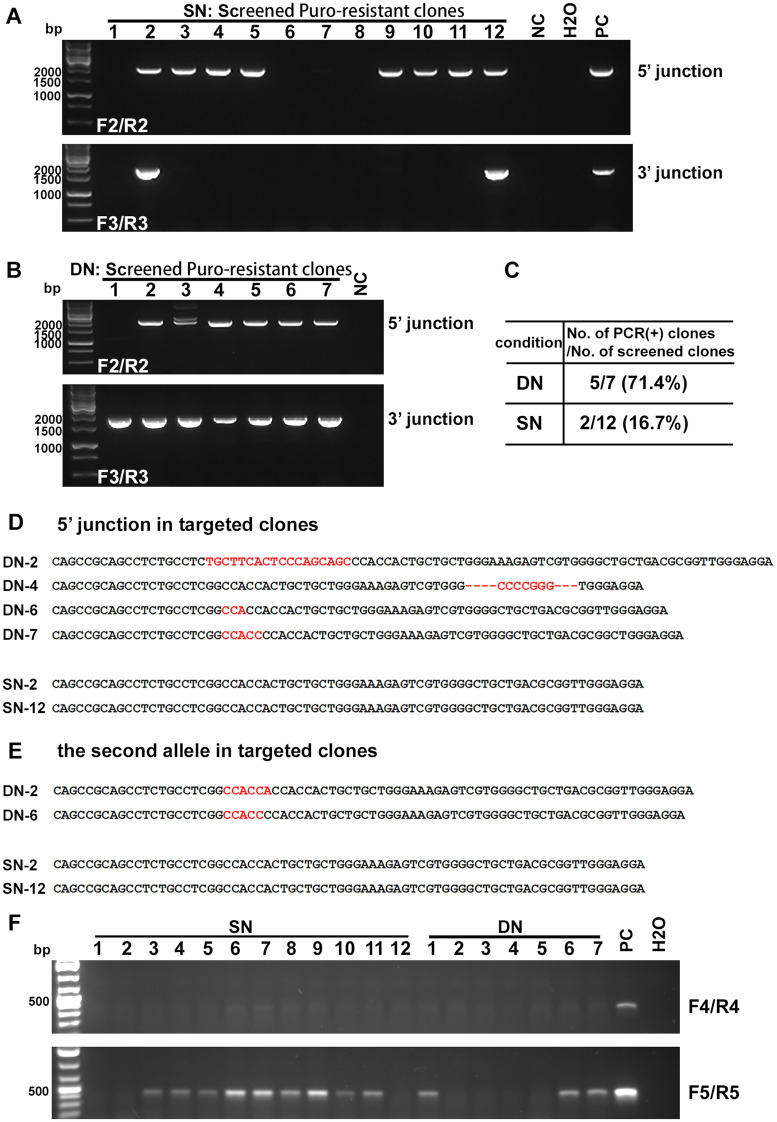
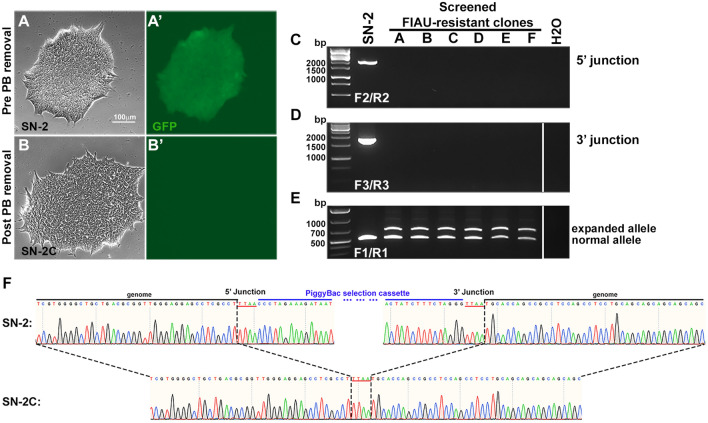
Cas9 nucleases permit rapid and efficient generation of gene-edited cell lines. However, in typical protocols, mutations are intentionally introduced into the donor template to avoid the cleavage of donor template or re-cleavage of the successfully edited allele, compromising the fidelity of the isogenic lines generated. In addition, the double-stranded breaks (DSBs) used for editing can introduce undesirable "on-target" indels within the second allele of successfully modified cells via non-homologous end joining (NHEJ). To address these problems, we present an optimized protocol for precise genome editing in human iPSCs that employs (1) single guided Cas9 nickase to generate single-stranded breaks (SSBs), (2) transient overexpression of BCL-XL to enhance survival post electroporation, and (3) the PiggyBac transposon system for seamless removal of dual selection markers. We have used this method to modify the length of the CAG repeat contained in exon 7 of PPP2R2B. When longer than 43 triplets, this repeat causes the neurodegenerative disorder spinocerebellar ataxia type 12 (SCA12); our goal was to seamlessly introduce the SCA12 mutation into a human control iPSC line. With our protocol, ~ 15% of iPSC clones selected had the desired gene editing without "on target" indels or off-target changes, and without the deliberate introduction of mutations via the donor template. This method will allow for the precise and efficient editing of human iPSCs for disease modeling and other purposes.
Cas9 核酸酶允许快速有效地生成基因编辑细胞系。然而,在典型的方案中,突变是故意引入供体模板中,以避免供体模板的切割或成功编辑等位基因的再切割,从而降低同基因系产生的准确性。此外,用于编辑的双链断裂 (DSB) 通过非同源末端连接 (NHEJ) 在成功修饰细胞的第二个等位基因中引入不理想的“靶内”缺失。为了解决这些问题,我们提出了一种优化的人类 iPSC 精确基因组编辑方案,该方案采用 (1) 单指导 Cas9 切口酶产生单链断裂 (SSB),(2) BCL-XL 的瞬时过表达以增强电穿孔后的存活率,以及 (3) PiggyBac 转座子系统用于无缝去除双重选择标记。我们已经使用这种方法来修饰 PPP2R2B 外显子 7 中包含的 CAG 重复的长度。当重复长度超过 43 个三联体时,这种重复会导致神经退行性疾病脊髓小脑共济失调 12 型 (SCA12);我们的目标是将 SCA12 突变无缝引入人类对照 iPSC 系。使用我们的方案,在没有“靶内”缺失或脱靶变化的情况下,约 15%的 iPSC 克隆被选择性编辑,并且没有通过供体模板故意引入突变。这种方法将允许对人类 iPSC 进行精确和高效的编辑,用于疾病建模和其他目的。