Zeng Bo, Liu Zhenguo, Zhu Haoshuai, Zhang Xin, Yang Weixiong, Li Xiaoxing, Cheng Chao
Department of Thoracic Surgery, the First Affiliated Hospital, Sun Yat-sen University, 510080, Guangzhou, China.
Institute of Precision Medicine, the First Affiliated Hospital, Sun Yat-sen University, 510080, Guangzhou, China.
Cell Death Discov. 2021 May 11;7(1):99. doi: 10.1038/s41420-021-00461-9.
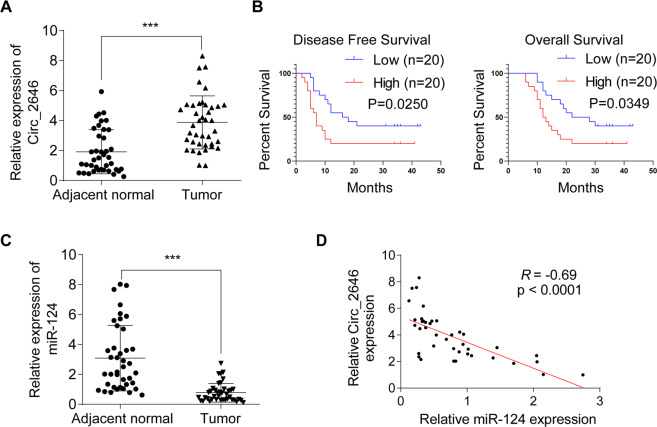
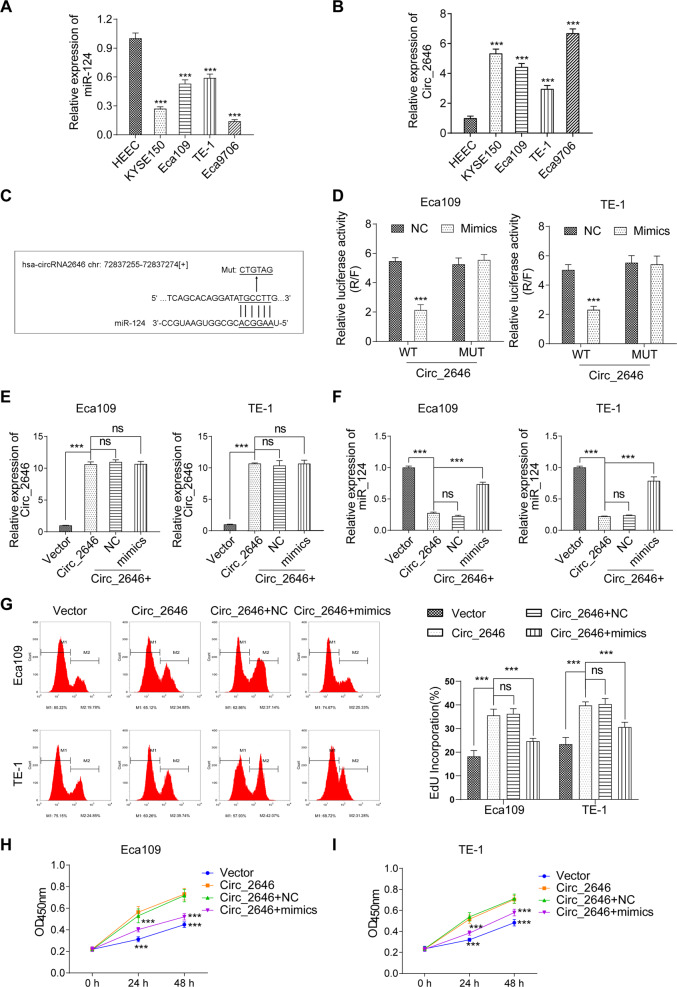
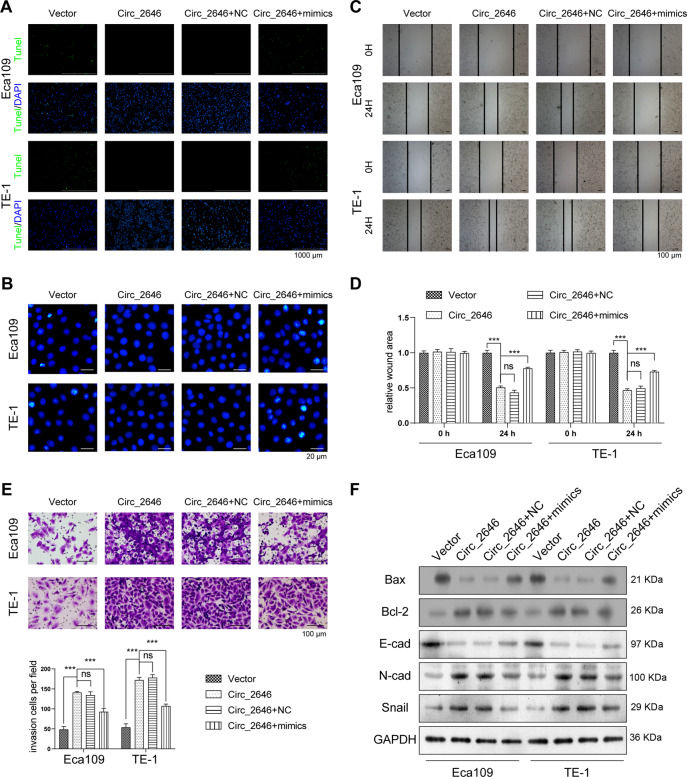
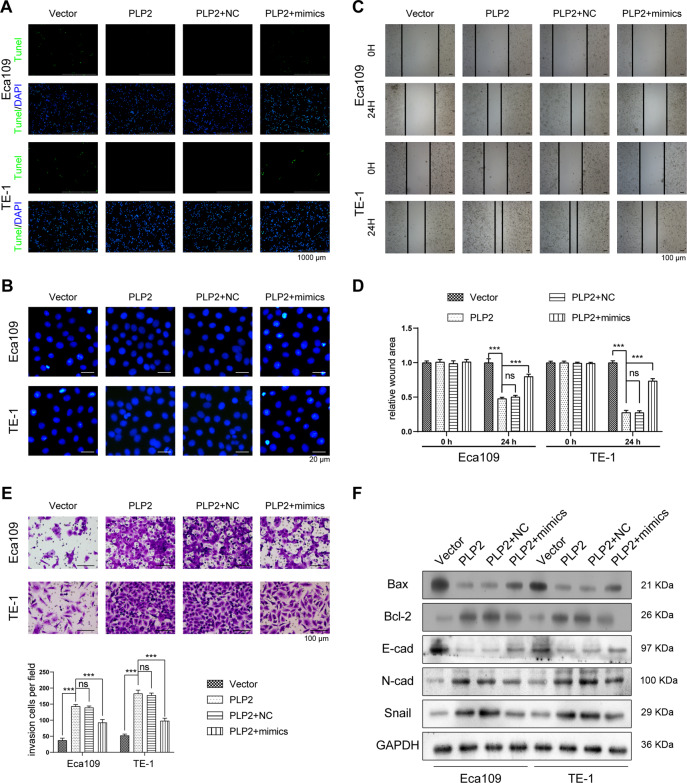
MicroRNA-124 (miR-124) has been predicted as a tumor suppressor in esophageal squamous cell carcinoma (ESCC). However, factors contributing to miR-124 reduction remain unclear. Circular RNAs (circRNAs) are a new family of non-coding RNAs with gene regulatory potential via interacting with miRNAs. We predicted three circRNAs, including CircRNA_14359, CircRNA_2646, and CircRNA_129, that could interact with miR-124 by bioinformatics analysis and determined their expressions in ESCC tissues and adjacent normal tissues. We found that CircRNA_2646 was up-regulated in ESCC, negatively correlated with the expression of miR-124 and positively associated with TNM stage and lymph node metastasis of ESCC. Luciferase reporter assay showed that CircRNA_2646 interacted with miR-124 in ESCC Eca109 and TE-1 cells. Moreover, ectopical overexpression of CircRNA_2646 accelerated cell proliferation, migration, invasion, and epithelial-to-mesenchymal transition (EMT), but restoration of miR-124 abrogated these functions and promoted Bcl-2-dependent cell apoptosis. Furthermore, it was found that the oncogene Proteolipid Protein 2 (PLP2) was the target gene of miR-124. In Eca109 and TE-1 cells, restoration of miR-124 decreased the level of PLP2 and inhibited PLP2-induced cell proliferation, migration, invasion, and EMT, but enhanced cell apoptosis. The in vivo study confirmed that CircRNA_2646 promoted ESCC development by repressing miR-124 and activating PLP2. Taken together, we identified that CircRNA_2646 functioned as an inhibitor in miR-124 signaling pathway in ESCC for carcinogenesis and could be a promising target for ESCC therapy.
微小RNA-124(miR-124)已被预测为食管鳞状细胞癌(ESCC)中的一种肿瘤抑制因子。然而,导致miR-124减少的因素仍不清楚。环状RNA(circRNAs)是一类新的非编码RNA,具有通过与微小RNA相互作用来调控基因的潜力。我们通过生物信息学分析预测了三种可与miR-124相互作用的环状RNA,即CircRNA_14359、CircRNA_2646和CircRNA_129,并测定了它们在ESCC组织及相邻正常组织中的表达。我们发现CircRNA_2646在ESCC中上调,与miR-124的表达呈负相关,与ESCC的TNM分期及淋巴结转移呈正相关。荧光素酶报告基因检测表明,CircRNA_2646在ESCC Eca109和TE-1细胞中与miR-124相互作用。此外,CircRNA_2646的异位过表达加速了细胞增殖、迁移、侵袭及上皮-间质转化(EMT),但miR-124的恢复消除了这些功能并促进了Bcl-2依赖的细胞凋亡。此外,发现癌基因蛋白脂质蛋白2(PLP2)是miR-124的靶基因。在Eca109和TE-1细胞中,miR-124的恢复降低了PLP2的水平,并抑制了PLP2诱导的细胞增殖、迁移、侵袭及EMT,但增强了细胞凋亡。体内研究证实,CircRNA_2646通过抑制miR-124并激活PLP2促进ESCC的发展。综上所述,我们确定CircRNA_2646在ESCC致癌过程中作为miR-124信号通路的抑制剂发挥作用,可能是ESCC治疗的一个有前景的靶点。