Hauw-Berlemont Caroline, Aubron Cécile, Aissaoui Nadia, Bodet-Contentin Laetitia, Boissier Florence, Fartoukh Muriel Sarah, Jourdain Mercedes, Le Marec Julien, Pestel Julia, Salmon Gandonnière Charlotte, Tamion Fabienne, Hamzaoui Olfa
Médecine Intensive Réanimation, Hôpital Européen Georges Pompidou, AP-HP, Université de Paris, Paris, France.
Médecine Intensive Réanimation, Centre Hospitalier Régional Et Universitaire de Brest, Université de La Bretagne Occidentale, Brest, France.
Ann Intensive Care. 2021 May 12;11(1):72. doi: 10.1186/s13613-021-00860-2.
The medical workforce has been feminized for the last two decades worldwide. Nonetheless, women remain under-represented among intensivists. We conducted a survey among French women intensivists to assess their professional and personal quality of life and their perception of potential gender discrimination at work.
We conducted an observational descriptive study by sending a survey, designed by the group FEMMIR (FEmmes Médecins en Médecine Intensive Réanimation), to women intensivists in France, using primarily the Société de Réanimation de Langue Française (SRLF) mailing list. The questionnaire was also available online between September 2019 and January 2020 and women intensivists were encouraged to answer through email reminders. It pertained to five main domains, including demographic characteristics, work position, workload and clinical/research activities, self-fulfillment scale, perceived discrimination at work and suggested measures to implement.
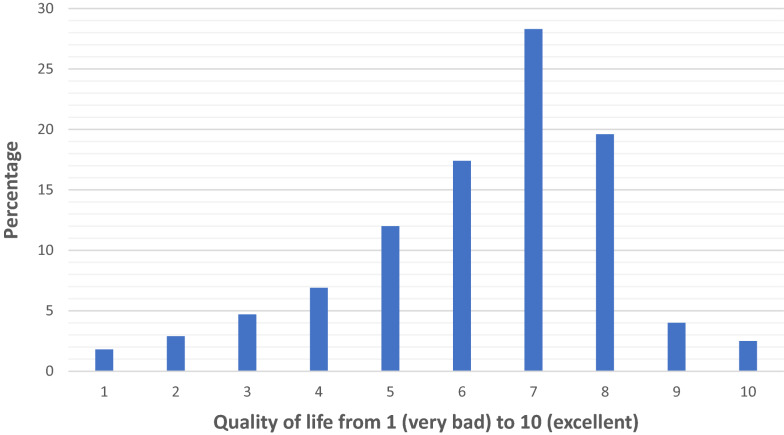
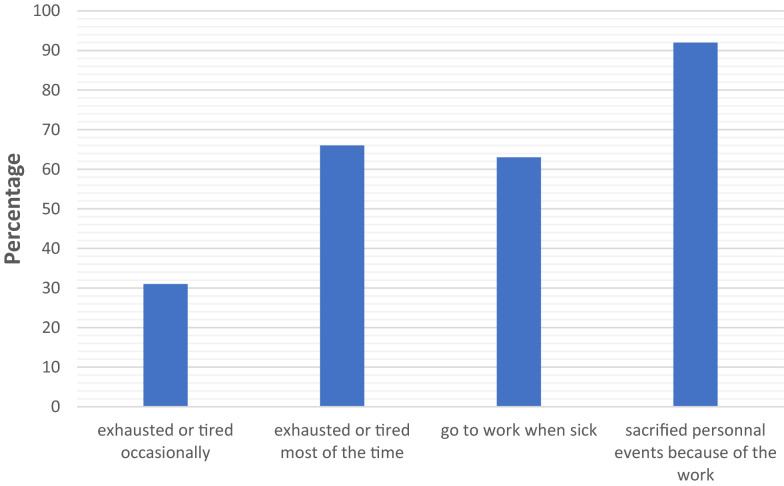
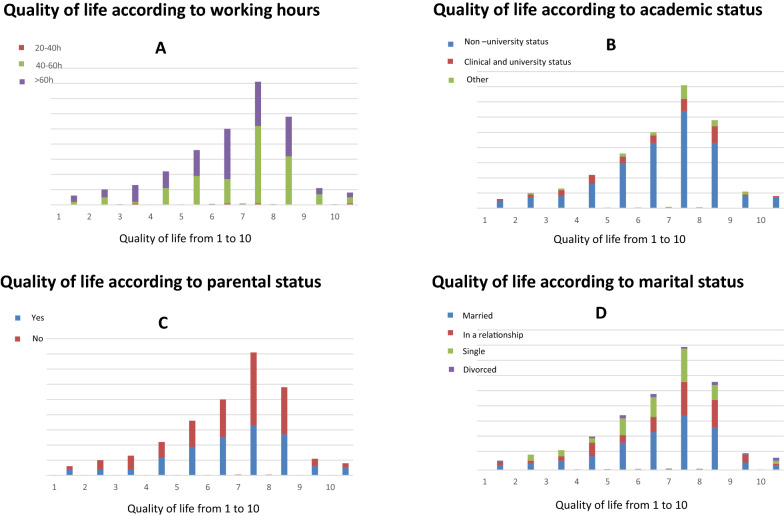
Three hundred and seventy-one women responded to the questionnaire, among whom 16% had an academic position. Being a woman intensivist and pregnancy were both considered to increase difficulties in careers' advancement by 31% and 73% of the respondents, respectively. Almost half of the respondents (46%) quoted their quality of life equal to or lower than 6 on a scale varying from 1 (very bad quality of life) to 10 (excellent quality of life). They were 52% to feel an imbalance between their personal and professional life at the cost of their personal life. Gender discrimination has been experienced by 55% of the respondents while 37% confided having already been subject of bullying or harassment. Opportunities to adjust their work timetable including part-time work, better considerations for pregnant women including increasing the number of intensivists and the systematic replacement during maternity leave, and the respect of the law regarding the paternity leave were suggested as key measures to enable better professional and personal accomplishment by women intensivists.
In this first large French survey in women intensivists, we pointed out issues felt by women intensivists that included an imbalance between professional and personal life, a perceived loss of opportunity due to the fact of being a woman, frequent reported bullying or harassment and a lack of consideration of the needs related to pregnancy and motherhood.
在过去二十年里,全球医疗劳动力队伍呈现女性化趋势。尽管如此,女性在重症医学专家中所占比例仍然较低。我们对法国女性重症医学专家进行了一项调查,以评估她们的职业和个人生活质量,以及她们对工作中潜在性别歧视的看法。
我们开展了一项观察性描述性研究,通过向法国女性重症医学专家发送由FEMMIR(重症医学与复苏领域的女医生)小组设计的调查问卷,主要利用法国重症医学会(SRLF)的邮件列表。该问卷在2019年9月至2020年1月期间也可在线获取,并鼓励女性重症医学专家通过电子邮件提醒进行回答。问卷涉及五个主要领域,包括人口统计学特征、工作职位、工作量以及临床/研究活动、自我实现量表、工作中感知到的歧视以及建议实施的措施。
371名女性回复了问卷,其中16%拥有学术职位。分别有31%和73%的受访者认为身为女性重症医学专家和怀孕会增加职业发展的困难。几乎一半的受访者(46%)表示她们的生活质量在1(非常差的生活质量)至10(优秀的生活质量)的量表中等于或低于6。她们中有52%感到个人生活和职业生活之间存在失衡,且是以个人生活为代价。55%的受访者经历过性别歧视,37%透露曾遭受欺凌或骚扰。建议采取的关键措施包括调整工作时间表的机会,如兼职工作;更好地照顾孕妇,包括增加重症医学专家的数量以及产假期间的系统替代;以及遵守关于陪产假的法律,以促使女性重症医学专家实现更好的职业和个人成就。
在这项针对法国女性重症医学专家的首次大型调查中,我们指出了女性重症医学专家所感受到的问题,包括职业生活和个人生活的失衡、因身为女性而感知到的机会丧失、频繁报告欺凌或骚扰以及对与怀孕和母亲身份相关需求的缺乏考虑。