Skin Cancer and Ageing Lab, Cancer Research UK Manchester Institute, The University of Manchester, Manchester, UK.
Department of Dermatology and Skin Cancers, Aix-Marseille University, Marseille, France.
Nat Commun. 2021 May 12;12(1):2742. doi: 10.1038/s41467-021-22953-z.
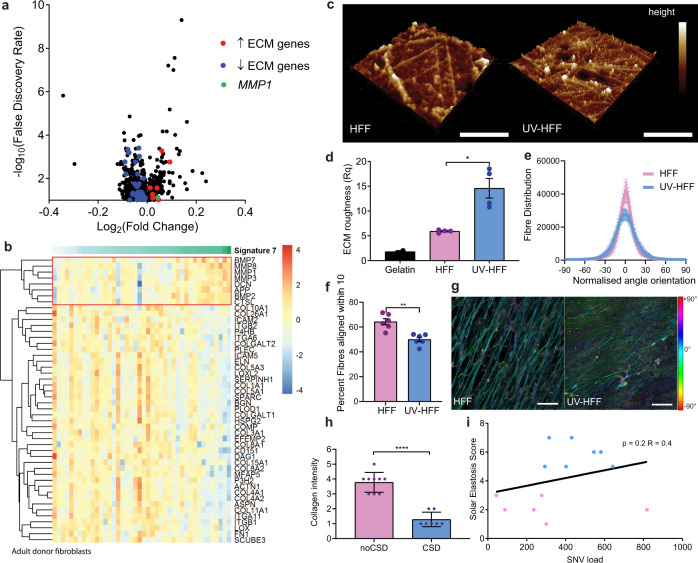
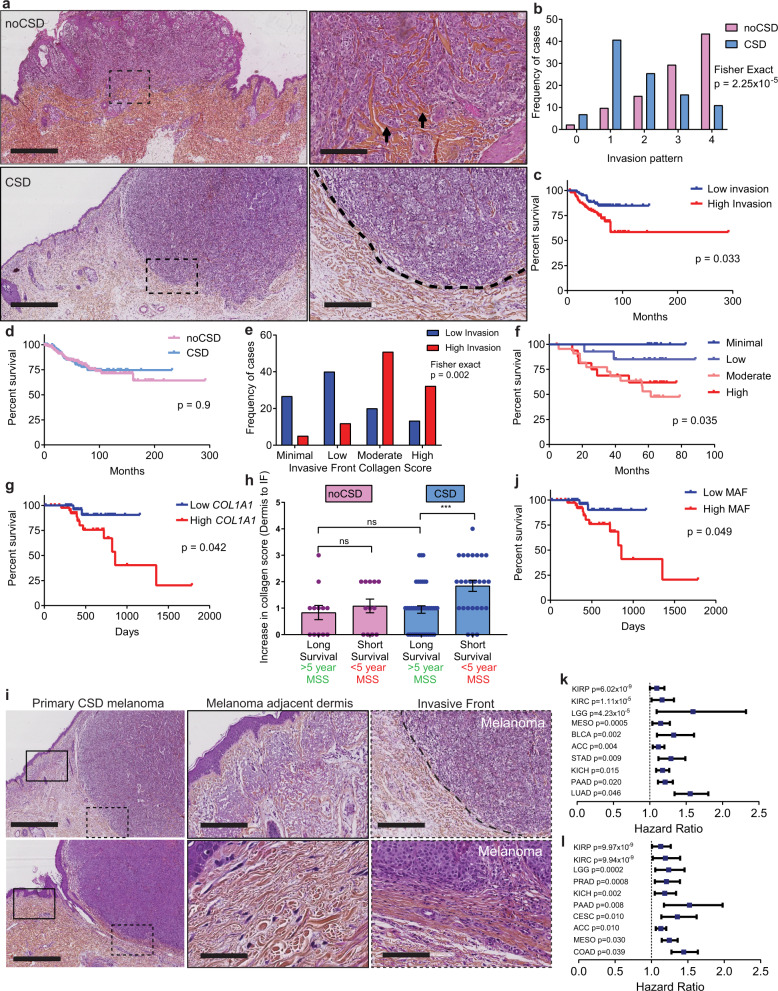
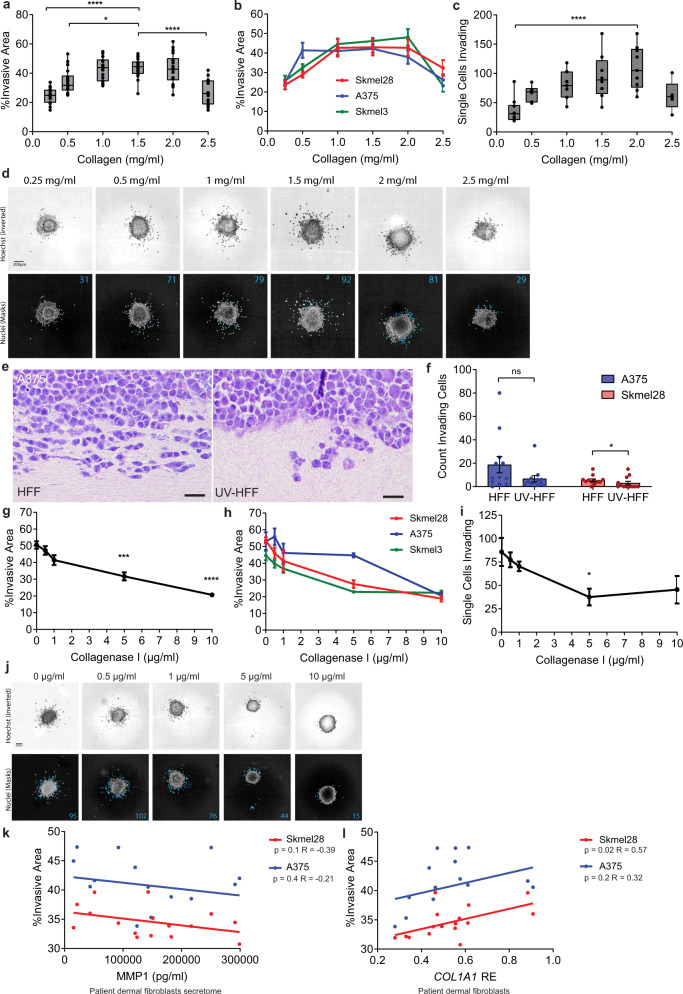
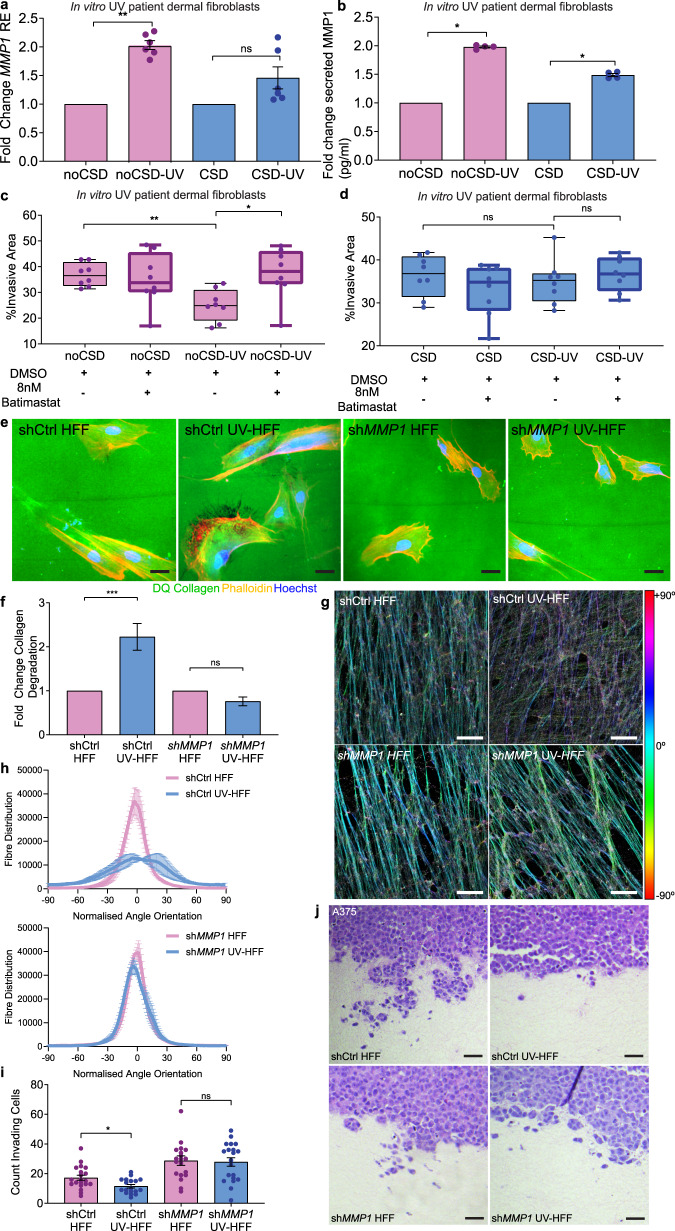
Ultraviolet radiation (UVR) damages the dermis and fibroblasts; and increases melanoma incidence. Fibroblasts and their matrix contribute to cancer, so we studied how UVR modifies dermal fibroblast function, the extracellular matrix (ECM) and melanoma invasion. We confirmed UVR-damaged fibroblasts persistently upregulate collagen-cleaving matrix metalloprotein-1 (MMP1) expression, reducing local collagen (COL1A1), and COL1A1 degradation by MMP1 decreased melanoma invasion. Conversely, inhibiting ECM degradation and MMP1 expression restored melanoma invasion. Primary cutaneous melanomas of aged humans show more cancer cells invade as single cells at the invasive front of melanomas expressing and depositing more collagen, and collagen and single melanoma cell invasion are robust predictors of poor melanoma-specific survival. Thus, primary melanomas arising over collagen-degraded skin are less invasive, and reduced invasion improves survival. However, melanoma-associated fibroblasts can restore invasion by increasing collagen synthesis. Finally, high COL1A1 gene expression is a biomarker of poor outcome across a range of primary cancers.
紫外线辐射(UVR)会损伤真皮和成纤维细胞,并增加黑色素瘤的发病率。成纤维细胞及其基质有助于癌症的发生,因此我们研究了 UVR 如何改变真皮成纤维细胞功能、细胞外基质(ECM)和黑色素瘤侵袭。我们证实 UVR 损伤的成纤维细胞持续上调胶原裂解基质金属蛋白酶 1(MMP1)的表达,降低局部胶原(COL1A1),而 MMP1 降解 COL1A1 则减少黑色素瘤的侵袭。相反,抑制 ECM 降解和 MMP1 表达可恢复黑色素瘤的侵袭。年龄较大的人类原发性皮肤黑色素瘤表现出更多的癌细胞以单细胞形式侵袭黑色素瘤的侵袭前沿,这些黑色素瘤表达和沉积更多的胶原蛋白,胶原蛋白和单个黑色素瘤细胞的侵袭是黑色素瘤特异性生存不良的强有力预测因子。因此,起源于胶原降解皮肤的原发性黑色素瘤侵袭性较低,降低侵袭性可改善生存。然而,黑色素瘤相关成纤维细胞可通过增加胶原蛋白合成来恢复侵袭性。最后,COL1A1 基因高表达是一系列原发性癌症不良预后的生物标志物。