Department of Internal Medicine, Hematology and Oncology, Masaryk University and University Hospital Brno, Brno, Czech Republic.
Department of Mathematics and Statistics, Faculty of Science, Masaryk University, Brno, Czech Republic.
Sci Rep. 2021 May 12;11(1):10124. doi: 10.1038/s41598-021-89545-1.
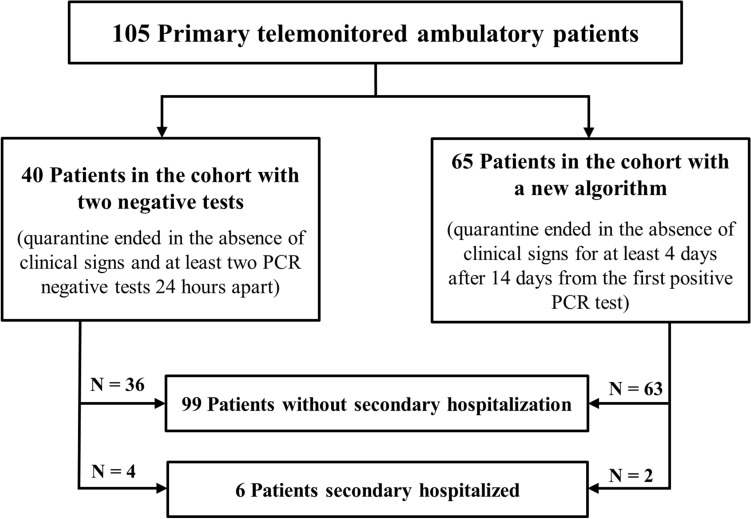
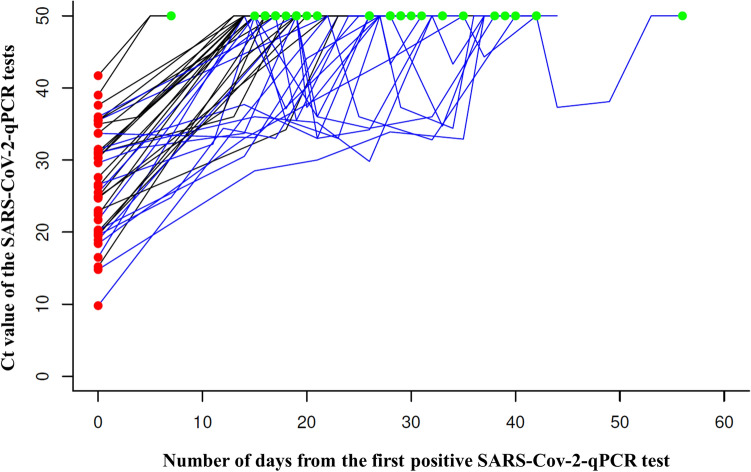
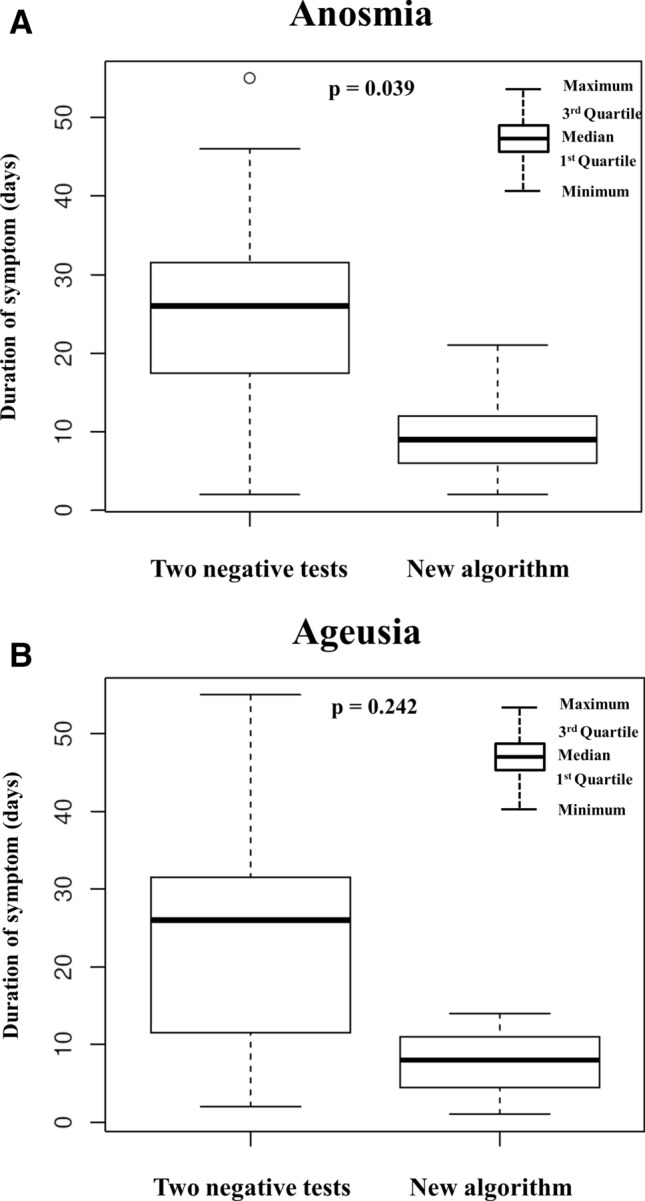
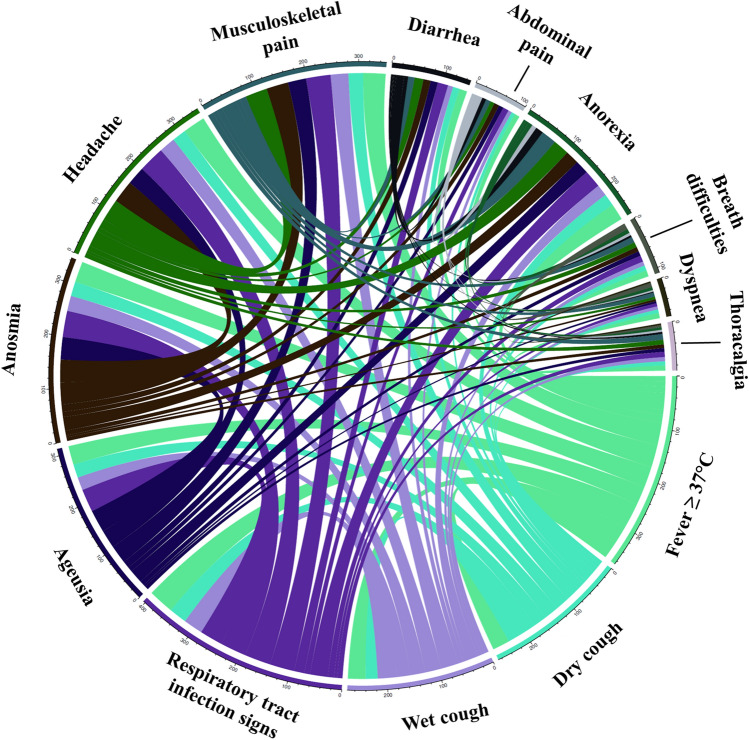
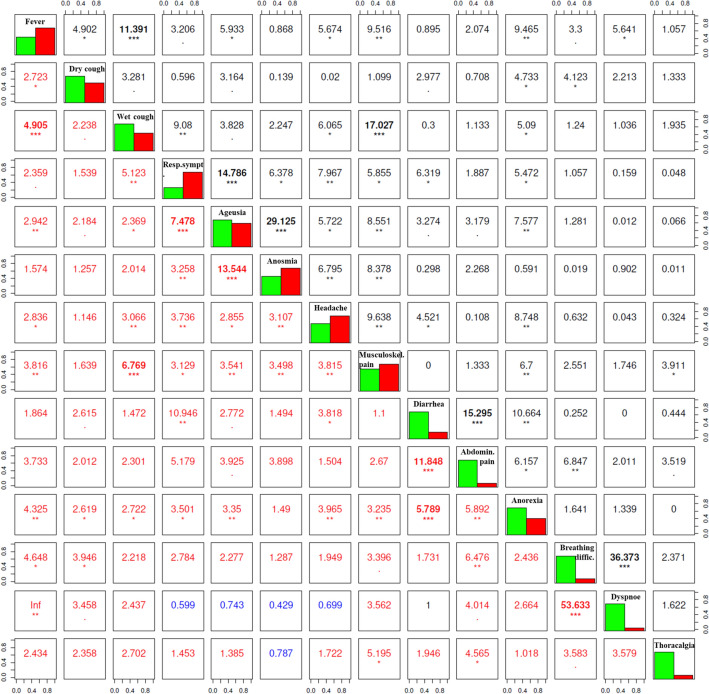
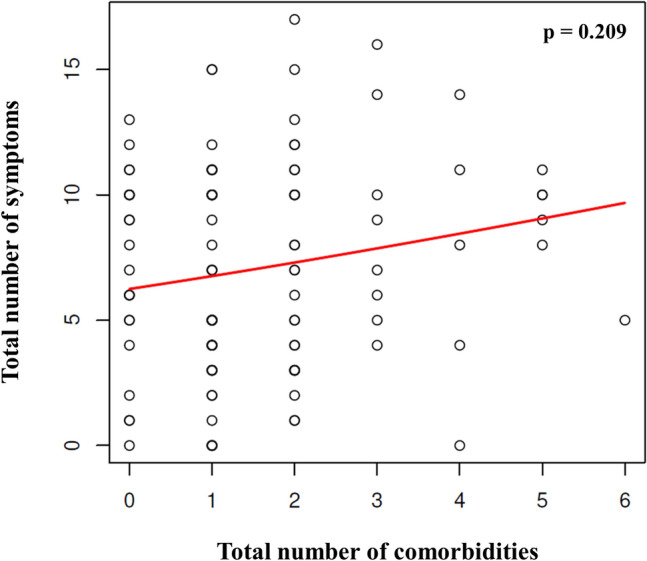
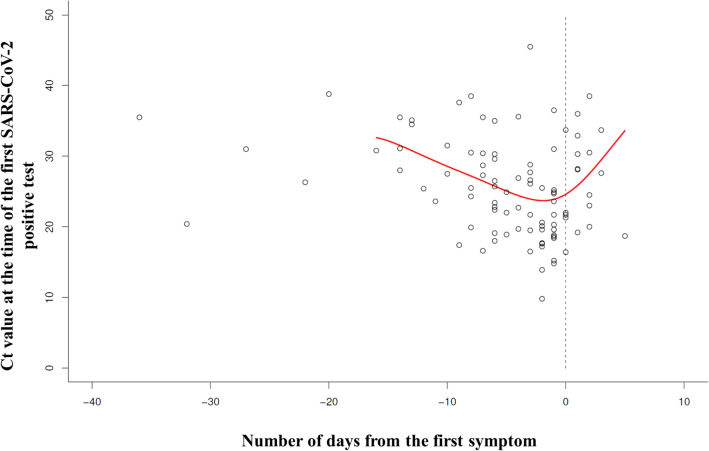
Research objective was to detail COVID-19's natural trajectory in relation to the Czech population's viral load. Our prospective detailed daily questionnaire-based telemonitoring study evaluated COVID-19's impact among 105 outpatients. In accordance with government quarantine requirements, outpatients were divided into a cohort with two negative tests at the end of the disease (40 patients) and a cohort with a new algorithm (65 patients) following a 14-day quarantine. Median follow-up differed significantly between the 2 groups (23 days vs. 16 days). Only 6% of patients were asymptomatic during the entire telemonitoring period. Another 13% of patients were diagnosed asymptomatic, as suspected contacts, yet later developed symptoms, while the remaining 81% were diagnosed as symptomatic on average 6 days following symptom onset. Telemonitoring enabled precise symptom status chronicling. The most frequently reported complaints were fevers, respiratory issues, and anosmia. Six patients were eventually hospitalized for complications detected early after routine telemonitoring. During the extended follow-up (median 181 days), anosmia persisted in 26% of patients. 79% of patients in the new quarantine algorithm cohort reported no symptoms on day 11 compared to just 56% of patients in the two negative test cohort upon first testing negative (median-19 days). The highest viral load occurred within 0-2 days of initial symptom onset. Both the PCR viral load and two consecutive PCR negative sample realizations indicated high interindividual variability with a surprisingly fluctuating pattern among 43% of patients. No definitive COVID-19 symptoms or set of symptoms excepting anosmia (59%) and/or ageusia (47%) were identified. No preexisting medical conditions specifically foreshadowed disease trajectory in a given patient. Without a PCR negativity requirement for quarantine cessation, patients could exhibit fewer symptoms. Our study therefore highlights the urgent need for routine ambulatory patient telemedicine monitoring, early complication detection, intensive mass education connecting disease demeanor with subsequent swift diagnostics, and, notably, the need to reevaluate and modify quarantine regulations for better control of SARS-CoV-2 proliferation.
研究目的是详细描述 COVID-19 与捷克人群病毒载量之间的自然轨迹。我们前瞻性地详细评估了 105 名门诊患者的 COVID-19 影响,每天通过基于问卷的远程监测进行研究。根据政府隔离要求,将门诊患者分为疾病结束时两次检测均为阴性的队列(40 名患者)和新算法队列(65 名患者)。两组患者的中位随访时间差异显著(23 天与 16 天)。在整个远程监测期间,仅有 6%的患者无症状。另有 13%的患者被诊断为无症状,因为他们是疑似接触者,但后来出现了症状,而其余 81%的患者平均在症状出现后 6 天被诊断为症状。远程监测使精确的症状状态记录成为可能。报告最多的症状是发热、呼吸问题和嗅觉丧失。6 名患者最终因常规远程监测后早期发现的并发症住院。在延长的随访期(中位随访期 181 天)中,26%的患者嗅觉丧失持续存在。在新的隔离算法队列中,79%的患者在第 11 天没有症状,而在两次检测均为阴性的队列中,只有 56%的患者在首次检测阴性时(中位-19 天)没有症状。病毒载量最高出现在症状出现后的 0-2 天内。PCR 病毒载量和两次连续的 PCR 阴性样本结果均表明个体间的变异性很高,43%的患者表现出惊人的波动模式。除了嗅觉丧失(59%)和/或味觉丧失(47%)外,没有确定的 COVID-19 症状或症状集。没有任何预先存在的医疗条件能准确预示患者的疾病轨迹。如果不需要 PCR 阴性就停止隔离,患者可能会出现更少的症状。因此,我们的研究强调了常规门诊患者远程医疗监测、早期并发症检测、将疾病表现与随后快速诊断联系起来的密集大众教育以及值得注意的是,需要重新评估和修改隔离规定以更好地控制 SARS-CoV-2 传播的迫切需要。