Institute of Life science and Bio-pharmaceuticals, Traditional Chinese Medicine College, Shenyang Pharmaceutical University, Liaoning, China.
Institute of Traditional Chinese Medicine, Shandong Hongjitang Pharmaceutical Group Co., Ltd, Shandong, China.
J Cell Mol Med. 2021 Jun;25(12):5753-5768. doi: 10.1111/jcmm.16599. Epub 2021 May 13.
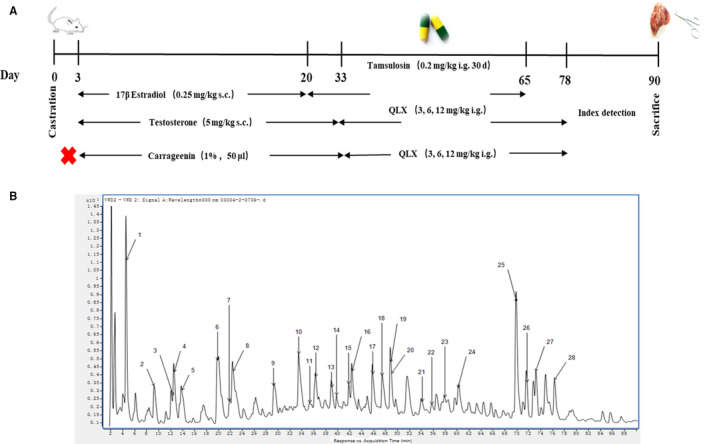
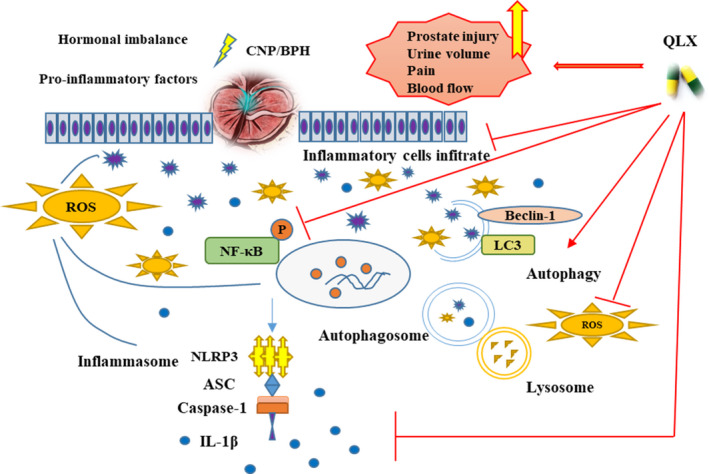
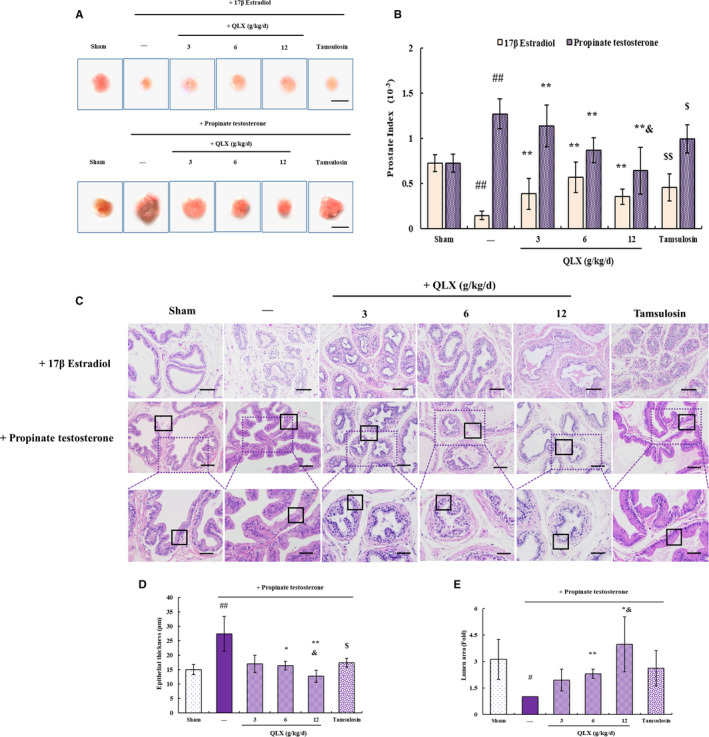
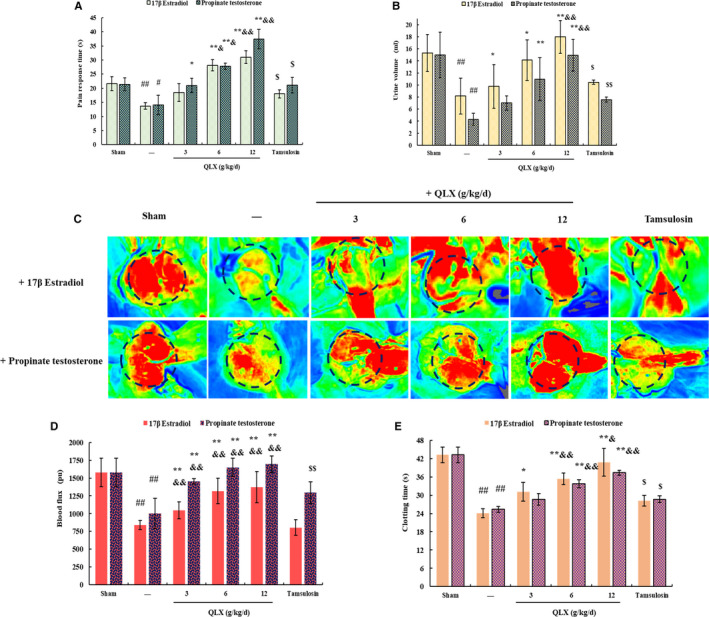
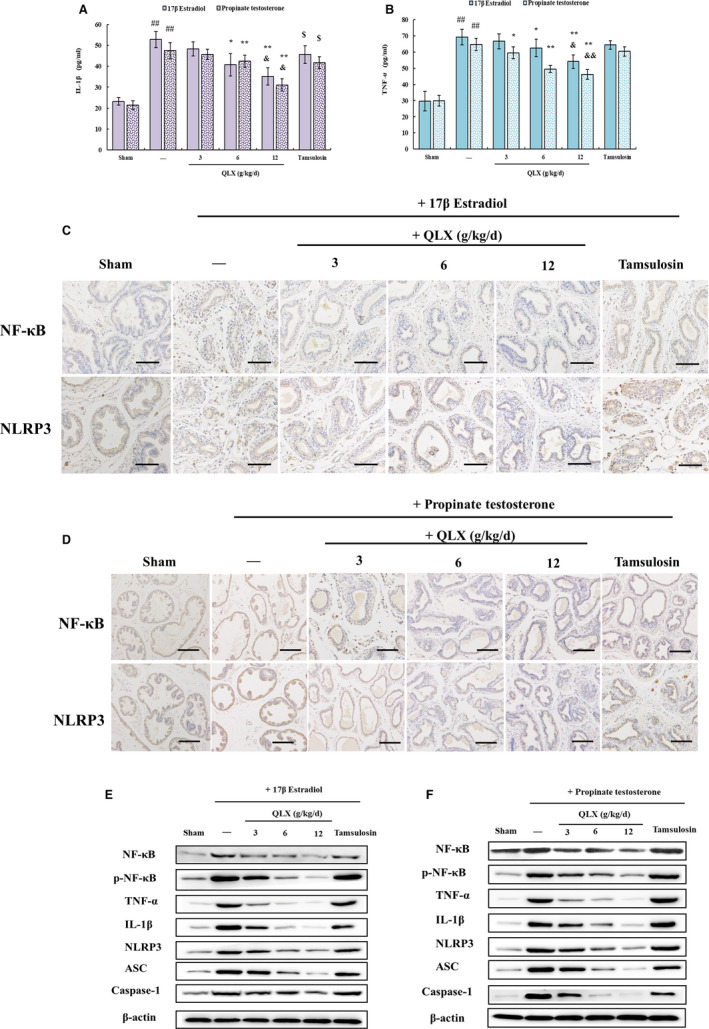
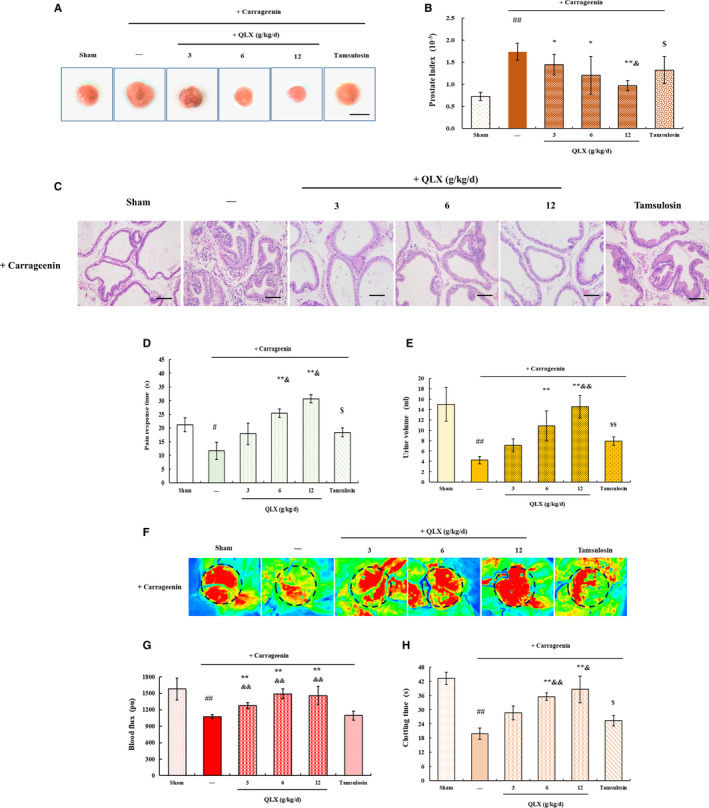
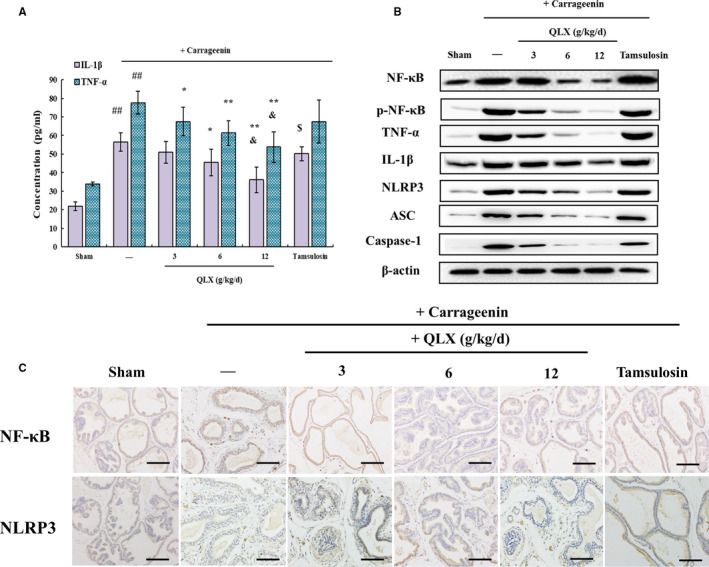
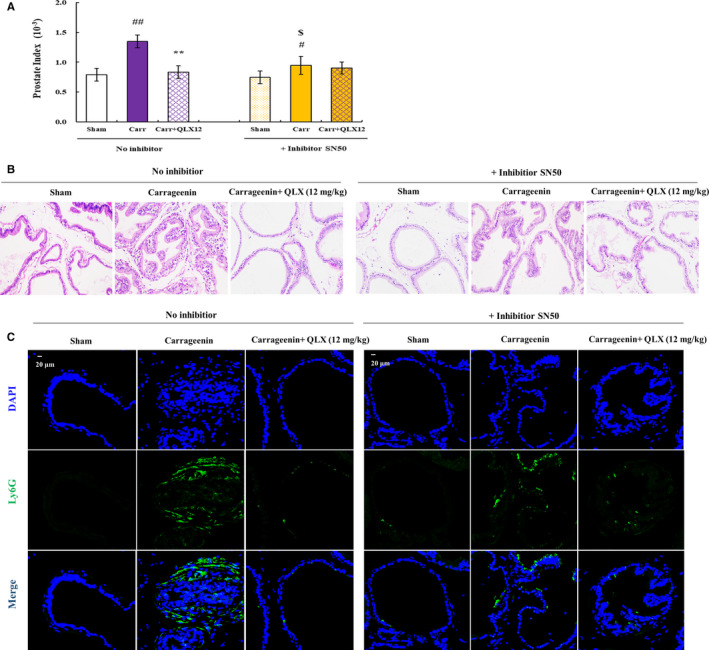
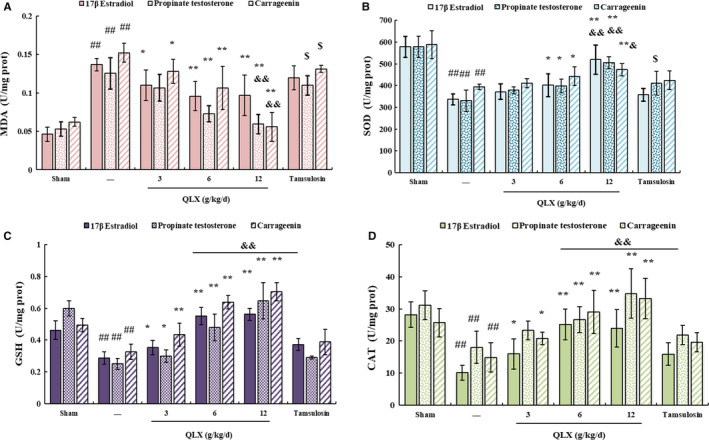
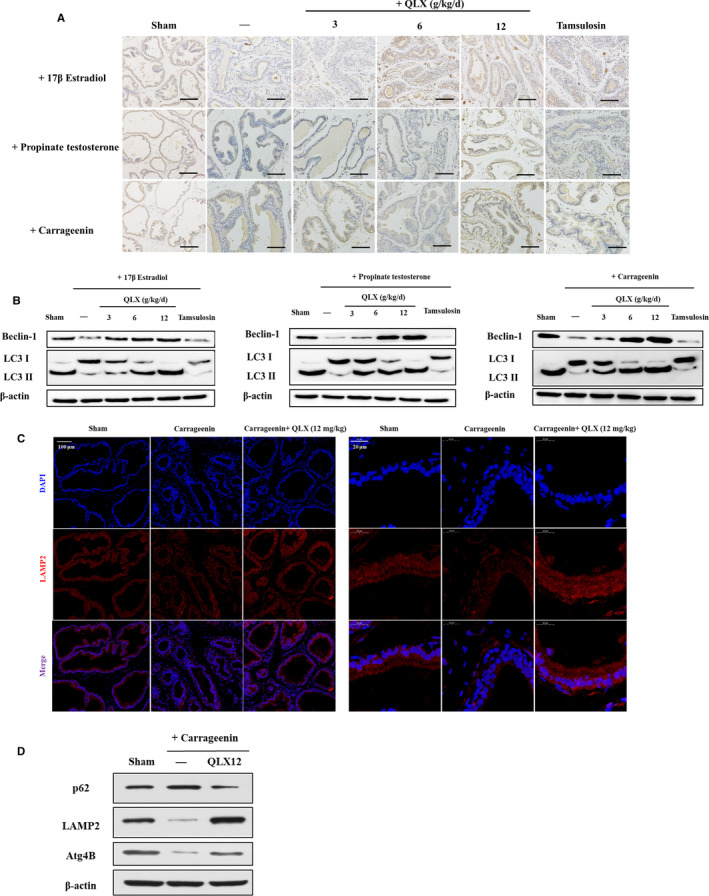
Qianliexin capsule (QLX) is a standardized traditional Chinese herbal preparation that has long been used to treat chronic non-bacterial prostatitis (CNP) and benign prostatic hyperplasia (BPH). This study investigated the anti-inflammatory activity of QLX in improving lower urinary tract symptoms (LUTS) associated with CNP and BPH. Rat models of CNP and BPH were induced by oestradiol or testosterone (hormonal imbalance) or chemical inflammation (carrageenan). QLX significantly relieved LUTS in CNP and BPH rat model by reducing prostate enlargement, epithelial thickness, pain response time, urine volume and bleeding time, and by improving prostatic blood flow. The expression of the pro-inflammatory cytokines interleukin (IL)-1β and tumour necrosis factor (TNF)-α, the pro-inflammatory transcription factor nuclear factor kappa-light-chain-enhancer of activated B cells (NF-κB), and inflammasome components (NLRP3, caspase-1 and ASC) in CNP and BPH tissues was reduced by QLX addition. QLX treatment was followed by reduced cellular malondialdehyde and increased superoxide dismutase, catalase and glutathione peroxidase activity, consistent with antioxidant activity. Increases in Beclin-1 expression and the LC3II/I ratio following QLX treatment indicated that autophagy had been induced. QLX relieved LUTS in CNP and BPH rat models by inhibiting inflammation. The underlying mechanisms included inhibition of inflammasome activation, NF-κB activation, oxidant stress and autophagy.
前列欣胶囊(QLX)是一种标准化的中药制剂,长期以来一直用于治疗慢性非细菌性前列腺炎(CNP)和良性前列腺增生(BPH)。本研究探讨了 QLX 的抗炎活性,以改善与 CNP 和 BPH 相关的下尿路症状(LUTS)。通过雌激素或睾酮(激素失衡)或化学炎症(角叉菜胶)诱导 CNP 和 BPH 大鼠模型。QLX 通过减少前列腺肿大、上皮厚度、疼痛反应时间、尿量和出血时间,以及改善前列腺血流,显著缓解 CNP 和 BPH 大鼠模型的 LUTS。QLX 还降低了 CNP 和 BPH 组织中促炎细胞因子白细胞介素(IL)-1β和肿瘤坏死因子(TNF)-α、促炎转录因子核因子κB(NF-κB)和炎症小体成分(NLRP3、半胱天冬酶-1 和 ASC)的表达。QLX 治疗后,细胞丙二醛减少,超氧化物歧化酶、过氧化氢酶和谷胱甘肽过氧化物酶活性增加,表明具有抗氧化活性。QLX 治疗后 Beclin-1 表达增加和 LC3II/I 比值增加表明自噬已被诱导。QLX 通过抑制炎症缓解 CNP 和 BPH 大鼠模型中的 LUTS。其潜在机制包括抑制炎症小体激活、NF-κB 激活、氧化应激和自噬。