Schneider W R, Doetsch R N
Appl Environ Microbiol. 1977 Dec;34(6):695-700. doi: 10.1128/aem.34.6.695-700.1977.
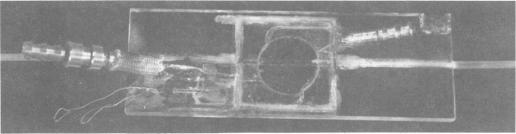
Details are presented for the construction of a simple precision temperature-controlled chamber for investigating bacterial motile behavior. Independent of original incubation temperature, all species of motile bacteria observed showed a five- to sevenfold increase in average translational velocity (micrometers per second) as the environment temperature was incremented over the range from 10 to 50 degrees C. Temperature jumps downward produced transient tumbling or reciprocal behavior responses, depending on the mode of flagellar distribution, in all species examined. Upward temperature jumps induced accelerated velocities without tumbling or reversal. A partial capacity adaptation to temperature was noted, in that the greatest average translational velocity at any given observation temperature occurred when the organisms were grown at temperatures less than the optimum.
本文详细介绍了一种用于研究细菌运动行为的简易精密温控腔室的构建。与原始培养温度无关,在10至50摄氏度范围内,随着环境温度升高,所有观察到的运动细菌种类的平均平移速度(微米/秒)均增加了五至七倍。在所有检测的细菌种类中,温度下降会根据鞭毛分布模式产生短暂的翻滚或往复行为反应。温度上升会导致速度加快,而不会出现翻滚或反向运动。研究发现存在部分温度适应能力,即在任何给定观察温度下,当生物体在低于最适温度的环境中生长时,其平均平移速度最大。