Peterson Rachel L, George Kristen M, Gilsanz Paola, Mayeda Elizabeth Rose, Glymour M Maria, Meyer Oanh L, Mungas Dan M, DeCarli Charles, Whitmer Rachel A
Biomedical Sciences 1C, University of California Davis School of Medicine, One Shields Ave., Davis, CA, 95616, USA.
Kaiser Permanente Northern California Division of Research, Oakland, CA, USA.
BMC Public Health. 2021 May 13;21(1):920. doi: 10.1186/s12889-021-10976-6.
Low socioeconomic status (SES) in early and late life has been associated with lower late-life cognition. Less is known about how changes in SES from childhood to late life are associated with late-life cognition, especially among diverse populations of older adults.
In a multi-ethnic sample (n = 1353) of older adults, we used linear regression to test associations of change in comprehensive measures of SES (financial, cultural, and social domains) from childhood to late life with semantic memory, episodic memory, and executive function. We tested whether the association between SES trajectory and late-life cognition differed by populations who resided in the U.S. during childhood or immigrated to the U.S. as adults.
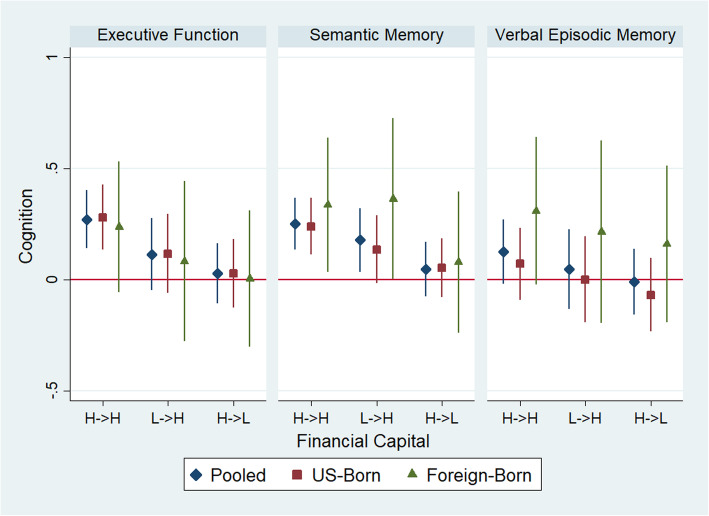
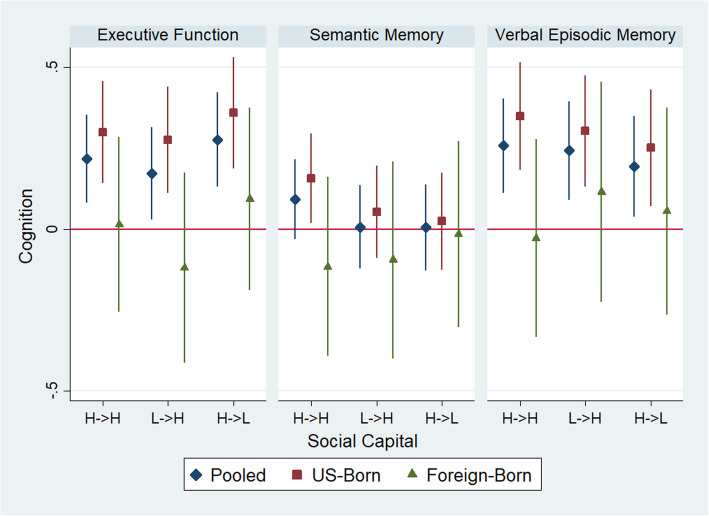
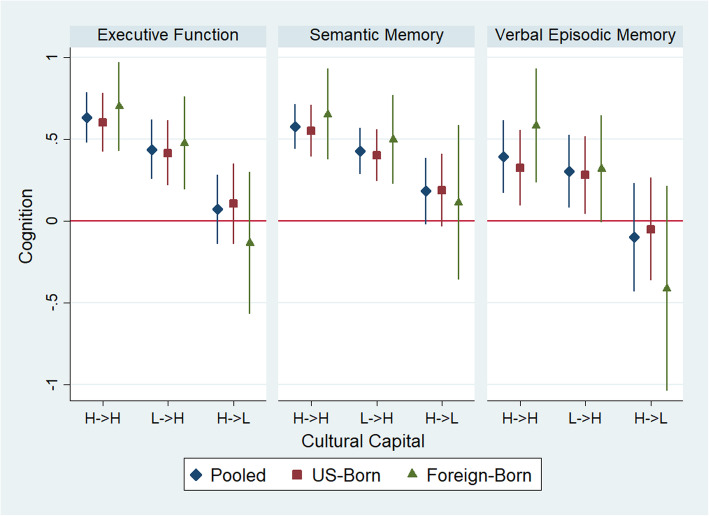
Participants with low childhood/high late-life financial capital had better semantic memory (β = 0.18; 95% CI: 0.04, 0.32) versus those with low financial capital in both childhood and late life, regardless of childhood residence. We observed a significant interaction in the association of verbal episodic memory and cultural capital by childhood residence (p = 0.08). Participants with a foreign childhood residence had higher verbal episodic memory if they had low childhood/high late-life cultural capital (β = 0.32; 95% CI: 0.01, 0.63), but lower verbal episodic memory if they had high childhood/low late-life cultural capital (β = - 0.40; 95% CI: - 0.94, 0.13). Having high lifecourse social capital was associated with better verbal episodic memory scores among those with a U.S. childhood (β = 0.34; 95% CI: 0.14, 0.55), but lower verbal episodic memory among those with a foreign childhood (β = - 0.10; 95% CI: - 0.51, 0.31).
High financial and cultural capital in late life is associated with better cognition, regardless of early childhood SES or childhood residence.
早年和晚年的低社会经济地位(SES)与晚年认知能力较低有关。从童年到晚年SES的变化如何与晚年认知能力相关,尤其是在不同的老年人群体中,人们了解较少。
在一个多民族的老年样本(n = 1353)中,我们使用线性回归来测试从童年到晚年SES综合指标(经济、文化和社会领域)的变化与语义记忆、情景记忆和执行功能之间的关联。我们测试了SES轨迹与晚年认知之间的关联是否因童年时期居住在美国或成年后移民到美国的人群而有所不同。
童年时期低/晚年高经济资本的参与者比童年和晚年都低经济资本的参与者有更好的语义记忆(β = 0.18;95%置信区间:0.04,0.32),无论童年时期的居住地如何。我们观察到童年居住地在言语情景记忆与文化资本的关联中存在显著交互作用(p = 0.08)。童年在国外居住的参与者,如果童年低/晚年高文化资本,则有较高的言语情景记忆(β = 0.32;95%置信区间:0.01,0.63),但如果童年高/晚年低文化资本,则言语情景记忆较低(β = -0.40;95%置信区间:-0.94,0.13)。拥有高生命历程社会资本与童年在美国的人群中较好的言语情景记忆得分相关(β = 0.34;95%置信区间:0.14,0.55),但与童年在国外的人群中较低的言语情景记忆相关(β = -0.10;95%置信区间:-0.51,0.31)。
晚年高经济和文化资本与更好的认知能力相关,无论童年早期的SES或童年居住地如何。