Department of Obstetrics and Gynecology, Shanghai Jiao Tong University Affiliated Sixth People's Hospital, Shanghai Jiao Tong University School of Medicine, Shanghai 200233, China.
Department of Obstetrics and Gynecology, Shanghai Eighth People's Hospital Affiliated to Jiangsu University, Shanghai 200233, China.
J Immunol Res. 2021 Apr 24;2021:9994004. doi: 10.1155/2021/9994004. eCollection 2021.
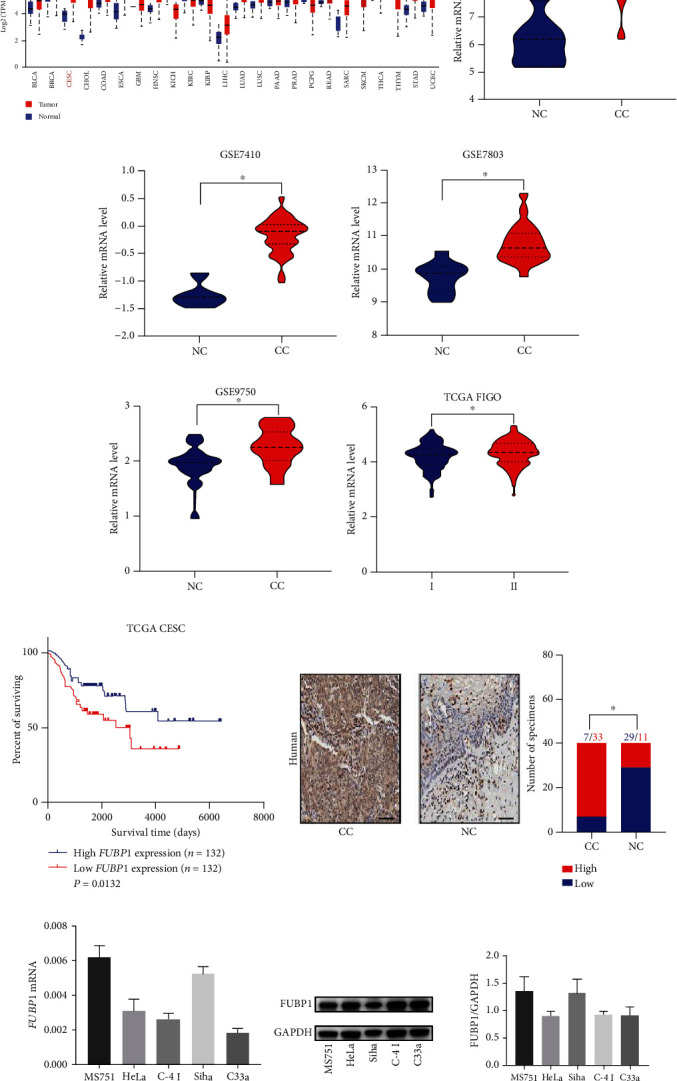
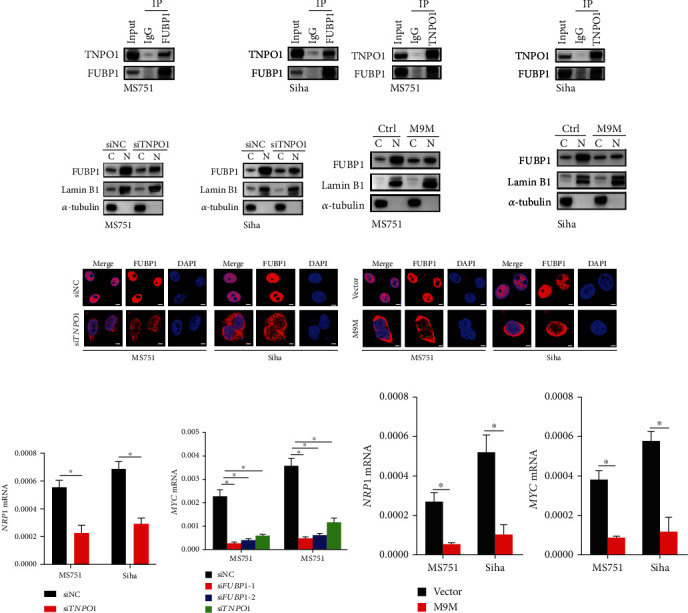
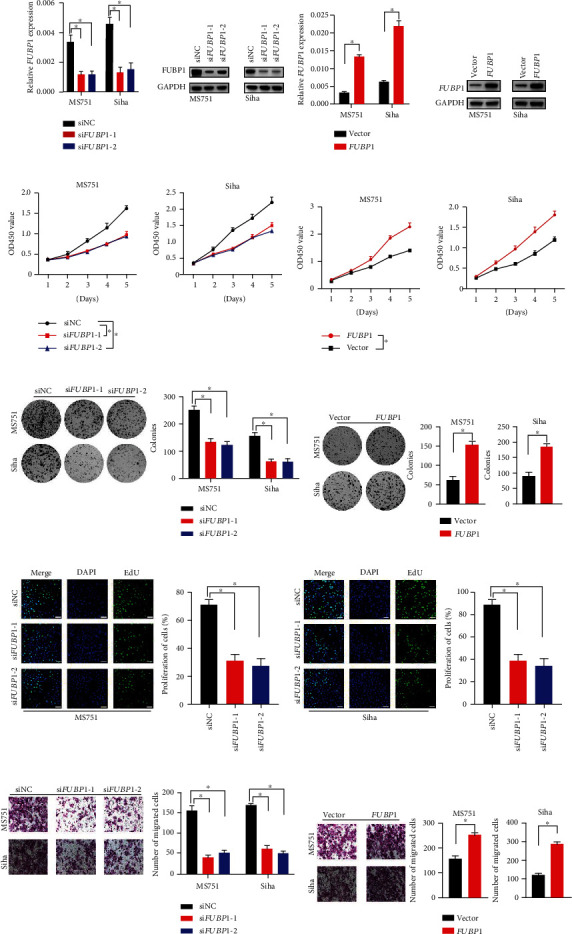
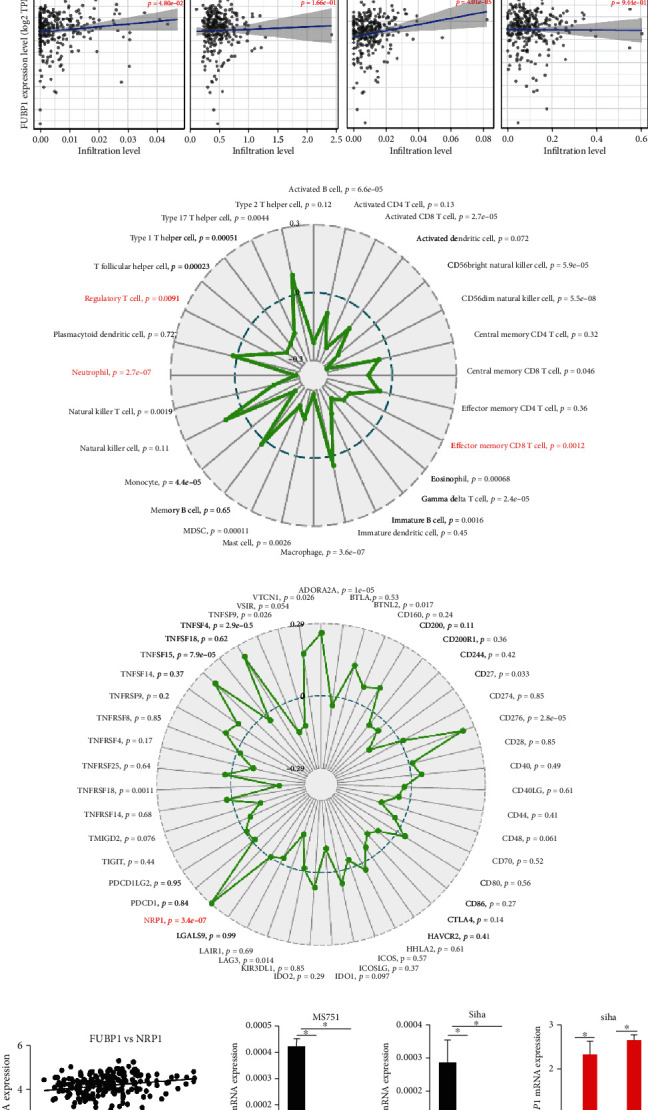
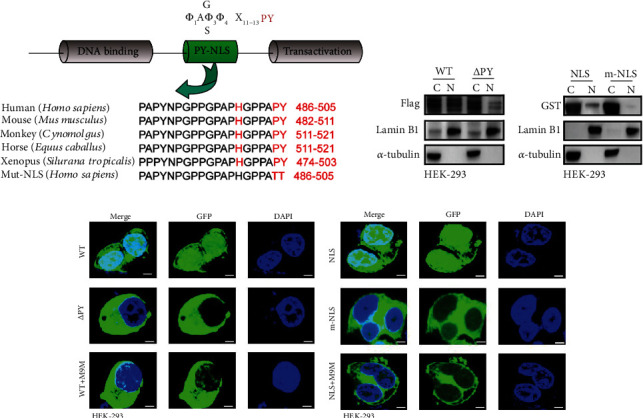
Far upstream element binding protein 1 (FUBP1), a DNA-binding protein, participates in diverse tumor-promoting behaviors by regulating the expression of oncogenes in the nucleus, but the underlying mechanisms remain to be elucidated. In the present study, we found that FUBP1 mRNA and protein expressions were markedly upregulated and closely linked with poor prognosis in cervical cancer. , functional experiments showed that knockdown of inhibited CC cell proliferation and migration. Therefore, FUBP1 plays a prooncogenic function in CC progression. Further investigations for the first time demonstrated that nuclear localization of FUBP1 regulated the gene expression of immune checkpoint NRP1. Moreover, our work demonstrated that FUBP1 translocated into the nucleus which was mediated by interacting with Transportin-1 (TNPO1). Collectively, this study revealed that FUBP1 might be a potential therapeutic target for the restriction of tumor progression.
远上游元件结合蛋白 1(FUBP1)是一种 DNA 结合蛋白,通过核内调节癌基因的表达参与多种促进肿瘤的行为,但潜在机制仍有待阐明。在本研究中,我们发现 FUBP1mRNA 和蛋白表达在宫颈癌中明显上调,并与预后不良密切相关。功能实验表明,下调 FUBP1 抑制了 CC 细胞的增殖和迁移。因此,FUBP1 在 CC 进展中发挥致癌作用。研究首次证明,FUBP1 的核定位调节免疫检查点 NRPl 的基因表达。此外,我们的工作表明,FUBP1 通过与 Transportin-1(TNPO1)相互作用而转移到核内。综上所述,本研究揭示了 FUBP1 可能是限制肿瘤进展的潜在治疗靶点。