School of Dentistry, University of Missouri - Kansas City, Kansas City, MO, 64108, USA.
Department of Chemistry, University of Missouri - Kansas City, MO, 64110, USA.
Dent Mater. 2021 Jul;37(7):1183-1192. doi: 10.1016/j.dental.2021.04.006. Epub 2021 May 14.
The aim of the study was to investigate the effects of methacrylate-functionalized proanthocyanidins (MAPAs) on dentin collagen's bio-stabilization against enzymatic degradation and crosslinking capability.
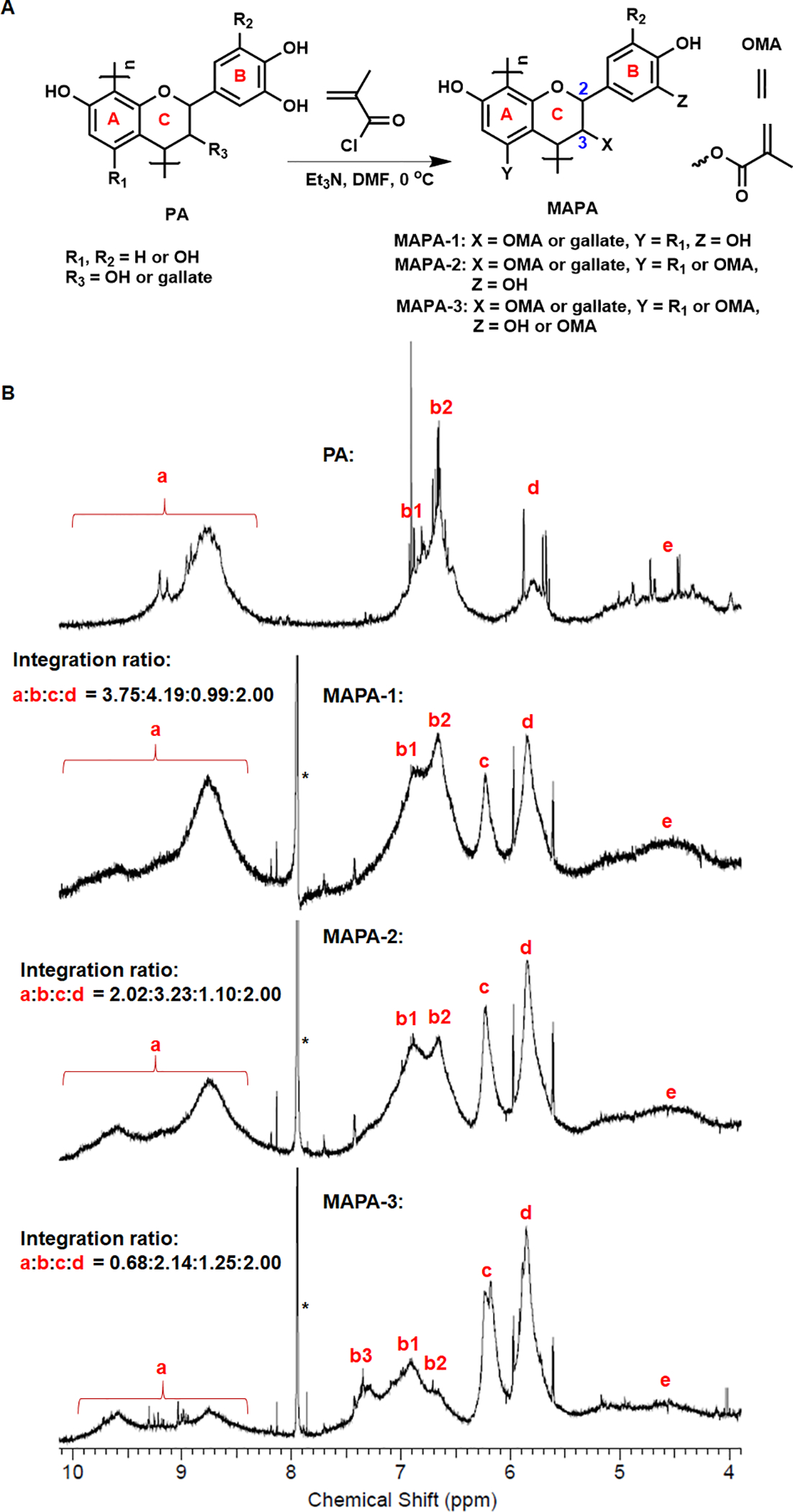
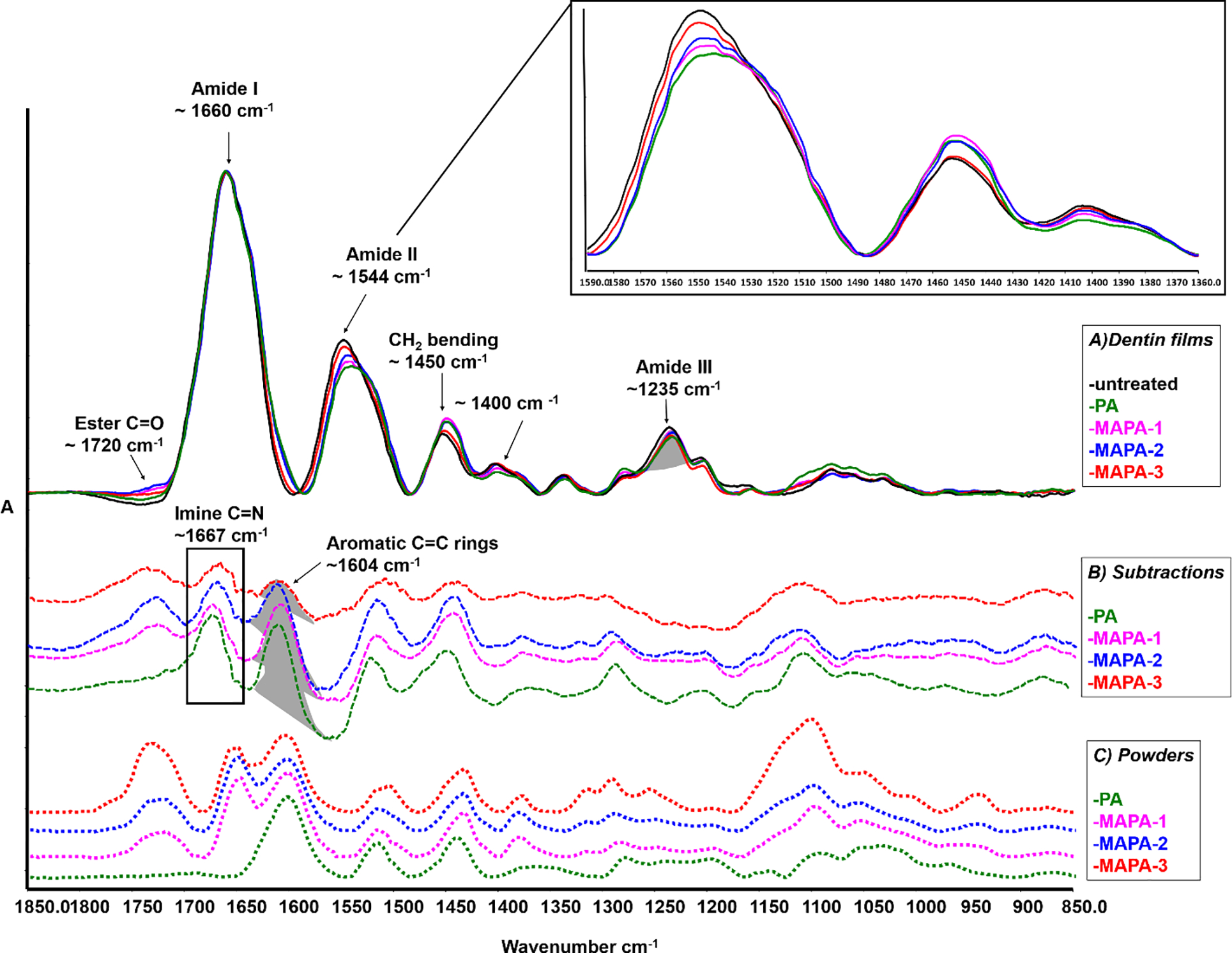
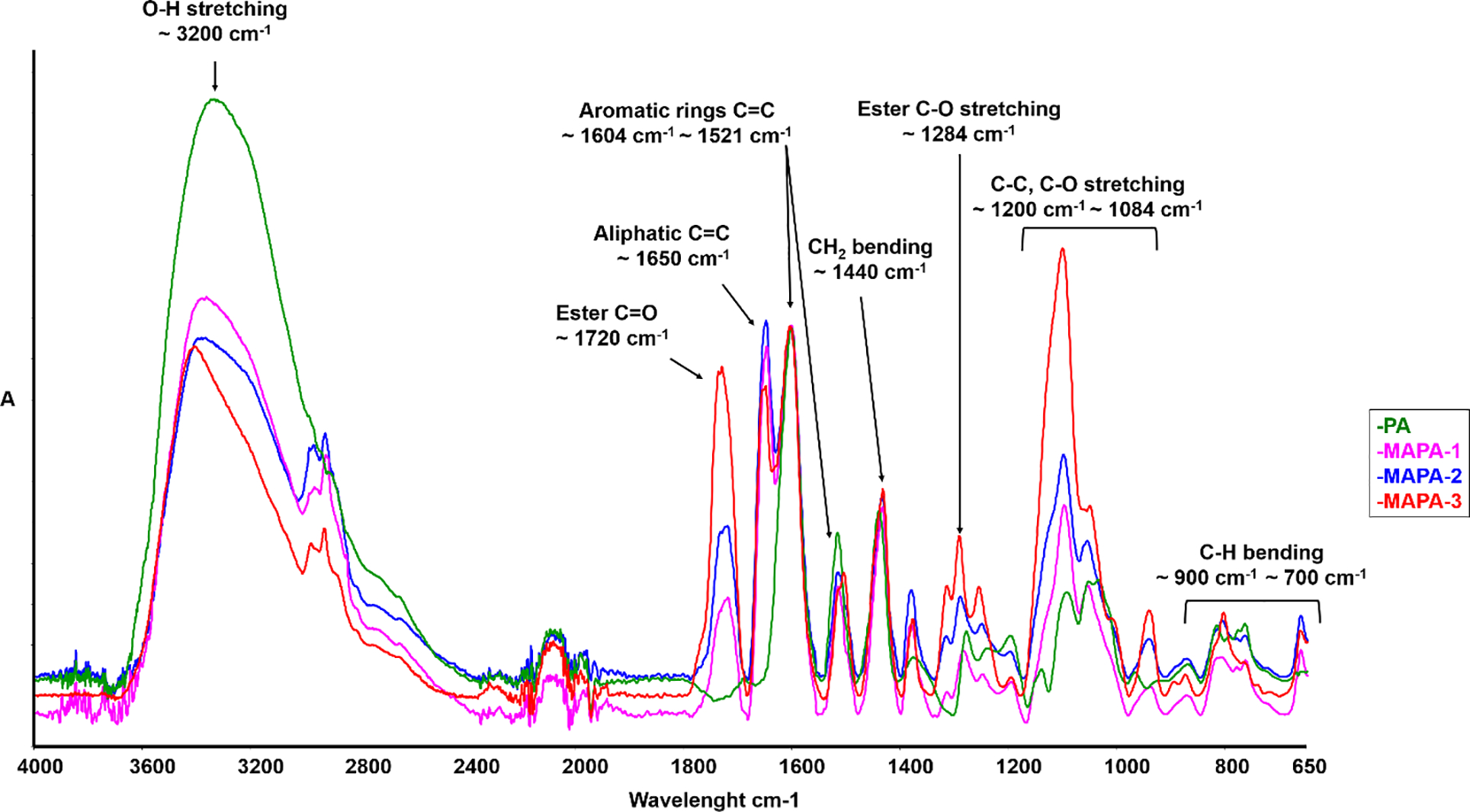
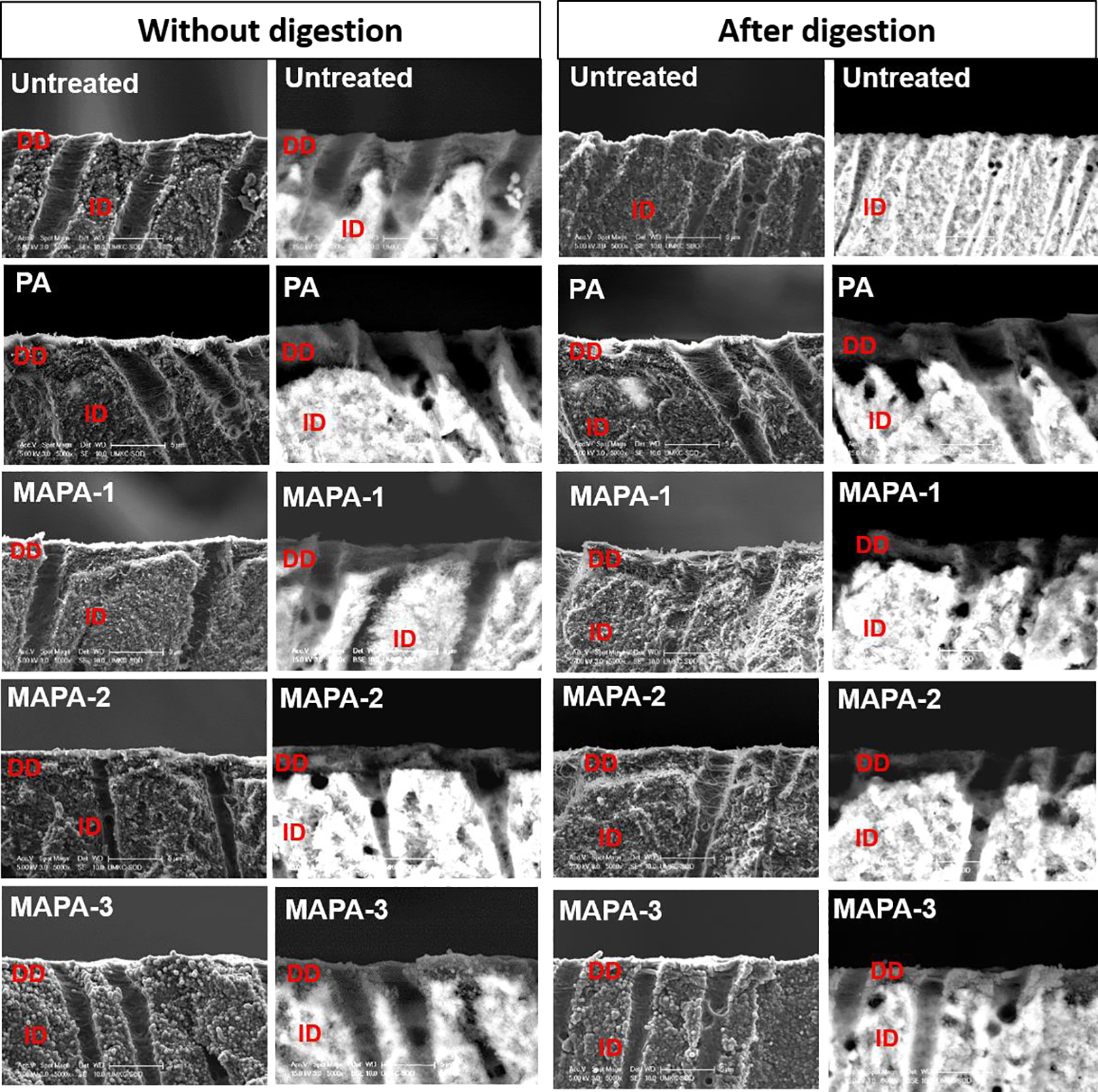
Three MAPAs were synthesized via varying methacrylate (MA) to proanthocyanidins (PA) feeding ratios of 1:2, 1:1, and 2:1 to obtain MAPA-1, MAPA-2, and MAPA-3, respectively. The three MAPAs were structurally characterized by proton nuclear magnetic resonance (H NMR) and Fourier transform infrared (FTIR) spectroscopic methods. 5-μm-thick dentin films were microtomed from dentin slabs of third molars. Following demineralization, films or slabs were treated with 1% MAPAs or PA in ethanol for 30 s. Collagen bio-stabilization against enzymatic degradation was analyzed by weight loss (WL) and hydroxyproline release (HYP) of films, as well as scanning electron microscopy (SEM) on dentin slabs. Crosslinking capacity and interactions of MAPAs with collagen were investigated by FTIR. Data were analyzed by ANOVA and Tukey's test (α = 0.05%).
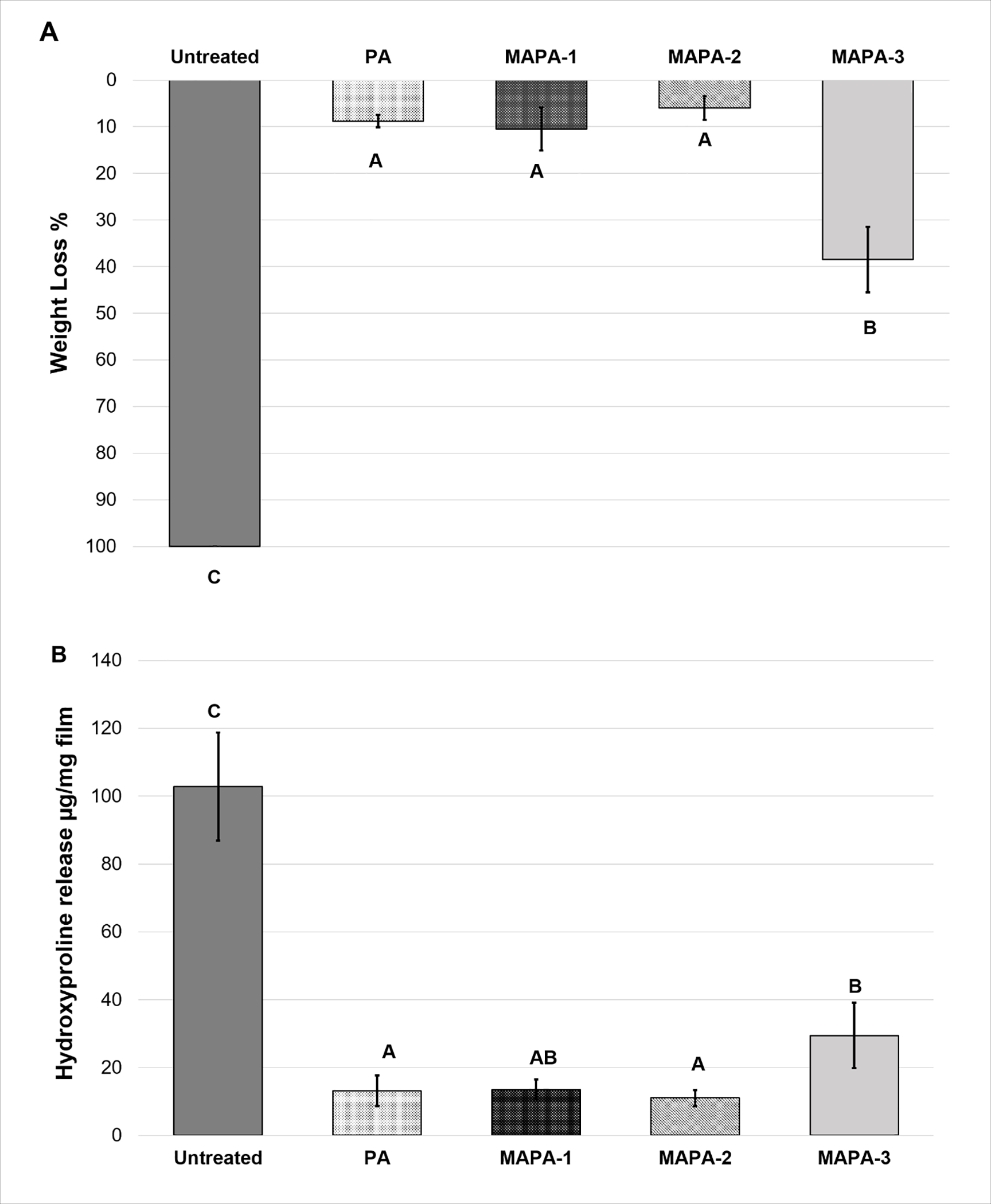
MA:PA feeding ratios affected MAPAs' chemical structures which in turn led to different collagen stabilization efficacy against degradation and varied collagen crosslinking capabilities. Higher collagen stabilization efficacy was detected using MAPA-1 (WL 10.52%; HYP 13.53 μg/mg) and MAPA-2 (WL 5.99%; HYP 11.02 μg/mg), which was comparable to that using PA (WL 8.79%; HYP 13.17 μg/mg) (p > 0.05), while a lower collagen stability occurred in MAPA-3 (WL 38.48%; HYP 29.49 μg/mg), indicating excessive MA-functionalization would compromise its stabilization efficacy. In comparison, complete digestion was detected for untreated collagen (WL 100%; HYP 102.76 μg/mg). The above results were consistent with collagen crosslinking efficacy of the three MAPAs revealed by SEM and FTIR.
A new class of novel polymerizable collagen cross-linkers MAPAs was synthesized and shown that, when appropriate MA:PA ratios were applied, the resulting MAPAs could render high collagen stability and the ability to copolymerize with resin monomers, overcoming the drawbacks of PA. These new polymerizable crosslinkers, when included in adhesives, could lead to long-lasting dentin bonding.
本研究旨在探讨甲基丙烯酰基化原花青素(MAPAs)对牙本质胶原的生物稳定性和交联能力的影响。
通过改变甲基丙烯酰基(MA)与原花青素(PA)的进料比(1:2、1:1 和 2:1),合成了 3 种 MAPAs,分别命名为 MAPA-1、MAPA-2 和 MAPA-3。采用质子核磁共振(1H NMR)和傅里叶变换红外(FTIR)光谱法对 3 种 MAPAs 的结构进行了表征。从第三磨牙的牙本质块中切取 5μm 厚的牙本质膜。脱矿后,用 1%的 MAPAs 或 PA 在乙醇中处理薄膜或薄片 30 秒。通过薄膜的失重(WL)和羟脯氨酸释放(HYP)以及牙本质薄片的扫描电子显微镜(SEM)分析胶原对酶降解的生物稳定性。通过 FTIR 研究了 MAPAs 与胶原的交联能力和相互作用。数据采用方差分析和 Tukey 检验(α=0.05%)进行分析。
MA:PA 进料比对 MAPAs 的化学结构有影响,进而导致对降解的胶原稳定性不同和胶原交联能力的差异。使用 MAPA-1(WL 10.52%;HYP 13.53μg/mg)和 MAPA-2(WL 5.99%;HYP 11.02μg/mg)检测到更高的胶原稳定性效果,与使用 PA(WL 8.79%;HYP 13.17μg/mg)相当(p>0.05),而 MAPA-3(WL 38.48%;HYP 29.49μg/mg)则胶原稳定性较低,表明过度的 MA 功能化会降低其稳定性效果。相比之下,未处理的胶原完全被消化(WL 100%;HYP 102.76μg/mg)。以上结果与 SEM 和 FTIR 显示的 3 种 MAPAs 的胶原交联效果一致。
合成了一类新型的可聚合胶原交联剂 MAPAs,结果表明,当应用适当的 MA:PA 比例时,所得 MAPAs 可赋予胶原高度的稳定性和与树脂单体共聚的能力,克服了 PA 的缺点。这些新的可聚合交联剂,如果包含在胶粘剂中,可能会导致牙本质的持久粘接。