Galemou Yoga Etienne, Schiller Jonathan, Zickermann Volker
Institute of Biochemistry II, University Hospital, Goethe University, Frankfurt, Germany.
Centre for Biomolecular Magnetic Resonance, Institute for Biophysical Chemistry, Goethe University, Frankfurt, Germany.
Front Chem. 2021 Apr 30;9:672851. doi: 10.3389/fchem.2021.672851. eCollection 2021.
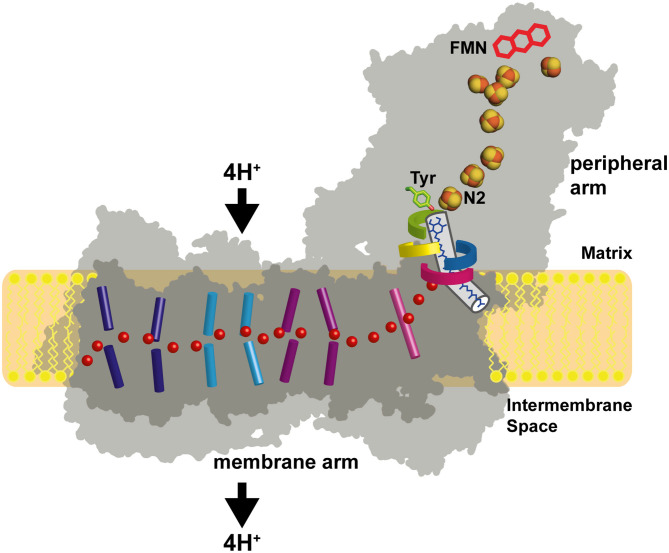
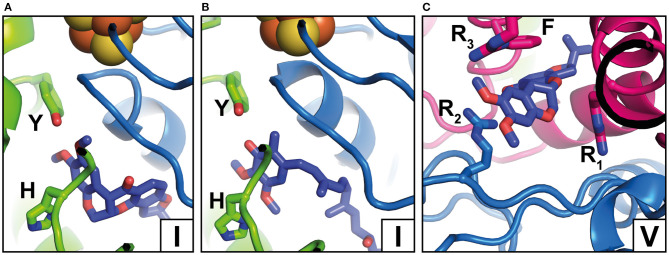
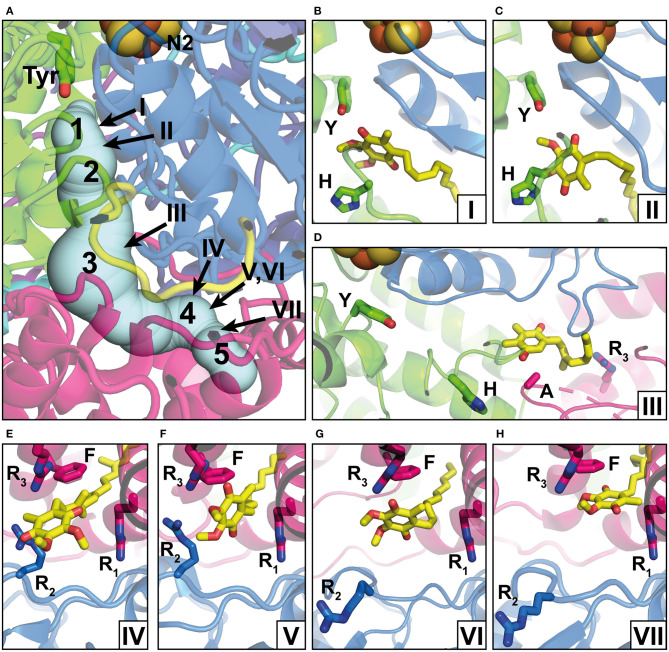
ubiquinone oxidoreductase (complex I) is the first enzyme complex of the respiratory chain. Complex I is a redox-driven proton pump that contributes to the proton motive force that drives ATP synthase. The structure of complex I has been analyzed by x-ray crystallography and electron cryo-microscopy and is now well-described. The ubiquinone (Q) reduction site of complex I is buried in the peripheral arm and a tunnel-like structure is thought to provide access for the hydrophobic substrate from the membrane. Several intermediate binding positions for Q in the tunnel were identified in molecular simulations. Structural data showed the binding of native Q molecules and short chain analogs and inhibitors in the access pathway and in the Q reduction site, respectively. We here review the current knowledge on the interaction of complex I with Q and discuss recent hypothetical models for the coupling mechanism.
泛醌氧化还原酶(复合体I)是呼吸链的首个酶复合体。复合体I是一种由氧化还原驱动的质子泵,它对驱动ATP合酶的质子动力做出贡献。复合体I的结构已通过X射线晶体学和电子冷冻显微镜进行分析,目前已有详尽描述。复合体I的泛醌(Q)还原位点深藏于外周臂中,人们认为一种隧道状结构为来自膜的疏水底物提供了通道。在分子模拟中确定了隧道内Q的几个中间结合位置。结构数据分别显示了天然Q分子以及短链类似物和抑制剂在通道和Q还原位点的结合情况。我们在此综述关于复合体I与Q相互作用的当前知识,并讨论耦合机制的最新假设模型。